THE ADVENTURE COLLECTIVE® · Independent discovery and booking for outdoor travel

Walk the labyrinthine streets of Fez el Bali with a local guide to see the madrasa, panoramic tannery views, and the oldest functioning university in the world. This full‑day guided tour blends cultural history with practical tips for navigating the medina's tight alleys.
Walk the labyrinthine streets of Fez el Bali with a local guide to see the madrasa, panoramic tannery views, and the oldest functioning university in the world. This full‑day guided tour blends cultural history with practical tips for navigating the medina's tight alleys.
You step from an air-conditioned van into a canyon of stone: alleys that bend like pages of history and walls that keep the smell of spices and leather close. The guide threads the group through Fez el Bali, where voices bounce off carved doorways and narrow streets seem to move with a life of their own.
Verified experiences and guided adventures in the surrounding area.
Operated by Marruecos desierto · Fez, Fes-Meknes
You step from an air-conditioned van into a canyon of stone: alleys that bend like pages of history and walls that keep the smell of spices and leather close. The guide threads the group through Fez el Bali, where voices bounce off carved doorways and narrow streets seem to move with a life of their own.
Fez el Bali is the medieval core of a city that grew from the 8th century into Morocco’s cultural heartbeat. Geologically, the medina sits on a gentle plateau above the Fez river; its streets follow centuries-old lines rather than modern grids. The area is home to the University of al-Qarawiyyin, founded in 859 CE, and a dense network of souks where traditional crafts—leather tanning, zellij tilework, metalwork—remain daily livelihoods.
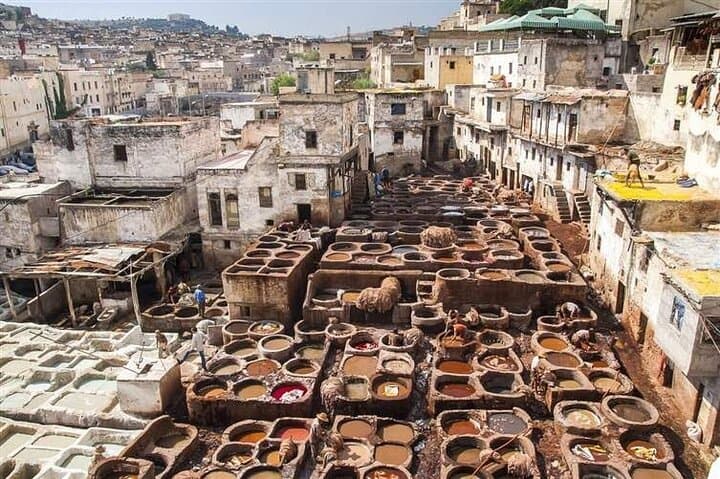
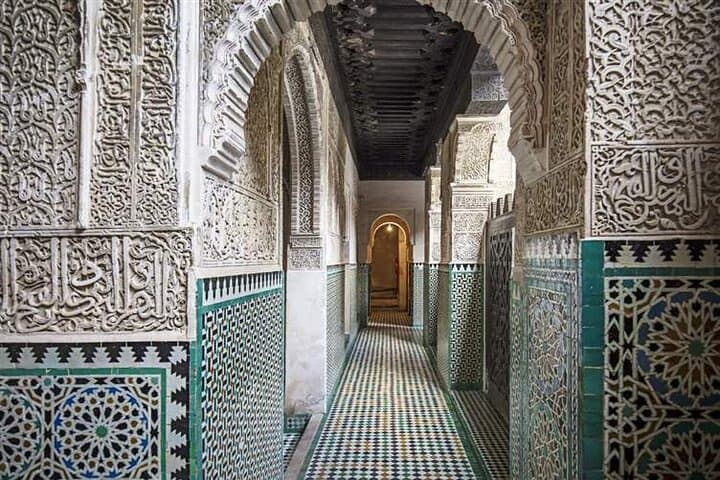
The tour typically visits a madrasa, panoramic viewpoints over the tannery pits, and active markets. Expect close quarters, uneven flagstones, and sensory intensity: dye vats that dare you to look away, spice piles stacked like small mountains, and craftsmen at tiny workbenches.
Practical notes: wear comfortable, closed-toe walking shoes and a lightweight layer for morning chill. Carry water and small change for purchases; photography is common but ask before shooting people at work. Midday heat peaks in summer—plan to start early or later in the afternoon. The route is largely pedestrian and accessible for most fitness levels, but it’s not stroller- or wheelchair-friendly throughout.
This guided experience is equal parts urban exploration and cultural snapshot—an efficient way to read the city’s past while supporting neighborhood artisans.
easy.
8–9 hours.
Light walking stamina; suitable for most fitness levels but requires standing and navigating uneven surfaces.
The tour runs approximately 8.5 hours (about 510 minutes) including transport and guided walking through the medina.
Standard bookings include a local guide and transportation; admission fees to specific monuments are typically not included—bring cash for entry where required.
No—many streets are narrow with uneven flagstones and steps; accessibility is limited in large parts of the medina.
Yes; the tour is suitable for children but infants must sit on laps per booking terms, and supervision is required in busy, crowded areas.
Fez el Bali is a UNESCO-listed medieval medina shaped over centuries around the University of al-Qarawiyyin (founded 859 CE), one of the world’s oldest continuously operating degree-granting institutions.
The medina endures pressure from tourism and urban wear; support local artisans directly, avoid single-use plastics, and follow guided-route recommendations to minimize impact.
Marruecos desierto operates guided outdoor trips and adventures with an emphasis on safety, stewardship, and memorable experiences.


You step from an air-conditioned van into a canyon of stone: alleys that bend like pages of history and walls that keep the smell of spices and leather close. The guide threads the group through Fez el Bali, where voices bounce off carved doorways and narrow streets seem to move with a life of their own.
You step from an air-conditioned van into a canyon of stone: alleys that bend like pages of history and walls that keep the smell of spices and leather close. The guide threads the group through Fez el Bali, where voices bounce off carved doorways and narrow streets seem to move with a life of their own.
Fez el Bali is the medieval core of a city that grew from the 8th century into Morocco’s cultural heartbeat. Geologically, the medina sits on a gentle plateau above the Fez river; its streets follow centuries-old lines rather than modern grids. The area is home to the University of al-Qarawiyyin, founded in 859 CE, and a dense network of souks where traditional crafts—leather tanning, zellij tilework, metalwork—remain daily livelihoods.
The tour typically visits a madrasa, panoramic viewpoints over the tannery pits, and active markets. Expect close quarters, uneven flagstones, and sensory intensity: dye vats that dare you to look away, spice piles stacked like small mountains, and craftsmen at tiny workbenches.
Practical notes: wear comfortable, closed-toe walking shoes and a lightweight layer for morning chill. Carry water and small change for purchases; photography is common but ask before shooting people at work. Midday heat peaks in summer—plan to start early or later in the afternoon. The route is largely pedestrian and accessible for most fitness levels, but it’s not stroller- or wheelchair-friendly throughout.
This guided experience is equal parts urban exploration and cultural snapshot—an efficient way to read the city’s past while supporting neighborhood artisans.