THE ADVENTURE COLLECTIVE® · Independent discovery and booking for outdoor travel

Walk the labyrinthine streets of Fes el Bali with an approved local guide, passing historic madrasas, the Chouara tannery, and hidden rooftop viewpoints. This 3–5 hour tour places centuries of craft, religion, and daily life within easy reach.
Walk the labyrinthine streets of Fes el Bali with an approved local guide, passing historic madrasas, the Chouara tannery, and hidden rooftop viewpoints. This 3–5 hour tour places centuries of craft, religion, and daily life within easy reach.
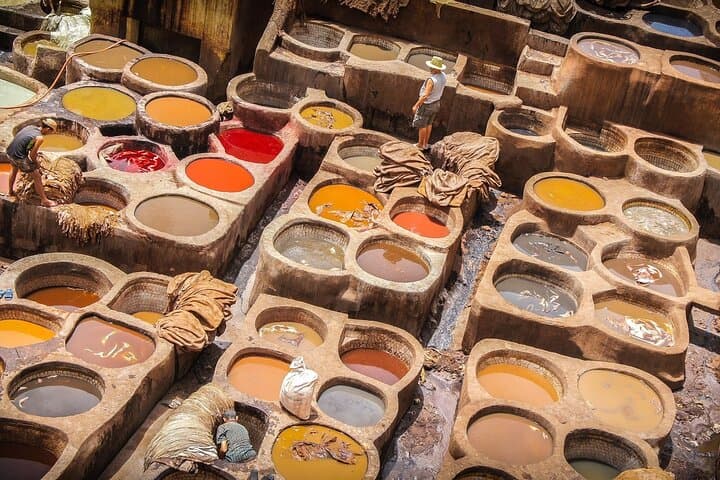
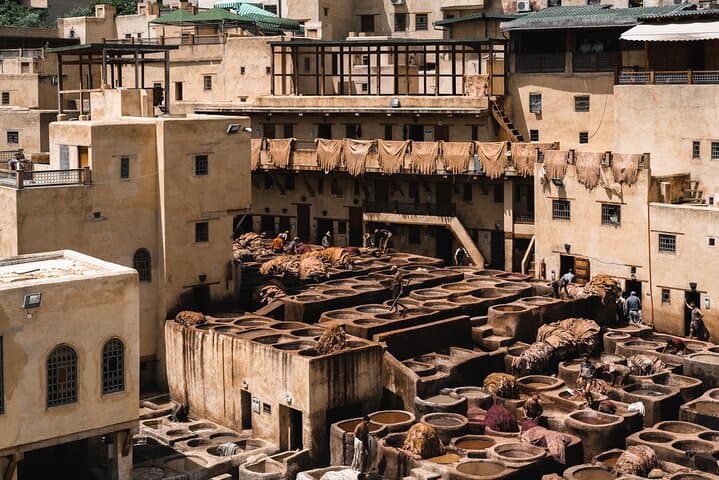
A narrow lane opens into a wash of light and sound: mules clack, vendors call, spice sacks tilt like color-splashed drums. The Fez Local Walking Guided Tour moves through Fes el Bali at a walking pace, placing visitors inside one of the world’s largest car-free urban fabrics. The guide leads past Bab Bou Jeloud’s blue tiles, up alleys that end at rooftop overlooks, and alongside the tannery pits where centuries-old leather work still steams and dyes the air.
Verified experiences and guided adventures in the surrounding area.
Operated by Ahmed Meski · Fez, Fes-Meknes
A narrow lane opens into a wash of light and sound: mules clack, vendors call, spice sacks tilt like color-splashed drums. The Fez Local Walking Guided Tour moves through Fes el Bali at a walking pace, placing visitors inside one of the world’s largest car-free urban fabrics. The guide leads past Bab Bou Jeloud’s blue tiles, up alleys that end at rooftop overlooks, and alongside the tannery pits where centuries-old leather work still steams and dyes the air.
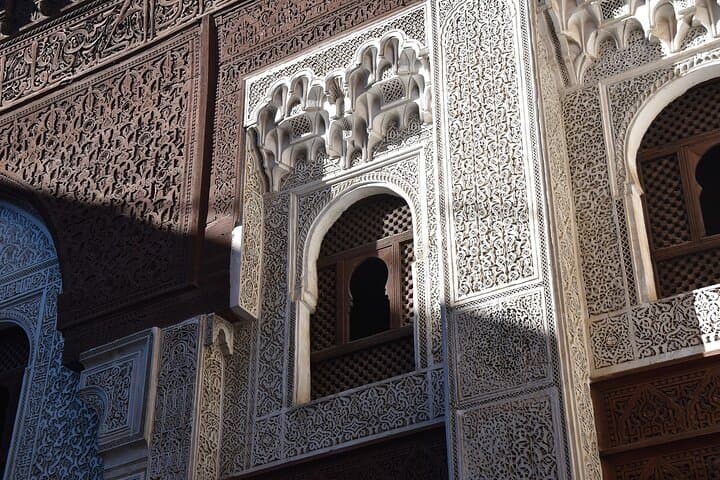
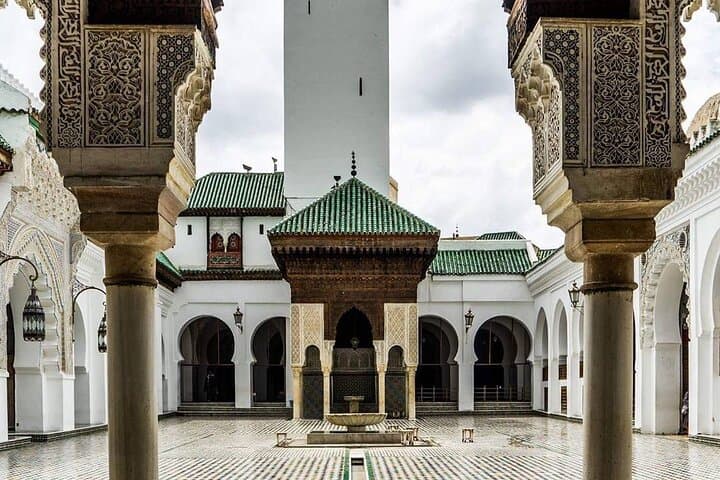
Fez’s layout reflects nearly 1,200 years of urban life. The route passes architectural highlights—the Bou Inania Madrasa’s carved cedar, the Qarawiyyin complex founded by Fatima al‑Fihri—and marketplaces where copperworkers, dyers, and wood artisans keep craft traditions alive. Geologically the city sits where the Middle Atlas foothills ease into the Saiss plain, the river Oued Bou Khrareb threading the medina and feeding historical industry.
Practically, expect uneven flagstones, tight stair sets, and strong sensory contrasts: fragrant spices, tannery odors, and pockets of quiet courtyards. Morning or late afternoon is best for cooler temperatures and softer light for photos. Bargaining is customary in souks; small bills and a compact bag reduce hassle. The approved local guide handles orientation, explains artisanal techniques, and points out quieter routes if crowds build.
This is a cultural walk more than a hike—light on fitness but heavy on observation. Travelers leave with a clear reading of Fez’s living history and a practical sense of how to navigate its layered streets on their own.
easy.
3–5 hours.
Suitable for most fitness levels; involves steady walking, standing, and short stair sections.
Yes; the route is paced for general comfort, though families should be prepared for walking on uneven surfaces and occasional stairs.
The tour typically includes external visits and explanations; entrance fees to museums or madrasa interiors may not be included—confirm with the operator.
Guides on this tour are approved by Morocco’s Ministry of Tourism and commonly speak English, French, Spanish, and Italian.
Small purchases and snacks can be inexpensive—plan for modest amounts (a few dollars to tens of dollars) depending on crafts; bargaining is expected at traditional souks.
Fez el Bali grew around the 9th century under Idris II and contains the University of al‑Qarawiyyin, founded by Fatima al‑Fihri in the 9th century—one of the oldest continuously operating educational institutions.
The medina faces pressure from tourism and industrial practices like tanning; travelers can reduce impact by staying on paths, minimizing plastic use, and supporting local conservation-focused shops.
Ahmed Meski operates guided outdoor trips and adventures with an emphasis on safety, stewardship, and memorable experiences.
A narrow lane opens into a wash of light and sound: mules clack, vendors call, spice sacks tilt like color-splashed drums. The Fez Local Walking Guided Tour moves through Fes el Bali at a walking pace, placing visitors inside one of the world’s largest car-free urban fabrics. The guide leads past Bab Bou Jeloud’s blue tiles, up alleys that end at rooftop overlooks, and alongside the tannery pits where centuries-old leather work still steams and dyes the air.
A narrow lane opens into a wash of light and sound: mules clack, vendors call, spice sacks tilt like color-splashed drums. The Fez Local Walking Guided Tour moves through Fes el Bali at a walking pace, placing visitors inside one of the world’s largest car-free urban fabrics. The guide leads past Bab Bou Jeloud’s blue tiles, up alleys that end at rooftop overlooks, and alongside the tannery pits where centuries-old leather work still steams and dyes the air.
Fez’s layout reflects nearly 1,200 years of urban life. The route passes architectural highlights—the Bou Inania Madrasa’s carved cedar, the Qarawiyyin complex founded by Fatima al‑Fihri—and marketplaces where copperworkers, dyers, and wood artisans keep craft traditions alive. Geologically the city sits where the Middle Atlas foothills ease into the Saiss plain, the river Oued Bou Khrareb threading the medina and feeding historical industry.
Practically, expect uneven flagstones, tight stair sets, and strong sensory contrasts: fragrant spices, tannery odors, and pockets of quiet courtyards. Morning or late afternoon is best for cooler temperatures and softer light for photos. Bargaining is customary in souks; small bills and a compact bag reduce hassle. The approved local guide handles orientation, explains artisanal techniques, and points out quieter routes if crowds build.
This is a cultural walk more than a hike—light on fitness but heavy on observation. Travelers leave with a clear reading of Fez’s living history and a practical sense of how to navigate its layered streets on their own.