THE ADVENTURE COLLECTIVE® · Independent discovery and booking for outdoor travel

A full-day private transfer from Casablanca drops you into Fez’s medina—a compact, intense city of crafts, courtyard schools and rooftop views. This guide outlines what to expect on a day tour: key sites, walking conditions, and practical tips to make the most of your visit.
A full-day private transfer from Casablanca drops you into Fez’s medina—a compact, intense city of crafts, courtyard schools and rooftop views. This guide outlines what to expect on a day tour: key sites, walking conditions, and practical tips to make the most of your visit.
You step out of the air-conditioned car and into an alley where sunlight slices through a lattice of washing lines and shop signs. The medina of Fez feels like a living map—narrow turns, sudden courtyards and rooftops punctuated by chimneys and satellite dishes. Bou Inania’s carved stucco peers over a mosaic of voices; somewhere below, tannery pits vibrate with the smell of leather and lime.
Verified experiences and guided adventures in the surrounding area.
Operated by Argania Travel · Fez, Fès-Meknès
You step out of the air-conditioned car and into an alley where sunlight slices through a lattice of washing lines and shop signs. The medina of Fez feels like a living map—narrow turns, sudden courtyards and rooftops punctuated by chimneys and satellite dishes. Bou Inania’s carved stucco peers over a mosaic of voices; somewhere below, tannery pits vibrate with the smell of leather and lime.
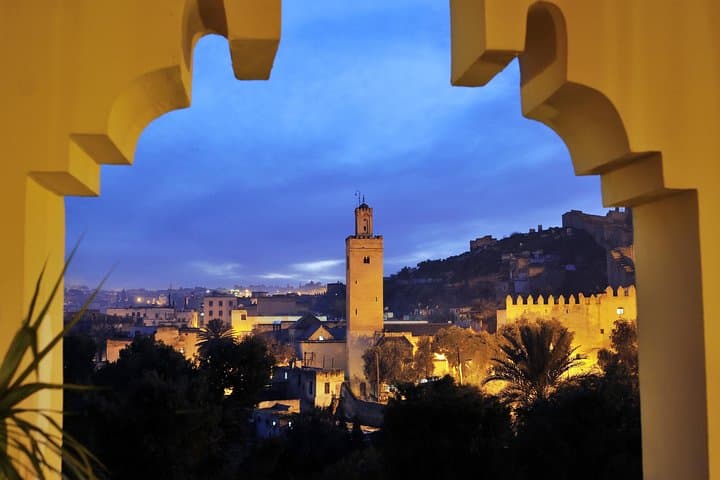
Fez dates to the late eighth century, founded by Idris I, and grew into Morocco’s religious and intellectual heart. The city sits on the northern edge of the Atlas foothills; its geology—limestone bedrock and alluvial terraces along the Oued Fez—has shaped the winding lanes that focus water and trade into distinct artisan quarters. Culturally the medina remains a guild city: woodworkers, dyers and metalworkers maintain centuries-old techniques in compact souks.
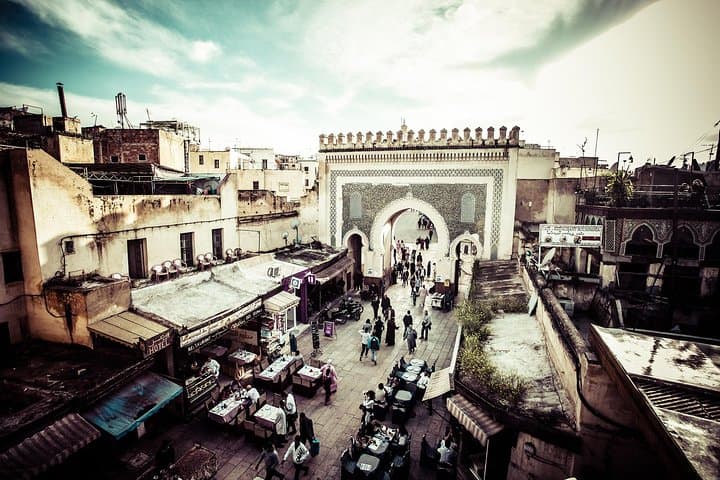
On a private full-day tour from Casablanca you cover the essentials: Bab Boujloud’s tiled gate, Bou Inania Madrasa’s courtyard, the panoramic tea room at the Nejjarine Museum and the busy souks that run beside the wadi. Expect lots of walking on uneven cobbles, brief climbs to rooftop viewpoints and sensory intensity—scents, calls and bargaining in close quarters.
Practical guidance: plan for 10–14 hours round trip depending on traffic, wear sturdy closed-toe shoes and sun protection, carry cash for small purchases, and respect religious sites—Al-Qarawiyyin Mosque is viewable from outside only. Schedule visits early in the day or late afternoon to avoid heat and peak crowds; Fridays may limit access to some monuments.
easy.
12–14 hours.
Suitable for travelers with basic fitness—long periods of walking and standing on uneven surfaces.
The drive is typically about 3.5–4 hours each way depending on traffic and route; expect a full-day schedule with travel and sightseeing included.
Meals are generally not included unless specified; most itineraries allow time for a lunch stop in or near the medina at your own expense.
No—Al-Qarawiyyin is closed to non-Muslim visitors; tours view the exterior and nearby madrasa courtyards instead.
Yes—hotel pickup and drop-off in Casablanca are typically provided as part of the private tour service.
Fez was founded in the late 8th century by Idris I and long served as Morocco’s religious and intellectual center, preserving medieval urban layouts and guild-based crafts.
Support sustainability by buying from certified local artisans, minimizing plastic waste, and staying on established paths to protect fragile historic fabric.
Argania Travel operates guided outdoor trips and adventures with an emphasis on safety, stewardship, and memorable experiences.
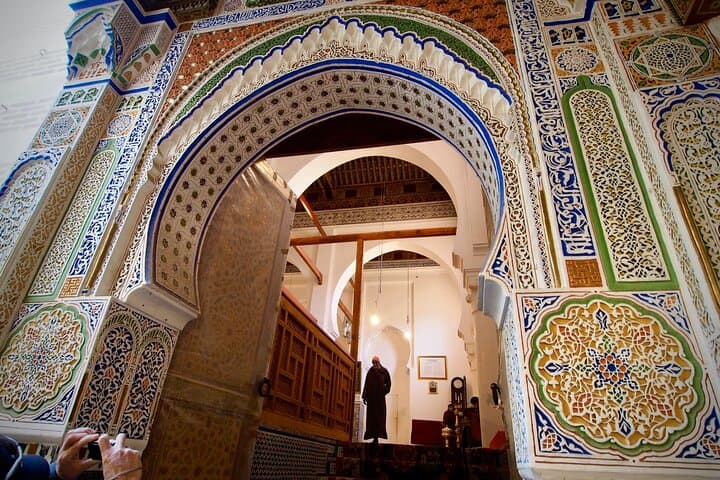
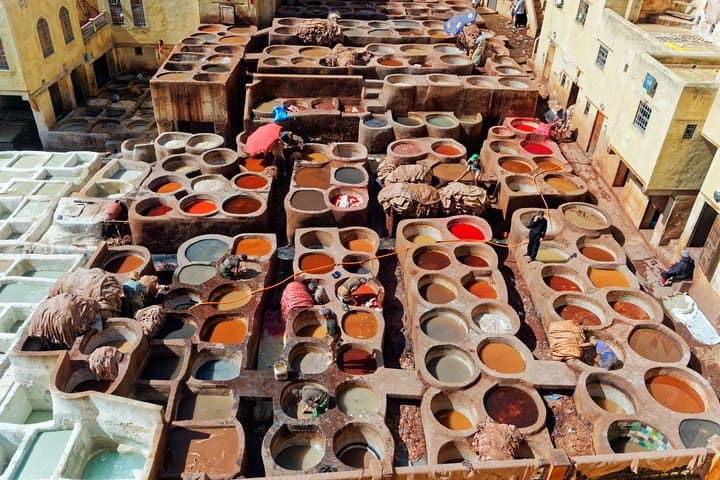
You step out of the air-conditioned car and into an alley where sunlight slices through a lattice of washing lines and shop signs. The medina of Fez feels like a living map—narrow turns, sudden courtyards and rooftops punctuated by chimneys and satellite dishes. Bou Inania’s carved stucco peers over a mosaic of voices; somewhere below, tannery pits vibrate with the smell of leather and lime.
You step out of the air-conditioned car and into an alley where sunlight slices through a lattice of washing lines and shop signs. The medina of Fez feels like a living map—narrow turns, sudden courtyards and rooftops punctuated by chimneys and satellite dishes. Bou Inania’s carved stucco peers over a mosaic of voices; somewhere below, tannery pits vibrate with the smell of leather and lime.
Fez dates to the late eighth century, founded by Idris I, and grew into Morocco’s religious and intellectual heart. The city sits on the northern edge of the Atlas foothills; its geology—limestone bedrock and alluvial terraces along the Oued Fez—has shaped the winding lanes that focus water and trade into distinct artisan quarters. Culturally the medina remains a guild city: woodworkers, dyers and metalworkers maintain centuries-old techniques in compact souks.
On a private full-day tour from Casablanca you cover the essentials: Bab Boujloud’s tiled gate, Bou Inania Madrasa’s courtyard, the panoramic tea room at the Nejjarine Museum and the busy souks that run beside the wadi. Expect lots of walking on uneven cobbles, brief climbs to rooftop viewpoints and sensory intensity—scents, calls and bargaining in close quarters.
Practical guidance: plan for 10–14 hours round trip depending on traffic, wear sturdy closed-toe shoes and sun protection, carry cash for small purchases, and respect religious sites—Al-Qarawiyyin Mosque is viewable from outside only. Schedule visits early in the day or late afternoon to avoid heat and peak crowds; Fridays may limit access to some monuments.