THE ADVENTURE COLLECTIVE® · Independent discovery and booking for outdoor travel

Drive from Fez into Morocco’s layered past on a private day trip to Meknes and Volubilis. Walk Roman mosaics at Volubilis, pass through Moulay Idriss, and take in the monumental gates and mausoleum of Meknes.
Drive from Fez into Morocco’s layered past on a private day trip to Meknes and Volubilis. Walk Roman mosaics at Volubilis, pass through Moulay Idriss, and take in the monumental gates and mausoleum of Meknes.
You step into the day before Fez wakes fully: a driver’s silhouette against a pale sky, the road threading out across the Saïss plain. Olive groves and low hills slide past as the car heads toward the monumental gates of Meknes, where the scale of imperial Morocco first becomes physical—stone ramparts, brass-studded doors, and the mausoleum of Moulay Ismail waiting in quiet.
Verified experiences and guided adventures in the surrounding area.
Operated by Peaceful Morocco Travel · Fez, Fès-Meknès
You step into the day before Fez wakes fully: a driver’s silhouette against a pale sky, the road threading out across the Saïss plain. Olive groves and low hills slide past as the car heads toward the monumental gates of Meknes, where the scale of imperial Morocco first becomes physical—stone ramparts, brass-studded doors, and the mausoleum of Moulay Ismail waiting in quiet.
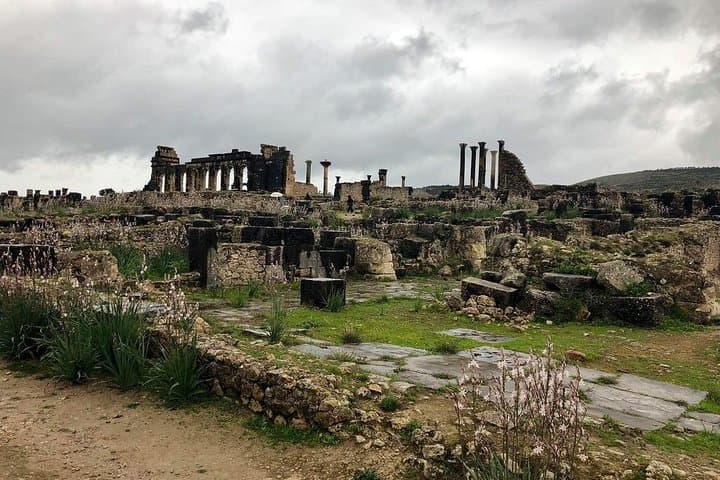
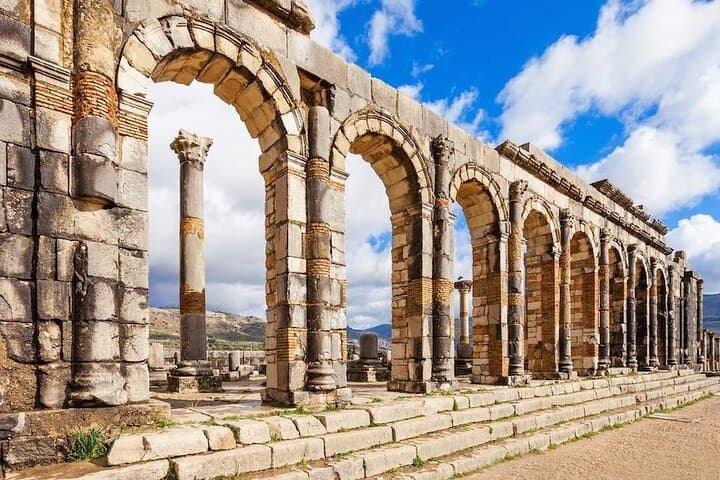
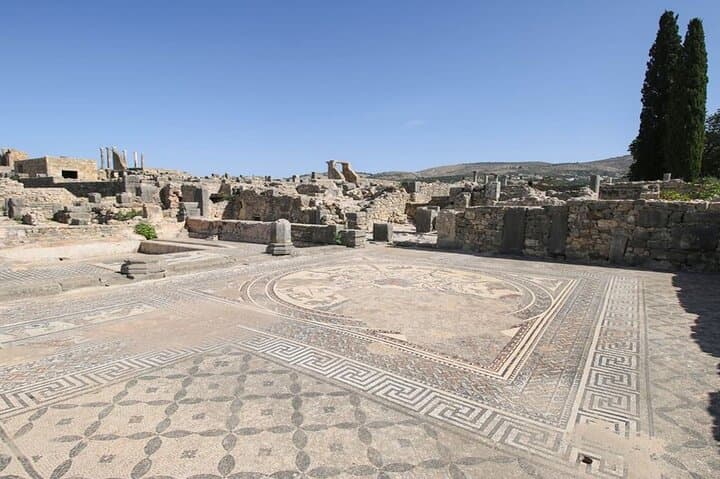
Meknes is an eighteenth-century assertion of power, its grand gates and royal granaries reflecting the ambitions of a sultan who reshaped the city into an imperial capital. From there the landscape shifts: fields give way to an archaeological plateau and the well-preserved mosaic floors of Volubilis, a Roman administrative center whose carved columns and basilica outline the empire’s reach into North Africa.
Geology here is pragmatic—fertile plains fed by winter rains, hilltops of limestone and shale that preserved ancient foundations. Cultural markers are close: the holy hilltop town of Moulay Idriss offers whitewashed alleys and a living sense of pilgrimage between the two sites.
Practical guide: expect a full day of walking on uneven stone and compact dirt; wear supportive shoes and bring sun protection and water. Entry to Volubilis requires a ticket—carry cash for small vendors and tips. Visits move at a relaxed pace with a private driver handling transfers; plan 6–10 hours depending on how long you linger over mosaics and medina gates.
This route blends Roman archaeology, Alaouite-era grandeur, and rural Moroccan rhythms—accessible for travelers who want history framed by straightforward logistics.
easy.
8–10 hours.
Suitable for most fitness levels; expect several short walks on uneven ground and some standing during site interpretation.
No—admission to Volubilis and any independently run sites is typically not included; carry local currency to pay on arrival.
Travel times vary with stops and traffic, but expect roughly 45–90 minutes between Fez and Meknes and a short drive from Meknes to Volubilis; your private driver handles transfers.
The tour is family-friendly, but Volubilis has uneven surfaces and some short climbs; those with limited mobility may find parts challenging—check with the operator about specific accessibility needs.
Yes—most itineraries include a lunch stop in Meknes or Moulay Idriss and time for a short walk through local markets; plan for an unhurried midday break.
Meknes rose to prominence under Sultan Moulay Ismail in the 17th–18th centuries; Volubilis is a largely preserved Roman town that later became an early Islamic settlement, now a UNESCO World Heritage Site.
Stick to marked paths at Volubilis to protect mosaic floors and standing ruins; support local guides and vendors to help conserve community-based tourism.
Peaceful Morocco Travel operates guided outdoor trips and adventures with an emphasis on safety, stewardship, and memorable experiences.
You step into the day before Fez wakes fully: a driver’s silhouette against a pale sky, the road threading out across the Saïss plain. Olive groves and low hills slide past as the car heads toward the monumental gates of Meknes, where the scale of imperial Morocco first becomes physical—stone ramparts, brass-studded doors, and the mausoleum of Moulay Ismail waiting in quiet.
You step into the day before Fez wakes fully: a driver’s silhouette against a pale sky, the road threading out across the Saïss plain. Olive groves and low hills slide past as the car heads toward the monumental gates of Meknes, where the scale of imperial Morocco first becomes physical—stone ramparts, brass-studded doors, and the mausoleum of Moulay Ismail waiting in quiet.
Meknes is an eighteenth-century assertion of power, its grand gates and royal granaries reflecting the ambitions of a sultan who reshaped the city into an imperial capital. From there the landscape shifts: fields give way to an archaeological plateau and the well-preserved mosaic floors of Volubilis, a Roman administrative center whose carved columns and basilica outline the empire’s reach into North Africa.
Geology here is pragmatic—fertile plains fed by winter rains, hilltops of limestone and shale that preserved ancient foundations. Cultural markers are close: the holy hilltop town of Moulay Idriss offers whitewashed alleys and a living sense of pilgrimage between the two sites.
Practical guide: expect a full day of walking on uneven stone and compact dirt; wear supportive shoes and bring sun protection and water. Entry to Volubilis requires a ticket—carry cash for small vendors and tips. Visits move at a relaxed pace with a private driver handling transfers; plan 6–10 hours depending on how long you linger over mosaics and medina gates.
This route blends Roman archaeology, Alaouite-era grandeur, and rural Moroccan rhythms—accessible for travelers who want history framed by straightforward logistics.