THE ADVENTURE COLLECTIVE® · Independent discovery and booking for outdoor travel

A compact, two-day loop from Fes to Merzouga and on to Marrakech that pairs Atlas mountain scenery, a camel trek into Erg Chebbi, and an overnight in a private desert camp. Perfect for travelers who want an accessible taste of the Sahara without a long expedition.
A compact, two-day loop from Fes to Merzouga and on to Marrakech that pairs Atlas mountain scenery, a camel trek into Erg Chebbi, and an overnight in a private desert camp. Perfect for travelers who want an accessible taste of the Sahara without a long expedition.
You climb into the minivan at dawn in Fes and the road unspools—cedar forests, a scatter of Berber villages, then the Middle Atlas rising and falling like a slow drumbeat. By late afternoon the asphalt gives way to ochre tracks and the dunes of Erg Chebbi appear on the horizon, a living landscape of wind-sculpted ridges that demand to be walked.
Verified experiences and guided adventures in the surrounding area.
Operated by Fez to Anywhere · Merzouga, Drâa-Tafilalet
You climb into the minivan at dawn in Fes and the road unspools—cedar forests, a scatter of Berber villages, then the Middle Atlas rising and falling like a slow drumbeat. By late afternoon the asphalt gives way to ochre tracks and the dunes of Erg Chebbi appear on the horizon, a living landscape of wind-sculpted ridges that demand to be walked.
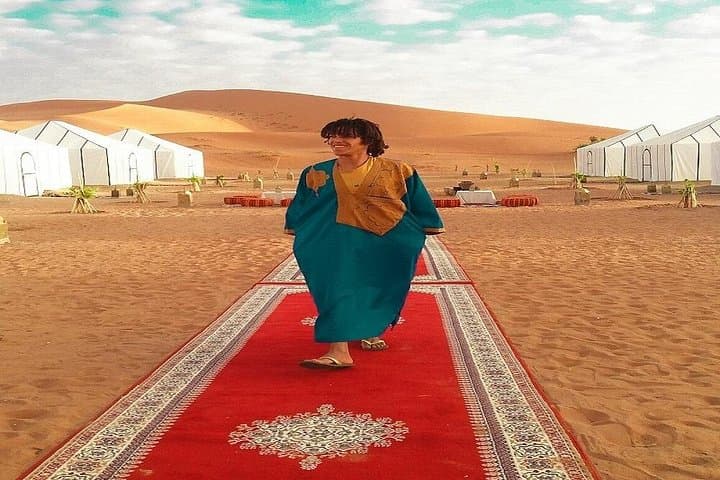
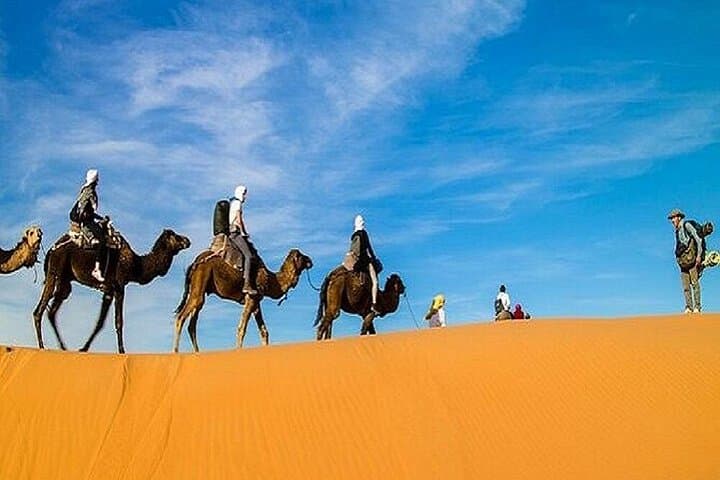
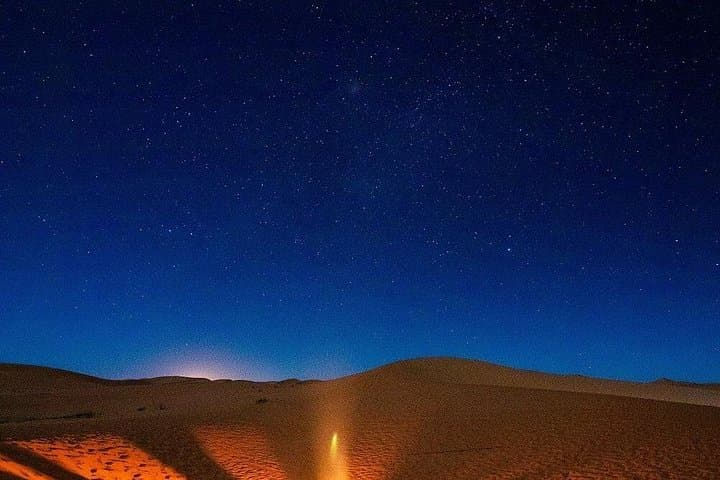
This itinerary threads natural history and human culture. The Middle Atlas is volcanic in origin, its cedar groves home to Barbary macaques; further south, ancient caravan corridors meet the Sahara’s sand seas. At Merzouga you trade engine hum for the sway of camelback, arriving at a private tented camp where dinner, drumming, and clear desert skies frame the night.
Expect a modest amount of walking—short dune climbs at sunset and sunrise—but most travel is by comfortable vehicle across varied terrain. Cultural stops include the Valley of the Roses and a cooperative demonstrating rose-water distillation, an industry shaped by local climate and centuries of trade.
Practical guidance: book layered clothing for hot days and cool nights, carry at least 2 liters of water, and plan camera batteries for long, golden-hour shots. If you’re sensitive to motion, request a front-seat in the minivan; road segments through Tizi n’Tichka are high-elevation and winding. The camp provides basic private amenities, but don’t expect full hotel services—this is comfort in the desert, not a city resort. Arrive with modest expectations and leave with desert light burned into memory.
easy.
2 days.
Light activity: suitable for most fitness levels; requires short walks on sand and long periods seated in vehicle
Camel rides are gentle and guided; dune walking involves short climbs and soft sand—good mobility helps but no special fitness is required.
The advertised camp offers private tents with a washbasin and shower/toilet facilities, though water pressure and hot water can be limited.
Dinner on night one and breakfast on day two are included; lunches during transit are usually at local restaurants and not included.
The tour notes accessibility options and infants can use strollers; contact the operator about specific mobility needs before booking.
The route follows parts of historic trans-Saharan corridors used for salt and spice trade; local Berber communities have shaped settlement and agricultural practices for centuries.
Water is scarce—pack out waste when possible and support local cooperatives for sustainable income; stick to marked tracks to protect fragile dune vegetation.
Fez to Anywhere operates guided outdoor trips and adventures with an emphasis on safety, stewardship, and memorable experiences.
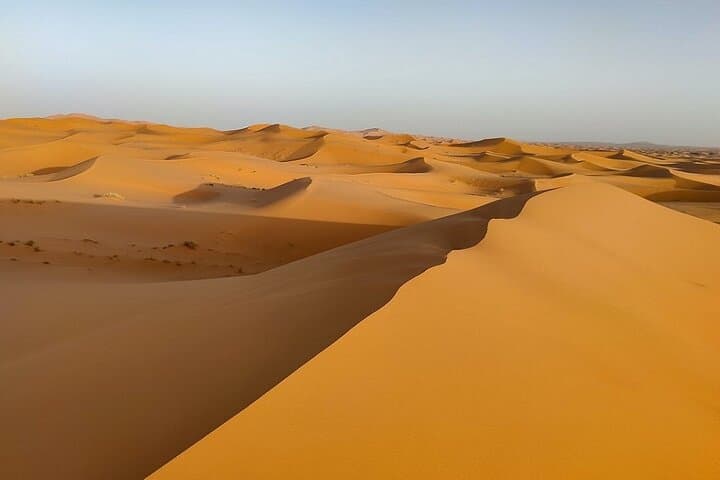
You climb into the minivan at dawn in Fes and the road unspools—cedar forests, a scatter of Berber villages, then the Middle Atlas rising and falling like a slow drumbeat. By late afternoon the asphalt gives way to ochre tracks and the dunes of Erg Chebbi appear on the horizon, a living landscape of wind-sculpted ridges that demand to be walked.
You climb into the minivan at dawn in Fes and the road unspools—cedar forests, a scatter of Berber villages, then the Middle Atlas rising and falling like a slow drumbeat. By late afternoon the asphalt gives way to ochre tracks and the dunes of Erg Chebbi appear on the horizon, a living landscape of wind-sculpted ridges that demand to be walked.
This itinerary threads natural history and human culture. The Middle Atlas is volcanic in origin, its cedar groves home to Barbary macaques; further south, ancient caravan corridors meet the Sahara’s sand seas. At Merzouga you trade engine hum for the sway of camelback, arriving at a private tented camp where dinner, drumming, and clear desert skies frame the night.
Expect a modest amount of walking—short dune climbs at sunset and sunrise—but most travel is by comfortable vehicle across varied terrain. Cultural stops include the Valley of the Roses and a cooperative demonstrating rose-water distillation, an industry shaped by local climate and centuries of trade.
Practical guidance: book layered clothing for hot days and cool nights, carry at least 2 liters of water, and plan camera batteries for long, golden-hour shots. If you’re sensitive to motion, request a front-seat in the minivan; road segments through Tizi n’Tichka are high-elevation and winding. The camp provides basic private amenities, but don’t expect full hotel services—this is comfort in the desert, not a city resort. Arrive with modest expectations and leave with desert light burned into memory.