THE ADVENTURE COLLECTIVE® · Independent discovery and booking for outdoor travel

Three days from Fez to Merzouga trace cedar forests, the Ziz Valley, Todra Gorge and the dunes of Erg Chebbi. Expect long drives, a camel trek, an overnight desert camp and a taste of Berber culture.
Three days from Fez to Merzouga trace cedar forests, the Ziz Valley, Todra Gorge and the dunes of Erg Chebbi. Expect long drives, a camel trek, an overnight desert camp and a taste of Berber culture.
A pale dawn peels back over the red roofs of Fes as your vehicle slips toward the Middle Atlas, the road folding through cedar forests and across plateaus until the land thins into the rippled bronze of Erg Chebbi. By late afternoon camels wait at the dune base; their slow, rhythmic sway carries you up wind-scoured ridges to a camp where the desert opens a wide, quiet sky and the sands seem to breathe.
Verified experiences and guided adventures in the surrounding area.
Operated by Fes Sahara Tours · Merzouga, Drâa-Tafilalet
A pale dawn peels back over the red roofs of Fes as your vehicle slips toward the Middle Atlas, the road folding through cedar forests and across plateaus until the land thins into the rippled bronze of Erg Chebbi. By late afternoon camels wait at the dune base; their slow, rhythmic sway carries you up wind-scoured ridges to a camp where the desert opens a wide, quiet sky and the sands seem to breathe.
This route follows old caravan corridors and modern highways: Ifrane’s alpine grid, the cedar groves of Azrou, the Ziz Valley’s palm-lined oases and the nomadic edges of Merzouga. Geologically the Sahara here is young sand blown from pale riverbeds and basins; Todra and Dades gorges on the return leg reveal ancient river incision through limestone and red sandstone. Culturally the journey threads Berber villages, Khamlia’s Gnawa music, and Aït Ben Haddou’s earthen kasbahs—UNESCO reminders of the region’s role in trans-Saharan trade and film history.
Expect long drives punctuated by short hikes, a sunrise camel ride, an overnight in a traditional tent, and chances to meet local guides and musicians. Nights are cold even after hot days; stars here feel close enough to touch.
Practical guidance: pack layers, sun protection and a sturdy pair of shoes for walking on sand and gravel. Hydrate on the road—water and two breakfasts/dinners are included. Roads over Tizi n’Tichka can be steep and, in winter, snowy; confirm pickup times and health advisories. For first-time visitors, move slowly on arrival days to acclimate to heat and dust.
moderate.
3 days (approx. 72 hours).
Suitable for travelers in average fitness: able to handle long vehicle transfers, short camel rides and walking on uneven sand and gravel.
Yes—this tour includes two dinners and two breakfasts, plus water; lunches are usually arranged at local restaurants along the route.
Camel rides are short and gentle but involve mounting/dismounting and balancing on shifting sand; basic mobility is sufficient.
Yes—the itinerary is a loop that picks up and drops off at hotels or riads in Fez as specified at booking.
Children are welcome but must be supervised; travelers with heart or serious mobility issues should consult the operator—camel rides and long drives may be unsuitable.
The route follows historic caravan roads and passes Aït Ben Haddou, an earthen kasbah complex tied to trans-Saharan trade and later film production.
Water is scarce and the dunes are sensitive—stick to trails, avoid driving on fragile interdune vegetation and support local guides who practice low-impact tourism.
Fes Sahara Tours operates guided outdoor trips and adventures with an emphasis on safety, stewardship, and memorable experiences.
A pale dawn peels back over the red roofs of Fes as your vehicle slips toward the Middle Atlas, the road folding through cedar forests and across plateaus until the land thins into the rippled bronze of Erg Chebbi. By late afternoon camels wait at the dune base; their slow, rhythmic sway carries you up wind-scoured ridges to a camp where the desert opens a wide, quiet sky and the sands seem to breathe.
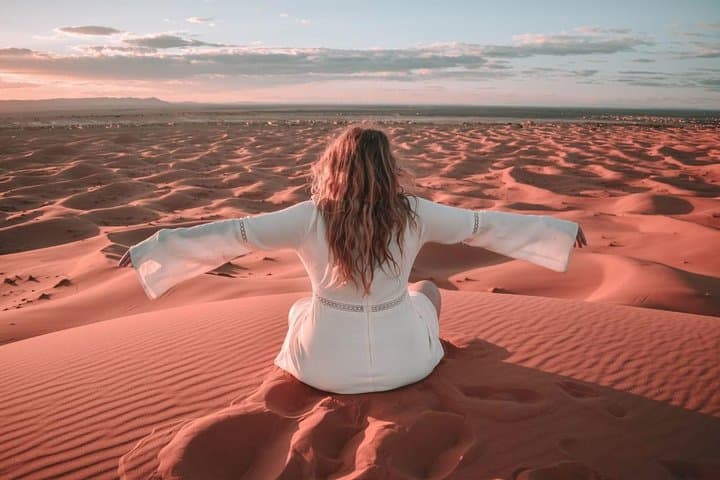
A pale dawn peels back over the red roofs of Fes as your vehicle slips toward the Middle Atlas, the road folding through cedar forests and across plateaus until the land thins into the rippled bronze of Erg Chebbi. By late afternoon camels wait at the dune base; their slow, rhythmic sway carries you up wind-scoured ridges to a camp where the desert opens a wide, quiet sky and the sands seem to breathe.
This route follows old caravan corridors and modern highways: Ifrane’s alpine grid, the cedar groves of Azrou, the Ziz Valley’s palm-lined oases and the nomadic edges of Merzouga. Geologically the Sahara here is young sand blown from pale riverbeds and basins; Todra and Dades gorges on the return leg reveal ancient river incision through limestone and red sandstone. Culturally the journey threads Berber villages, Khamlia’s Gnawa music, and Aït Ben Haddou’s earthen kasbahs—UNESCO reminders of the region’s role in trans-Saharan trade and film history.
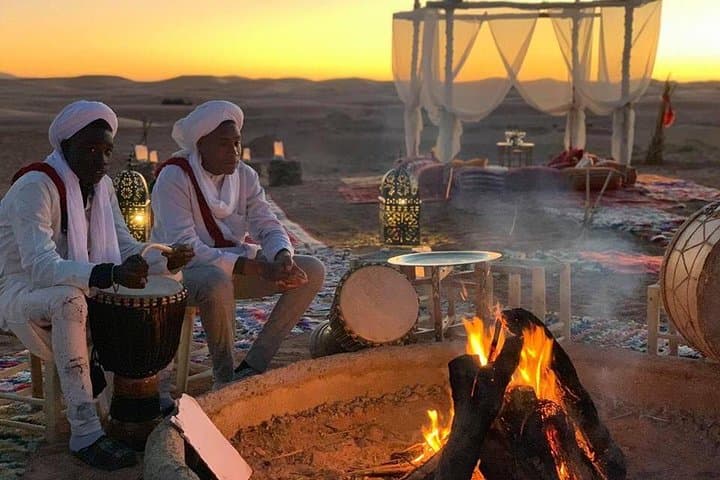
Expect long drives punctuated by short hikes, a sunrise camel ride, an overnight in a traditional tent, and chances to meet local guides and musicians. Nights are cold even after hot days; stars here feel close enough to touch.
Practical guidance: pack layers, sun protection and a sturdy pair of shoes for walking on sand and gravel. Hydrate on the road—water and two breakfasts/dinners are included. Roads over Tizi n’Tichka can be steep and, in winter, snowy; confirm pickup times and health advisories. For first-time visitors, move slowly on arrival days to acclimate to heat and dust.