THE ADVENTURE COLLECTIVE® · Independent discovery and booking for outdoor travel

Cross the Atlas, ride camels at sunrise, and sleep beneath Saharan stars on a compact 4-day circuit from Fes to Marrakech. This itinerary pairs Erg Chebbi dune time with canyon walks, kasbah visits, and Berber hospitality.
Cross the Atlas, ride camels at sunrise, and sleep beneath Saharan stars on a compact 4-day circuit from Fes to Marrakech. This itinerary pairs Erg Chebbi dune time with canyon walks, kasbah visits, and Berber hospitality.
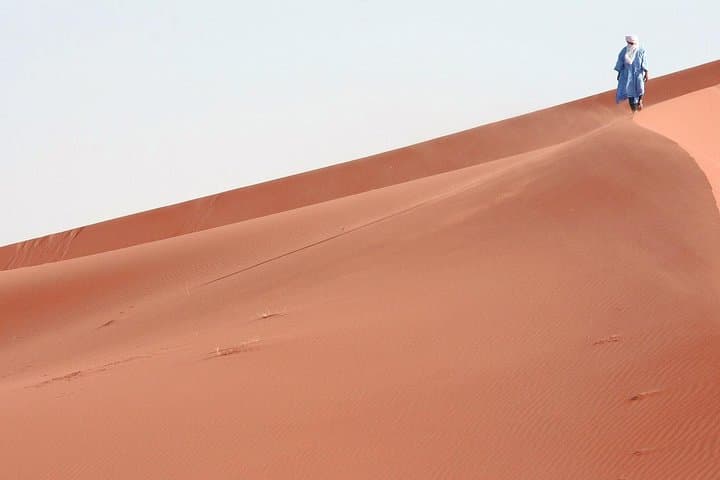
Before dawn the dunes of Erg Chebbi look like an open ocean of sand—camel silhouettes cut the horizon while the first pale light throws the crests into relief.
Verified experiences and guided adventures in the surrounding area.
Operated by Open Travel - Day Tours · Merzouga, Drâa-Tafilalet
Before dawn the dunes of Erg Chebbi look like an open ocean of sand—camel silhouettes cut the horizon while the first pale light throws the crests into relief.
This four-day route threads the Middle Atlas cedar forests and apple orchards around Midelt, drops into the fossil-rich plains of Erfoud, and spends two nights at the feet of Merzouga’s big dunes. Geologically the trip contrasts folded, schist-strewn highlands of the Atlas with wind-sculpted erg dunes formed from Pleistocene river deposits; culturally it follows old caravan roads where kasbahs like Aït Ben Haddou still mark trade and film histories.
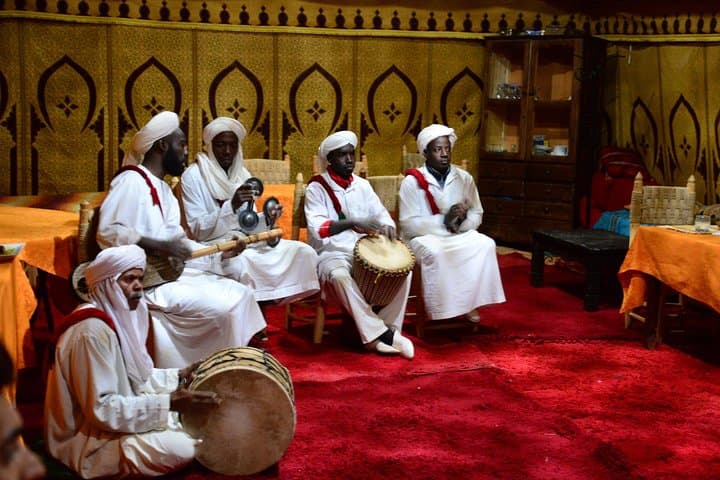
Travelers visit a donkey market in Rissani, walk palm groves, and peer into the narrow slot of Todra Gorge—places where Berber hospitality is practical and direct: mint tea offered after a long drive, tents warmed by stoves at night. The camel trek at sunrise is short but iconic; the long drives between sights mean you’ll trade sustained hiking for layered landscapes and frequent stops.
Practical guidance: start days early to avoid desert heat, carry at least 2–3 liters of water, and wear closed shoes for dune edges and rocky gorges. Nights can drop sharply in temperature so pack insulating layers. Respect private and nomadic communities—ask before photographing and accept tea invitations as cultural exchanges. The route is private-transport friendly and suitable for travelers in average fitness who can tolerate several hours in a vehicle each day.
Expect simple riads, one or two nights under desert camp blankets, and a steady rhythm of road, sand, and Kasbahs—an efficient cross-section of Morocco’s southern landscapes.
moderate.
4 days.
Suitable for travelers in average fitness who can handle several hours in a vehicle each day plus short walks, camel rides and modest hikes.
No — camel rides are typically short and optional segments; you can walk or stay by the camp if you prefer.
Expect one or two nights in a traditional desert camp with blankets and shared or private berber-style tents depending on booking options.
Most routes include breakfasts and dinners as noted in the itinerary; bring snacks for long drives and any special dietary needs.
Walks in Todra and Dades are generally short to moderate on uneven terrain; basic mobility and good shoes are sufficient.
The route follows historic caravan corridors between the Sahara and Marrakech; Aït Ben Haddou served as a fortified trading stop where kasbahs clustered along the Ounila valley.
The Sahara’s fragile soils and limited water require low-impact travel—pack out waste, minimize nighttime light, and support local guides and family-run riads.
Open Travel - Day Tours operates guided outdoor trips and adventures with an emphasis on safety, stewardship, and memorable experiences.
Before dawn the dunes of Erg Chebbi look like an open ocean of sand—camel silhouettes cut the horizon while the first pale light throws the crests into relief.
Before dawn the dunes of Erg Chebbi look like an open ocean of sand—camel silhouettes cut the horizon while the first pale light throws the crests into relief.
This four-day route threads the Middle Atlas cedar forests and apple orchards around Midelt, drops into the fossil-rich plains of Erfoud, and spends two nights at the feet of Merzouga’s big dunes. Geologically the trip contrasts folded, schist-strewn highlands of the Atlas with wind-sculpted erg dunes formed from Pleistocene river deposits; culturally it follows old caravan roads where kasbahs like Aït Ben Haddou still mark trade and film histories.
Travelers visit a donkey market in Rissani, walk palm groves, and peer into the narrow slot of Todra Gorge—places where Berber hospitality is practical and direct: mint tea offered after a long drive, tents warmed by stoves at night. The camel trek at sunrise is short but iconic; the long drives between sights mean you’ll trade sustained hiking for layered landscapes and frequent stops.
Practical guidance: start days early to avoid desert heat, carry at least 2–3 liters of water, and wear closed shoes for dune edges and rocky gorges. Nights can drop sharply in temperature so pack insulating layers. Respect private and nomadic communities—ask before photographing and accept tea invitations as cultural exchanges. The route is private-transport friendly and suitable for travelers in average fitness who can tolerate several hours in a vehicle each day.
Expect simple riads, one or two nights under desert camp blankets, and a steady rhythm of road, sand, and Kasbahs—an efficient cross-section of Morocco’s southern landscapes.