THE ADVENTURE COLLECTIVE® · Independent discovery and booking for outdoor travel

Cross the Middle Atlas into the Sahara on a compact 4-day route from Fes to Marrakech. Expect cedar forests, Erg Chebbi’s golden dunes, Todra’s limestone gorges, and the UNESCO ksar of Ait Benhaddou—all with guided logistics and overnight tents and hotels.
Cross the Middle Atlas into the Sahara on a compact 4-day route from Fes to Marrakech. Expect cedar forests, Erg Chebbi’s golden dunes, Todra’s limestone gorges, and the UNESCO ksar of Ait Benhaddou—all with guided logistics and overnight tents and hotels.
Early light across Erg Chebbi turns sand into a banded landscape of ochre and gold; the wind draws new ridges each hour and camels cut a steady silhouette toward the horizon. Travelers on the four-day route from Fes to Marrakech spend those hours moving through the Middle Atlas, past cedar forests and the long shoulders of the Ziz Valley before arriving at Merzouga and the wide Sahara beyond.
Verified experiences and guided adventures in the surrounding area.
Operated by Khamlia Morocco tours · Merzouga, Drâa-Tafilalet
Early light across Erg Chebbi turns sand into a banded landscape of ochre and gold; the wind draws new ridges each hour and camels cut a steady silhouette toward the horizon. Travelers on the four-day route from Fes to Marrakech spend those hours moving through the Middle Atlas, past cedar forests and the long shoulders of the Ziz Valley before arriving at Merzouga and the wide Sahara beyond.
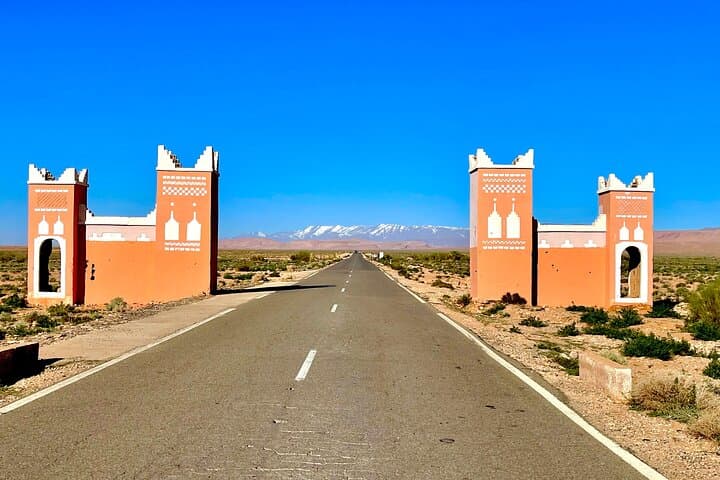
This trip traces ancient caravan corridors and modern trade routes: the Ziz was long a lifeline for caravans from sub-Saharan Africa, and Ait Benhaddou—a fortified ksar—stands as a living reminder of trans-Saharan commerce and southern Moroccan clay architecture. Geologically, the tour moves from folded Atlas ranges to fluvial valleys and finally to wind-sculpted erg dunes; the Todra Gorges reveal limestone walls polished by flash floods, while the Valley of Roses is an alluvial corridor shaped by seasonal runoff.
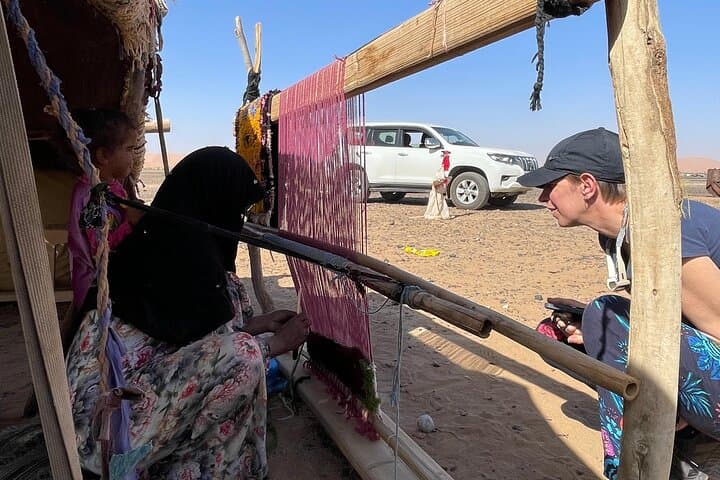
Cultural moments are compact and vibrant: Gnawa music in Khamlia, nomad visits near Merzouga, and Berber hospitality at desert camps. Practical reality: expect long driving days (several 100 km stretches), brief guided walks at gorges and kasbahs, a 4x4 loop, and a camel-led dune approach to camp. Bring layered clothing for hot daytime sun and cold desert nights, carry 2–3 liters of water per day, sturdy closed-toe shoes for rocky sections, and a small daypack for sun protection and camera gear. Timing visits for sunrise or sunset on the dunes rewards sightlines and cooler conditions. This tour is experiential—centered on landscape transitions, simple desert life, and cinematic cultural stops—designed for travelers who want a compact cross-section of Morocco’s south with the practicality of guided logistics and overnight comfort in both hotels and traditional desert camps.
moderate.
4 days (travel-heavy; daily travel 4–10 hours).
Suitable for travelers in light-to-moderate fitness — able to handle camel rides, short walks, and long vehicle transfers.
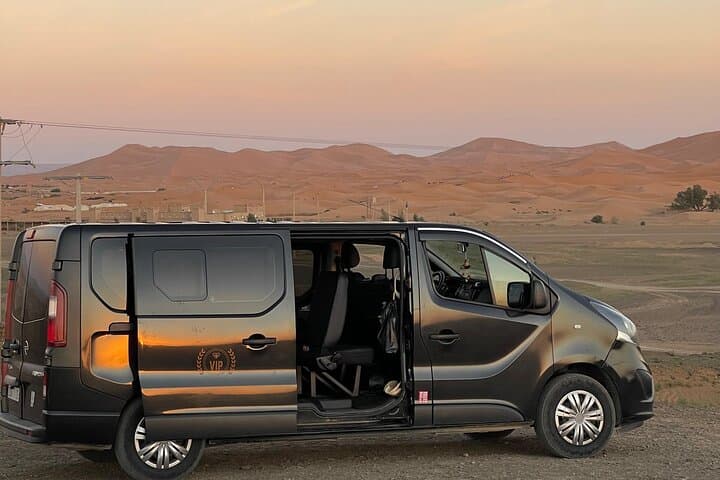
Expect several long transfers—some days include 4–6 hours of driving, others up to 8–10 hours with stops; the itinerary balances travel with key visits.
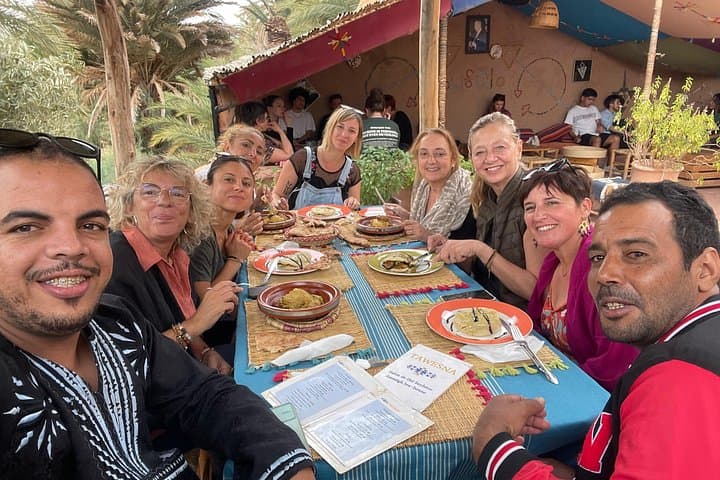
Camps are traditional desert-style with mattresses and blankets; many provide communal dining and portable toilets—standards vary but include dinner and breakfast.
Camel rides to the camp are typically included for the dune approach and return by camel or vehicle is arranged the next morning; confirm with the operator for alternatives.
The tour lists as family-friendly and wheelchair/stroller accessible in parts, but camel rides and some gorges require mobility; check specifics with the operator if you have limited mobility.
The route follows historic caravan and trade corridors; Ait Benhaddou is a clay ksar on the former trans-Saharan route and now a UNESCO site.
The Sahara’s fragile ecosystems depend on limited water and responsible tourism; avoid off-track driving on dunes and minimize single-use plastics.
Khamlia Morocco tours operates guided outdoor trips and adventures with an emphasis on safety, stewardship, and memorable experiences.
Early light across Erg Chebbi turns sand into a banded landscape of ochre and gold; the wind draws new ridges each hour and camels cut a steady silhouette toward the horizon. Travelers on the four-day route from Fes to Marrakech spend those hours moving through the Middle Atlas, past cedar forests and the long shoulders of the Ziz Valley before arriving at Merzouga and the wide Sahara beyond.
Early light across Erg Chebbi turns sand into a banded landscape of ochre and gold; the wind draws new ridges each hour and camels cut a steady silhouette toward the horizon. Travelers on the four-day route from Fes to Marrakech spend those hours moving through the Middle Atlas, past cedar forests and the long shoulders of the Ziz Valley before arriving at Merzouga and the wide Sahara beyond.
This trip traces ancient caravan corridors and modern trade routes: the Ziz was long a lifeline for caravans from sub-Saharan Africa, and Ait Benhaddou—a fortified ksar—stands as a living reminder of trans-Saharan commerce and southern Moroccan clay architecture. Geologically, the tour moves from folded Atlas ranges to fluvial valleys and finally to wind-sculpted erg dunes; the Todra Gorges reveal limestone walls polished by flash floods, while the Valley of Roses is an alluvial corridor shaped by seasonal runoff.
Cultural moments are compact and vibrant: Gnawa music in Khamlia, nomad visits near Merzouga, and Berber hospitality at desert camps. Practical reality: expect long driving days (several 100 km stretches), brief guided walks at gorges and kasbahs, a 4x4 loop, and a camel-led dune approach to camp. Bring layered clothing for hot daytime sun and cold desert nights, carry 2–3 liters of water per day, sturdy closed-toe shoes for rocky sections, and a small daypack for sun protection and camera gear. Timing visits for sunrise or sunset on the dunes rewards sightlines and cooler conditions. This tour is experiential—centered on landscape transitions, simple desert life, and cinematic cultural stops—designed for travelers who want a compact cross-section of Morocco’s south with the practicality of guided logistics and overnight comfort in both hotels and traditional desert camps.