THE ADVENTURE COLLECTIVE® · Independent discovery and booking for outdoor travel

Cross the Erg Chebbi dunes by camel, sleep under a campfire-lit sky and drive the High Atlas to Aït Ben Haddou on this three-day Fes-to-Marrakech loop. Expect long scenic drives, dramatic sandscapes, and Berber hospitality.
Cross the Erg Chebbi dunes by camel, sleep under a campfire-lit sky and drive the High Atlas to Aït Ben Haddou on this three-day Fes-to-Marrakech loop. Expect long scenic drives, dramatic sandscapes, and Berber hospitality.
A wind-swept ridge of sand rises before the group as the sun lowers into the Sahara—orange light pooling across Erg Chebbi’s high dunes while camels shift and creak, patient under the saddle. The first day begins with a long, scenic drive from Fes across the Middle Atlas (about 7–8 hours of road-time with stops), through cedar forests and Ziz Valley palms, closing on Merzouga where the dunes take over.
Verified experiences and guided adventures in the surrounding area.
Operated by Berber Camp Merzouga · Merzouga, Drâa-Tafilalet
A wind-swept ridge of sand rises before the group as the sun lowers into the Sahara—orange light pooling across Erg Chebbi’s high dunes while camels shift and creak, patient under the saddle. The first day begins with a long, scenic drive from Fes across the Middle Atlas (about 7–8 hours of road-time with stops), through cedar forests and Ziz Valley palms, closing on Merzouga where the dunes take over.
This route threads centuries of history: caravan corridors that once moved salt and dates, ksour and kasbahs built from local clay, and modern film studios around Ouarzazate. Geologically Erg Chebbi is a sea of quartz-rich sand shaped by dominant northerly winds into dunes that reach roughly 100–150 meters—moving dunes that demand respect at sunrise and dusk. Culturally, the tour mixes Berber hospitality, Gnawa and Berber music around the campfire, and market culture in Rissani’s souk.
Practical guidance: plan for long drives and short walks on soft sand—camel transfers commonly last 45–90 minutes between camp and Merzouga. Temperatures swing: hot by day, cold at night; layers and sun protection are essential. Expect basic-to-luxury desert camps, communal meals, and optional sandboarding. Mobility limitations and serious spine or heart conditions may make camel riding uncomfortable.
Timing your visit for spring or fall keeps heat manageable and makes sunrise/sunset photography rewarding. Bring cash for local purchases, treat the dunes gently—leave no trace—and arrive ready to swap city noise for a wide, starlit horizon.
moderate.
3 days.
Suitable for travelers in reasonable health who can handle long drives, short hikes on sand, and a camel ride; not strenuous but endurance helps.
Typical camel treks from the Merzouga edge into an Erg Chebbi camp last about 45–90 minutes each way, depending on the camp’s dune location.
Camps range from basic tents with shared facilities to luxury tents with private bathrooms; most provide blankets but bring a warm layer for night chill.
The tour involves mounting camels and walking on sand; travelers with serious back, spine, or cardiovascular issues should consult a physician and the operator before booking.
Tipping is customary—small amounts for drivers, guides, and camel handlers are appreciated; carry small dirham notes for this purpose.
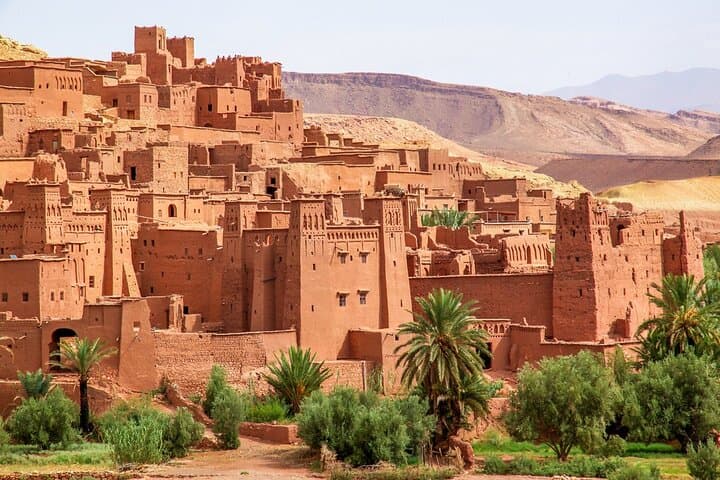
This route follows historic trans-Sahara trade corridors and passes fortified ksour; Aït Ben Haddou is a UNESCO-listed example of souk and kasbah architecture used for regional defense and trade.
The Erg Chebbi ecosystem is fragile—stick to established paths, avoid driving on dunes, minimize waste, and choose camps that follow local water and waste practices to reduce impact.
Berber Camp Merzouga operates guided outdoor trips and adventures with an emphasis on safety, stewardship, and memorable experiences.
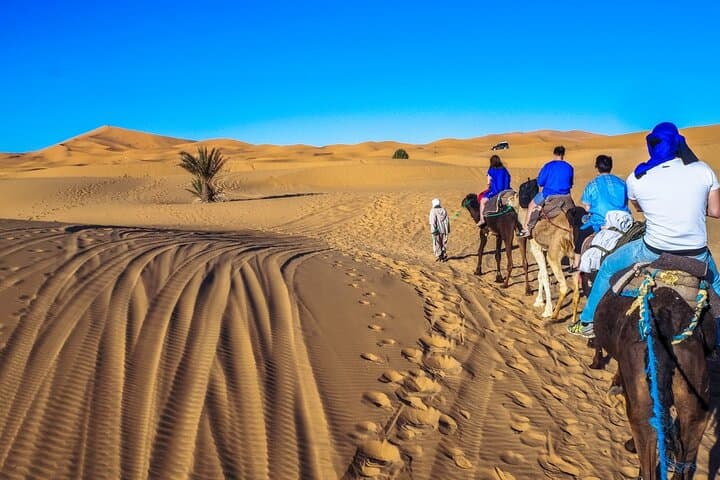
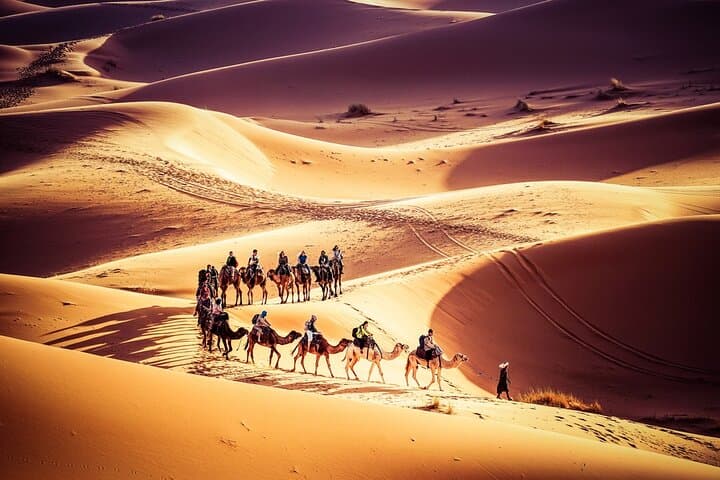
A wind-swept ridge of sand rises before the group as the sun lowers into the Sahara—orange light pooling across Erg Chebbi’s high dunes while camels shift and creak, patient under the saddle. The first day begins with a long, scenic drive from Fes across the Middle Atlas (about 7–8 hours of road-time with stops), through cedar forests and Ziz Valley palms, closing on Merzouga where the dunes take over.
A wind-swept ridge of sand rises before the group as the sun lowers into the Sahara—orange light pooling across Erg Chebbi’s high dunes while camels shift and creak, patient under the saddle. The first day begins with a long, scenic drive from Fes across the Middle Atlas (about 7–8 hours of road-time with stops), through cedar forests and Ziz Valley palms, closing on Merzouga where the dunes take over.
This route threads centuries of history: caravan corridors that once moved salt and dates, ksour and kasbahs built from local clay, and modern film studios around Ouarzazate. Geologically Erg Chebbi is a sea of quartz-rich sand shaped by dominant northerly winds into dunes that reach roughly 100–150 meters—moving dunes that demand respect at sunrise and dusk. Culturally, the tour mixes Berber hospitality, Gnawa and Berber music around the campfire, and market culture in Rissani’s souk.
Practical guidance: plan for long drives and short walks on soft sand—camel transfers commonly last 45–90 minutes between camp and Merzouga. Temperatures swing: hot by day, cold at night; layers and sun protection are essential. Expect basic-to-luxury desert camps, communal meals, and optional sandboarding. Mobility limitations and serious spine or heart conditions may make camel riding uncomfortable.
Timing your visit for spring or fall keeps heat manageable and makes sunrise/sunset photography rewarding. Bring cash for local purchases, treat the dunes gently—leave no trace—and arrive ready to swap city noise for a wide, starlit horizon.