THE ADVENTURE COLLECTIVE® · Independent discovery and booking for outdoor travel

Explore the heart of Fes el-Bali with a licensed guide on a 3–4 hour walking tour. Visit the Blue Gate, Bou Inania Medersa, Nejjarine Museum and the Chouara tanneries while learning about centuries-old crafts and local life.
Explore the heart of Fes el-Bali with a licensed guide on a 3–4 hour walking tour. Visit the Blue Gate, Bou Inania Medersa, Nejjarine Museum and the Chouara tanneries while learning about centuries-old crafts and local life.
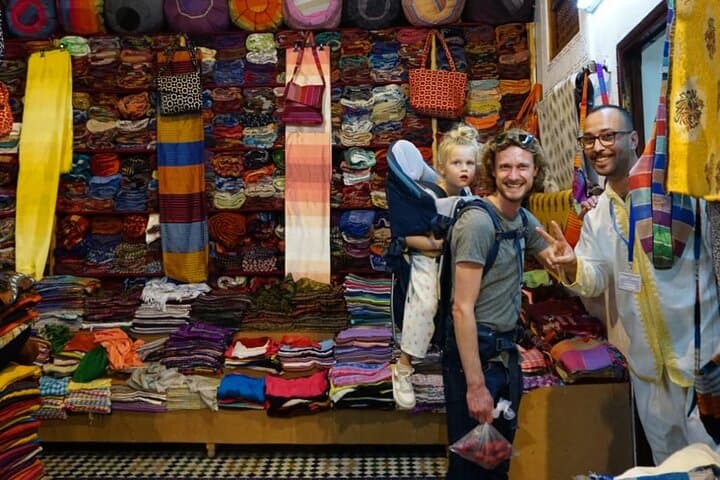
You step through Bab Boujloud — the Blue Gate — and the medina folds around you: narrow lanes press in, voices trade in Arabic, French and Spanish, and the air carries leather, spices and citrus.
Verified experiences and guided adventures in the surrounding area.
Operated by Fancy Moroccan Trips · Fes, Fès-Meknès
You step through Bab Boujloud — the Blue Gate — and the medina folds around you: narrow lanes press in, voices trade in Arabic, French and Spanish, and the air carries leather, spices and citrus.
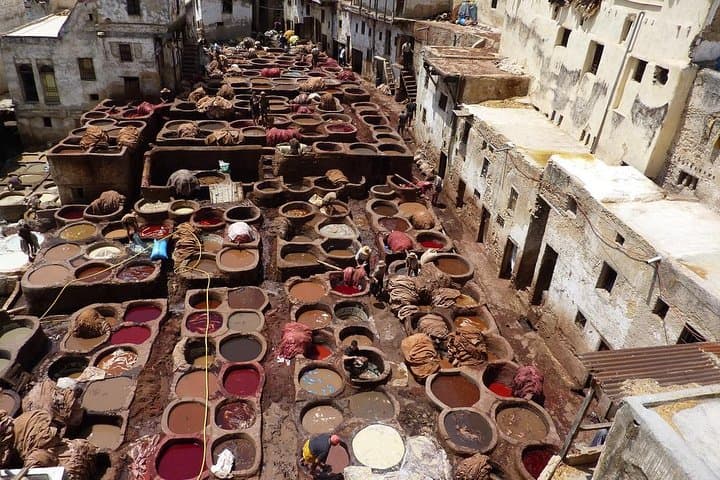
This half-day guided tour threads the core highlights of Fes el-Bali, the old medina whose winding streets date to the 9th century and whose urban fabric is protected as a UNESCO World Heritage Site. Your guide will interpret Bou Inania Medersa’s intricate zellij tile and woodwork, point out the timbered balconies and the carved stucco that mark the city’s religious and artisan history, and lead you to the Nejjarine Museum and the elevated views above the Chouara tanneries where vats of dyework create a patchwork of color.
Geologically the city sits on a low alluvial plain fed by the Oued Fes, with the Middle Atlas foothills rising to the north and influencing local building materials and climate. Culturally, Fes remains Morocco’s craft capital — metalworkers, woodcarvers and tannery workers practice centuries-old techniques in the tight lanes.
Practical guidance: this is a walking tour of roughly 3–4 hours on uneven stone and narrow alleys; closed-toe shoes and a head covering in religious sites are recommended. Carry dirhams for small purchases, drink water frequently during warm months, and be ready to haggle politely in the souks. A licensed local guide will add context, navigate shortcuts and introduce quieter workshops off the main routes.
easy.
3–4 hours.
Suitable for most fitness levels; requires comfortable walking and standing for up to an hour at stops.
The tour runs about 3–4 hours at a relaxed walking pace with several short stops for explanations and photo opportunities.
Some stops are exterior or narrated from outside; admission to specific monuments may not be included—confirm at booking if you want entry covered.
Yes; the itinerary is classified as easy and suitable for most ages, but there are many steps and narrow passages that may be challenging for limited mobility.
Local guides commonly speak English, French, Spanish and Italian; request language preferences when booking to ensure a compatible guide.
Fes was established in the 8th–9th centuries and its medina evolved as a center for Islamic learning and crafts; its dense artisan quarters reflect centuries of guild-based production.
The medina faces pressure from tourism and urban wear; support responsible shops, avoid purchasing endangered materials, and follow guides’ advice to respect fragile architecture.
Fancy Moroccan Trips operates guided outdoor trips and adventures with an emphasis on safety, stewardship, and memorable experiences.

You step through Bab Boujloud — the Blue Gate — and the medina folds around you: narrow lanes press in, voices trade in Arabic, French and Spanish, and the air carries leather, spices and citrus.
You step through Bab Boujloud — the Blue Gate — and the medina folds around you: narrow lanes press in, voices trade in Arabic, French and Spanish, and the air carries leather, spices and citrus.
This half-day guided tour threads the core highlights of Fes el-Bali, the old medina whose winding streets date to the 9th century and whose urban fabric is protected as a UNESCO World Heritage Site. Your guide will interpret Bou Inania Medersa’s intricate zellij tile and woodwork, point out the timbered balconies and the carved stucco that mark the city’s religious and artisan history, and lead you to the Nejjarine Museum and the elevated views above the Chouara tanneries where vats of dyework create a patchwork of color.
Geologically the city sits on a low alluvial plain fed by the Oued Fes, with the Middle Atlas foothills rising to the north and influencing local building materials and climate. Culturally, Fes remains Morocco’s craft capital — metalworkers, woodcarvers and tannery workers practice centuries-old techniques in the tight lanes.
Practical guidance: this is a walking tour of roughly 3–4 hours on uneven stone and narrow alleys; closed-toe shoes and a head covering in religious sites are recommended. Carry dirhams for small purchases, drink water frequently during warm months, and be ready to haggle politely in the souks. A licensed local guide will add context, navigate shortcuts and introduce quieter workshops off the main routes.