THE ADVENTURE COLLECTIVE® · Independent discovery and booking for outdoor travel

Short ferry hop from the Gateway of India leads to Elephanta (Gharapuri), where rock‑cut temples and monumental Shiva reliefs await. This easy half‑day outing combines coastal scenery, medieval stonework and a compact hike up steps and ramps.
Short ferry hop from the Gateway of India leads to Elephanta (Gharapuri), where rock‑cut temples and monumental Shiva reliefs await. This easy half‑day outing combines coastal scenery, medieval stonework and a compact hike up steps and ramps.
The ferry shoves off from the Gateway of India and the city slides away: salt air, gulls circling, and the gray outline of Elephanta rising from the Arabian Sea. On arrival the island’s basalt headland looms—art carved straight from the stone—inviting you up the worn steps toward cool shadowed chambers.
Verified experiences and guided adventures in the surrounding area.
Operated by Triptivo techonologies private limited · Gharapuri (Elephanta Island), Maharashtra
The ferry shoves off from the Gateway of India and the city slides away: salt air, gulls circling, and the gray outline of Elephanta rising from the Arabian Sea. On arrival the island’s basalt headland looms—art carved straight from the stone—inviting you up the worn steps toward cool shadowed chambers.
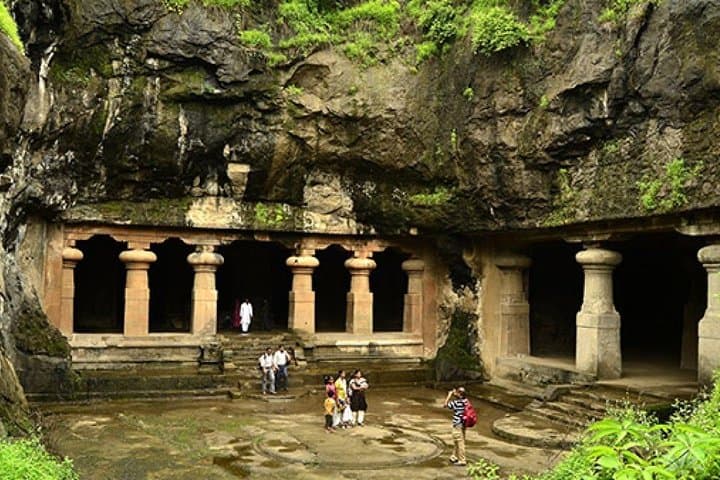
Elephanta, or Gharapuri, preserves rock‑cut temples and large Shaiva sculptures dating roughly to the 6th–8th centuries CE. The caves are cut from solid flood‑basalt flows and arranged in two groups: the main cluster of five Hindu caves with monumental reliefs of Shiva, and a smaller pair of Buddhist alcoves. Portuguese maps from the 16th–17th centuries later recorded the island; today it’s a UNESCO World Heritage Site managed by India’s Archaeological Survey.
Culturally, the site illustrates medieval devotional practice and temple architecture in a coastal context; geologically, the hard basalt retains crisp carving but shows weathering from sea spray. Locals run small stalls and boats; seasonal ferry schedules and holiday crowds shape the visit.
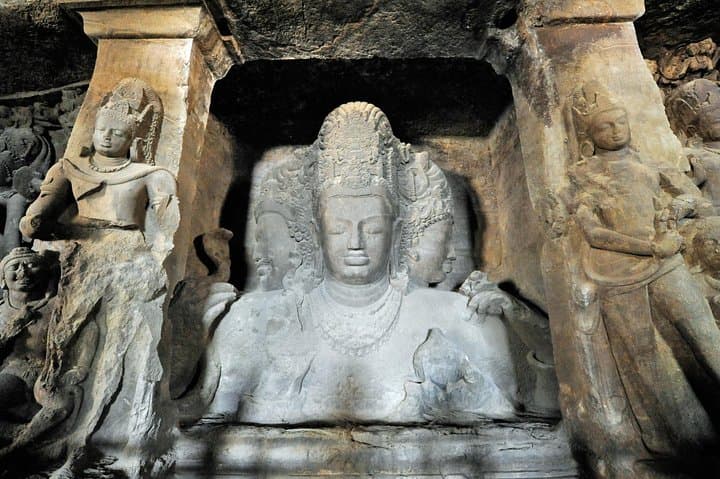
Practically: plan for 3–4 hours including ferry time, wear sturdy shoes—paths are steep and uneven—carry water and sun protection, and give yourself time to climb to the cliff viewpoint for a sweep of Mumbai’s skyline. Audio or guided explanations help untangle iconography: the three‑faced Shiva (Trimurti) is the highlight.
Respect rope barriers and avoid touching fragile sculptures. Early morning ferries cut the heat and the crowds, and winter months offer the clearest views across the harbor.
easy.
3–4 hours.
Light fitness level: able to climb multiple flights of uneven steps and walk short distances on rocky paths.
The public ferry typically takes about 60 minutes round‑trip each way depending on the service; speedboats are faster—check schedules and factor boarding time.
Yes, there is an entry charge to the Elephanta Caves collected on the island; tickets for organized tours sometimes include this fee—confirm before you travel.
Access is limited: steep steps and ramps lead to the main cave, so full wheelchair access is not available; assistance may be needed for limited mobility visitors.
Weekday mornings and the winter months (November–February) tend to be less crowded, with cooler temperatures and clearer harbor views.
Elephanta (Gharapuri) preserves rock‑cut Hindu and Buddhist cave temples carved from basalt between approximately the 6th and 8th centuries CE and was later mapped by Portuguese sailors.
The caves’ basalt sculptures are sensitive to weathering and touch; follow ASI signage, avoid flash photography in enclosed chambers, and minimize litter to protect the site.
Triptivo techonologies private limited operates guided outdoor trips and adventures with an emphasis on safety, stewardship, and memorable experiences.
The ferry shoves off from the Gateway of India and the city slides away: salt air, gulls circling, and the gray outline of Elephanta rising from the Arabian Sea. On arrival the island’s basalt headland looms—art carved straight from the stone—inviting you up the worn steps toward cool shadowed chambers.
The ferry shoves off from the Gateway of India and the city slides away: salt air, gulls circling, and the gray outline of Elephanta rising from the Arabian Sea. On arrival the island’s basalt headland looms—art carved straight from the stone—inviting you up the worn steps toward cool shadowed chambers.
Elephanta, or Gharapuri, preserves rock‑cut temples and large Shaiva sculptures dating roughly to the 6th–8th centuries CE. The caves are cut from solid flood‑basalt flows and arranged in two groups: the main cluster of five Hindu caves with monumental reliefs of Shiva, and a smaller pair of Buddhist alcoves. Portuguese maps from the 16th–17th centuries later recorded the island; today it’s a UNESCO World Heritage Site managed by India’s Archaeological Survey.
Culturally, the site illustrates medieval devotional practice and temple architecture in a coastal context; geologically, the hard basalt retains crisp carving but shows weathering from sea spray. Locals run small stalls and boats; seasonal ferry schedules and holiday crowds shape the visit.
Practically: plan for 3–4 hours including ferry time, wear sturdy shoes—paths are steep and uneven—carry water and sun protection, and give yourself time to climb to the cliff viewpoint for a sweep of Mumbai’s skyline. Audio or guided explanations help untangle iconography: the three‑faced Shiva (Trimurti) is the highlight.
Respect rope barriers and avoid touching fragile sculptures. Early morning ferries cut the heat and the crowds, and winter months offer the clearest views across the harbor.