THE ADVENTURE COLLECTIVE® · Independent discovery and booking for outdoor travel

Pair a night in Fenghuang’s riverside alleys with a full day on Mount Fanjing’s otherworldly summits. This two-day self-guided route combines cultural streetscapes and UNESCO-listed mountain geology for travelers who want big views without technical climbing.
Pair a night in Fenghuang’s riverside alleys with a full day on Mount Fanjing’s otherworldly summits. This two-day self-guided route combines cultural streetscapes and UNESCO-listed mountain geology for travelers who want big views without technical climbing.
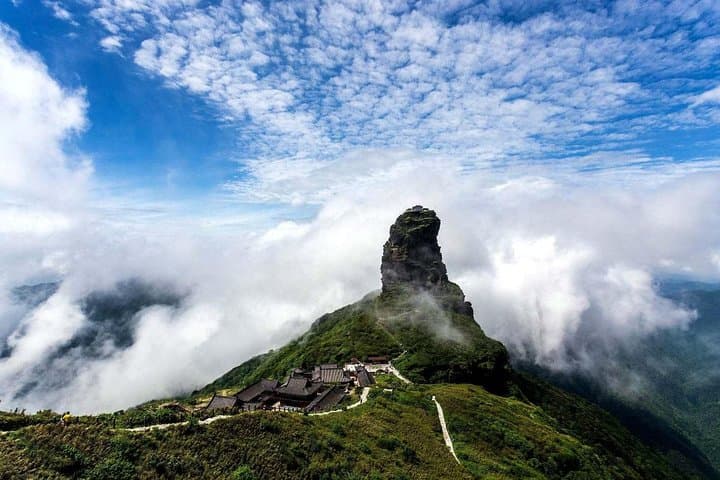
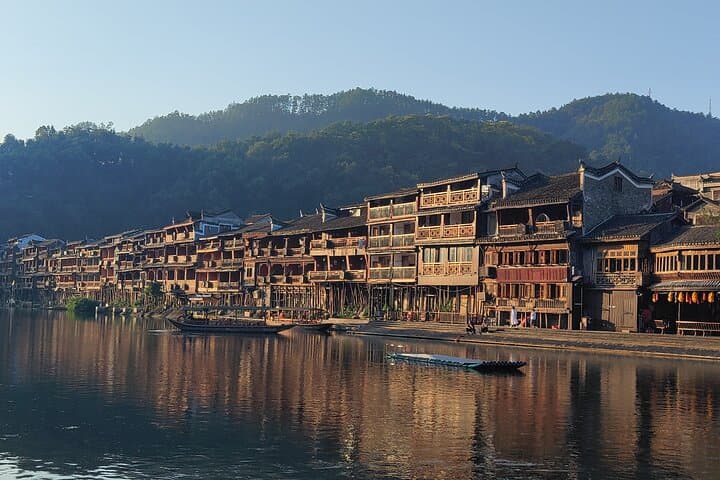
You step off the highway into a river town that keeps its face to the water — stilt houses leaning like old friends over the Tuojiang, lanterns blinking as dusk pools in the alleys. The first night is for Fenghuang: narrow flagstone lanes, wooden balconies, and the quiet of elderly vendors smoking by tea shops. The next morning the road climbs west toward Fanjingshan, where clouds push and peel around thumb-like peaks shaped by ancient seas and relentless weather.
Verified experiences and guided adventures in the surrounding area.
Operated by happychinatours · Fenghuang, Hunan
You step off the highway into a river town that keeps its face to the water — stilt houses leaning like old friends over the Tuojiang, lanterns blinking as dusk pools in the alleys. The first night is for Fenghuang: narrow flagstone lanes, wooden balconies, and the quiet of elderly vendors smoking by tea shops. The next morning the road climbs west toward Fanjingshan, where clouds push and peel around thumb-like peaks shaped by ancient seas and relentless weather.
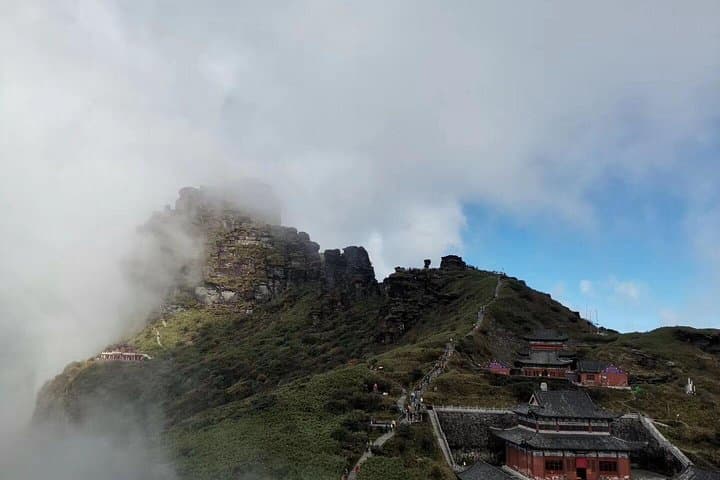
Fanjingshan is both geological oddity and Buddhist retreat. Its metamorphic towers rose long ago and were later carved into sacred landscape by monks who built temples on precarious summits. Fenghuang preserves a different past: Ming and Qing-era architecture, bridges with local legends, and Miao and Tujia crafts still sold from riverside stalls.
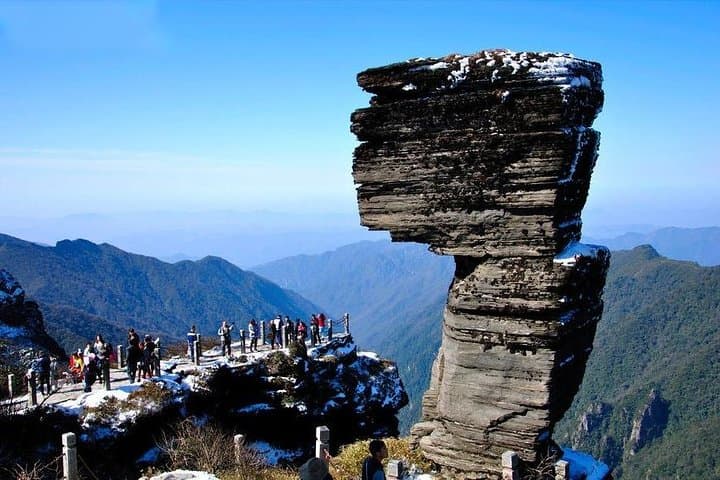
Practically, this itinerary trades intensive trekking for concentrated access: a highway drive links the two sites and a cable car at Fanjingshan saves steep approach, leaving hours for summit platforms, Mushroom Stone, and Cheng En Temple. Expect cool air above 2,400 m, switchback boardwalks, and well-marked paths in the reserve.
Plan for an early departure, bring layered clothing and plenty of water, and budget cash for small vendors in Fenghuang. Respect temple etiquette, arrive at popular viewpoints before midday for clearer light, and allow time to wander Fenghuang’s alleys — that’s where the trip’s slower, human stories live.
moderate.
2 days.
Moderate fitness: able to handle stair sections, short steep walks and several hours on feet in a day.
Expect roughly 2–2.5 hours each way by private car (around 120–125 km); roads are mostly highway with rural sections near the reserve.
Yes — the South Route uses a park bus and a cable car to the summit area; trails and boardwalks require no technical climbing skills.
Drivers typically have translation apps and support teams; however, fluent English may be limited at remote sites, so basic phrases or a translator app are useful.
Yes — the itinerary is designed for a relaxed night in Fenghuang and a full day at Fanjingshan, but expect early starts and significant time in transit.
Fenghuang preserves Ming and Qing architectural layouts and local Miao and Tujia cultural traditions; Fanjingshan has been a Buddhist pilgrimage site with temples dating back centuries.
Fanjingshan is a UNESCO World Heritage site and biosphere reserve—stay on marked paths, avoid disturbing wildlife, and leave no trace in fragile alpine zones.
happychinatours operates guided outdoor trips and adventures with an emphasis on safety, stewardship, and memorable experiences.
You step off the highway into a river town that keeps its face to the water — stilt houses leaning like old friends over the Tuojiang, lanterns blinking as dusk pools in the alleys. The first night is for Fenghuang: narrow flagstone lanes, wooden balconies, and the quiet of elderly vendors smoking by tea shops. The next morning the road climbs west toward Fanjingshan, where clouds push and peel around thumb-like peaks shaped by ancient seas and relentless weather.
You step off the highway into a river town that keeps its face to the water — stilt houses leaning like old friends over the Tuojiang, lanterns blinking as dusk pools in the alleys. The first night is for Fenghuang: narrow flagstone lanes, wooden balconies, and the quiet of elderly vendors smoking by tea shops. The next morning the road climbs west toward Fanjingshan, where clouds push and peel around thumb-like peaks shaped by ancient seas and relentless weather.
Fanjingshan is both geological oddity and Buddhist retreat. Its metamorphic towers rose long ago and were later carved into sacred landscape by monks who built temples on precarious summits. Fenghuang preserves a different past: Ming and Qing-era architecture, bridges with local legends, and Miao and Tujia crafts still sold from riverside stalls.
Practically, this itinerary trades intensive trekking for concentrated access: a highway drive links the two sites and a cable car at Fanjingshan saves steep approach, leaving hours for summit platforms, Mushroom Stone, and Cheng En Temple. Expect cool air above 2,400 m, switchback boardwalks, and well-marked paths in the reserve.
Plan for an early departure, bring layered clothing and plenty of water, and budget cash for small vendors in Fenghuang. Respect temple etiquette, arrive at popular viewpoints before midday for clearer light, and allow time to wander Fenghuang’s alleys — that’s where the trip’s slower, human stories live.