THE ADVENTURE COLLECTIVE® · Independent discovery and booking for outdoor travel

Spend a day between Mokra Gora’s wooden village, a 11 km hike to Banjska Stena in Tara National Park, and the picture‑perfect Lonely House on the Drina. This full‑day trip mixes film culture, ridge walking and river scenery with optional train or kayak alternatives.
Spend a day between Mokra Gora’s wooden village, a 11 km hike to Banjska Stena in Tara National Park, and the picture‑perfect Lonely House on the Drina. This full‑day trip mixes film culture, ridge walking and river scenery with optional train or kayak alternatives.
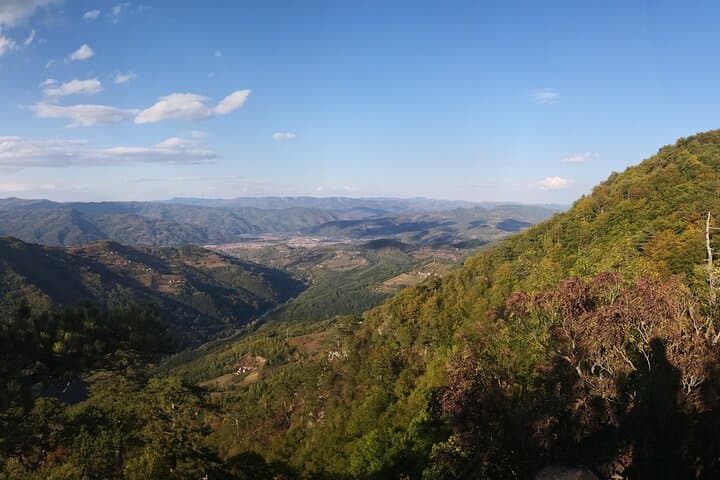
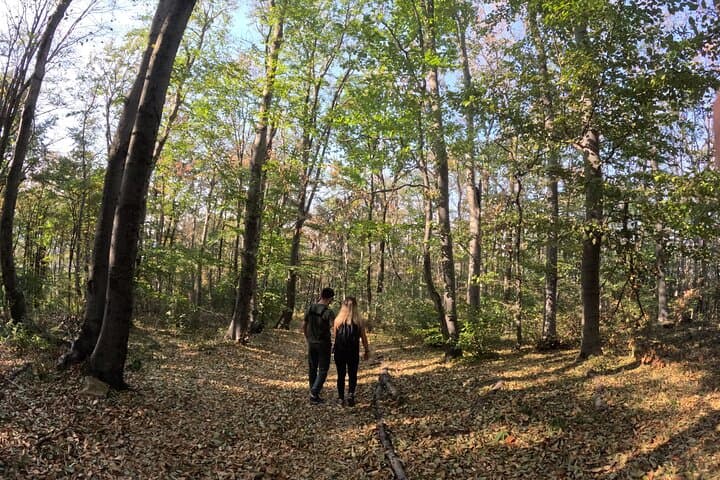
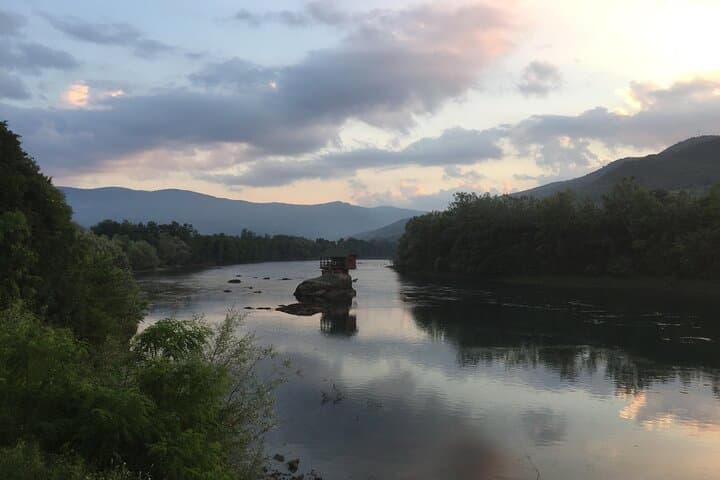
A low sun cuts through beech and fir as the road from Mokra Gora climbs toward Tara National Park; the air smells of damp earth and resin, the Drina River below carving a bright thread through limestone walls. On this full-day circuit visitors move from Emir Kusturica’s hand-built Wooden Town to a four-hour, 11 km hike up to Banjska Stena, then downriver to the iconic lonely house standing in the Drina.
Verified experiences and guided adventures in the surrounding area.
Operated by Dejan Slijepcevic · Bajina Bašta, Zlatibor District
A low sun cuts through beech and fir as the road from Mokra Gora climbs toward Tara National Park; the air smells of damp earth and resin, the Drina River below carving a bright thread through limestone walls. On this full-day circuit visitors move from Emir Kusturica’s hand-built Wooden Town to a four-hour, 11 km hike up to Banjska Stena, then downriver to the iconic lonely house standing in the Drina.
The region blends human craft and wild geology: Mokra Gora’s Drvengrad recreates traditional wooden architecture and film culture, while Tara’s plateaus and canyons are carved from Mesozoic limestone and cloaked in old-growth beech—part of the Dinaric Arc. Local life still orbits small-scale farming, timber work, and riverside fishing; Bajina Bašta and nearby villages keep the feel of rural Serbia.
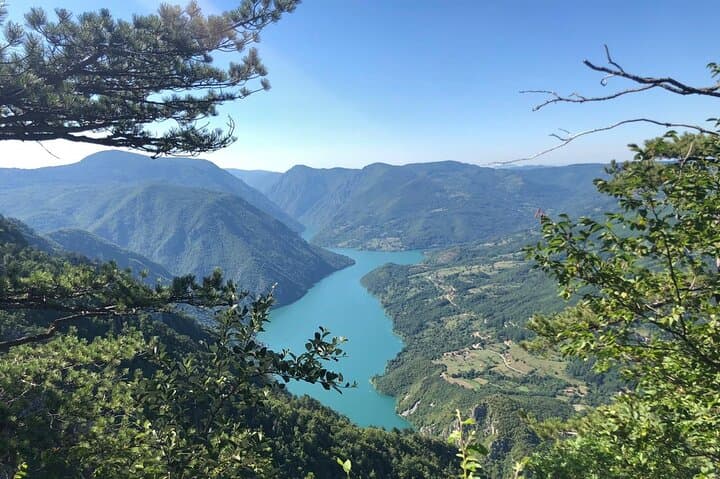
Expect singletrack and forest roads, rooted steps and a sustained 300 m ascent to the Banjska Stena overlook with wide views over Lake Perućac and the Drina canyon. Depending on the group, the hike can be swapped for the Sarganska Osmica scenic steam train or a guided kayak on Perucac Lake.
Practical side: start early, carry layered clothing and 1–2 liters of water, and budget time for an unhurried late lunch around 17:00. Trails can be wet and muddy after rain; good boots and trekking poles smooth steep sections. Mobile signal is intermittent—download maps in advance. The day pairs cultural stops with a solid ridge walk, making it ideal for hikers who want history and geology alongside panoramic river scenery.
moderate.
10–14 hours.
Moderately fit: regular walkers or hikers comfortable with 11 km and a sustained 300 m ascent.
The hike is about 11 km round route with roughly 300 m of elevation gain and typically takes around four hours depending on pace and breaks.
Yes—subject to group agreement the organizer can swap the hike for the Sarganska Osmica scenic train (ticket €10) or a guided kayak on Perucac Lake.
The tour is designed for small groups and is physically moderate; children used to walking and active older adults can take part, but those with spinal, heart, or pregnancy concerns are advised not to join the hike portion.
Bring layered clothing, sturdy shoes, 1–2 liters of water, snacks, sun protection, and a charged phone with downloaded maps—mobile signal can be intermittent.
Drvengrad (Wooden Town) was built by filmmaker Emir Kusturica as a cultural project; the Drina valley has long been a corridor between the Balkans and Central Europe, with settlements tracing Ottoman and Austro‑Hungarian eras.
Tara National Park protects extensive beech forests and karst systems—stay on trails, pack out waste, and avoid disturbing nesting birds and fragile understory plants.
Dejan Slijepcevic operates guided outdoor trips and adventures with an emphasis on safety, stewardship, and memorable experiences.
A low sun cuts through beech and fir as the road from Mokra Gora climbs toward Tara National Park; the air smells of damp earth and resin, the Drina River below carving a bright thread through limestone walls. On this full-day circuit visitors move from Emir Kusturica’s hand-built Wooden Town to a four-hour, 11 km hike up to Banjska Stena, then downriver to the iconic lonely house standing in the Drina.
A low sun cuts through beech and fir as the road from Mokra Gora climbs toward Tara National Park; the air smells of damp earth and resin, the Drina River below carving a bright thread through limestone walls. On this full-day circuit visitors move from Emir Kusturica’s hand-built Wooden Town to a four-hour, 11 km hike up to Banjska Stena, then downriver to the iconic lonely house standing in the Drina.
The region blends human craft and wild geology: Mokra Gora’s Drvengrad recreates traditional wooden architecture and film culture, while Tara’s plateaus and canyons are carved from Mesozoic limestone and cloaked in old-growth beech—part of the Dinaric Arc. Local life still orbits small-scale farming, timber work, and riverside fishing; Bajina Bašta and nearby villages keep the feel of rural Serbia.
Expect singletrack and forest roads, rooted steps and a sustained 300 m ascent to the Banjska Stena overlook with wide views over Lake Perućac and the Drina canyon. Depending on the group, the hike can be swapped for the Sarganska Osmica scenic steam train or a guided kayak on Perucac Lake.
Practical side: start early, carry layered clothing and 1–2 liters of water, and budget time for an unhurried late lunch around 17:00. Trails can be wet and muddy after rain; good boots and trekking poles smooth steep sections. Mobile signal is intermittent—download maps in advance. The day pairs cultural stops with a solid ridge walk, making it ideal for hikers who want history and geology alongside panoramic river scenery.