THE ADVENTURE COLLECTIVE® · Independent discovery and booking for outdoor travel

Walk through Akbar’s abandoned capital on a private half‑day tour from Agra. Experience red sandstone palaces, imperial courtyards and Mughal history with the convenience of private transport and a flexible pace.
Walk through Akbar’s abandoned capital on a private half‑day tour from Agra. Experience red sandstone palaces, imperial courtyards and Mughal history with the convenience of private transport and a flexible pace.
Stepping off the air‑conditioned vehicle, the heat of the plains gives way to the cool shadowed colonnades of Fatehpur Sikri. Red sandstone walls loom with deliberate geometry; arches frame courtyards where wind threads through empty halls like a quiet guide. A private half‑day visit lets you move at a human pace—pausing at the Buland Darwaza, circling the Jama Masjid courtyard and tracing Mughal inscriptions that still keep the echo of court life.
Verified experiences and guided adventures in the surrounding area.
Operated by Holiday Journey India · Fatehpur Sikri, Uttar Pradesh
Stepping off the air‑conditioned vehicle, the heat of the plains gives way to the cool shadowed colonnades of Fatehpur Sikri. Red sandstone walls loom with deliberate geometry; arches frame courtyards where wind threads through empty halls like a quiet guide. A private half‑day visit lets you move at a human pace—pausing at the Buland Darwaza, circling the Jama Masjid courtyard and tracing Mughal inscriptions that still keep the echo of court life.
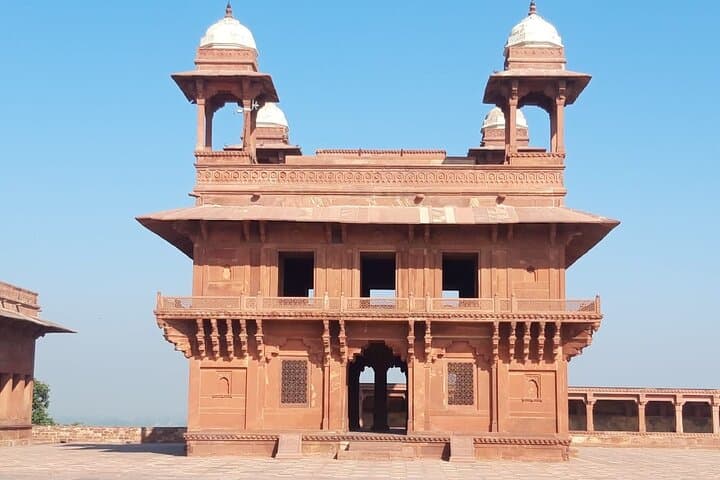
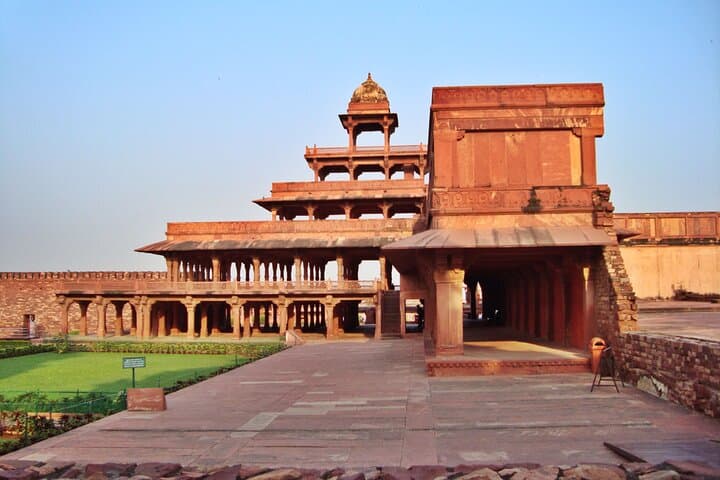
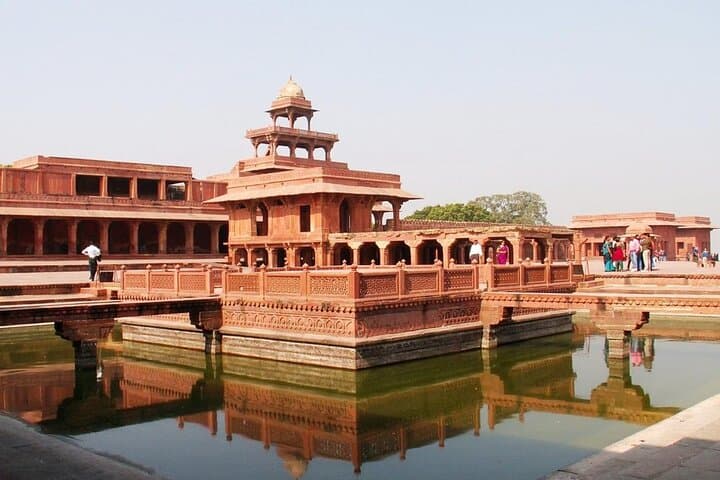
Fatehpur Sikri was built in the late 16th century by Emperor Akbar as a new capital and spiritual center. The city’s layout blends Persian planning and local craftsmanship: vast open squares, octagonal pavilions, and stone lattices that temper sunlight. Geologically the buildings are carved from locally quarried red sandstone whose warm hues change through the day; monsoon rains have smoothed many surfaces over centuries. Culturally, the site marks Akbar’s experiment in religious dialogue—nearby shrines and palaces tell stories of politics, faith and empire.
Practically, plan for museum‑style walking across uneven stone and steps—this is a site visit, not a hike. Start early to avoid crowds and heat; bring sun protection and modest clothing for respectful entry. Photography is excellent in late afternoon light but the best viewing windows are morning and late afternoon. Ticketing and security lines are present; if you’ve booked a private tour, confirm pickup details in Agra and carry ID for gate checks. Hydration, sturdy shoes, and a mindful pace will let you savor imperial architecture without the rush.
easy.
6 hours.
Light walking on mostly flat, paved surfaces; suitable for most fitness levels.
The tour is approximately six hours including pickup, drive time from Agra, and on‑site exploration of Fatehpur Sikri.
Yes; the tour is rated easy and accommodates all fitness levels, though children should be supervised around high platforms and steps.
There is an entry fee for Fatehpur Sikri payable at the gate—carrying local currency is recommended; your tour may include tickets depending on the booking.
Basic facilities and small vendors are available near the site; bring snacks or eat in Agra before or after the visit for more options.
Founded by Emperor Akbar in the 16th century as a planned capital and center for religious discourse, Fatehpur Sikri was a short‑lived imperial seat that preserves Mughal administrative and spiritual architecture.
Fatehpur Sikri is a UNESCO World Heritage Site; visitor management and conservation efforts focus on protecting sandstone façades and fragile inlay work, so stick to marked paths and avoid touching delicate carvings.
Holiday Journey India operates guided outdoor trips and adventures with an emphasis on safety, stewardship, and memorable experiences.

Stepping off the air‑conditioned vehicle, the heat of the plains gives way to the cool shadowed colonnades of Fatehpur Sikri. Red sandstone walls loom with deliberate geometry; arches frame courtyards where wind threads through empty halls like a quiet guide. A private half‑day visit lets you move at a human pace—pausing at the Buland Darwaza, circling the Jama Masjid courtyard and tracing Mughal inscriptions that still keep the echo of court life.
Stepping off the air‑conditioned vehicle, the heat of the plains gives way to the cool shadowed colonnades of Fatehpur Sikri. Red sandstone walls loom with deliberate geometry; arches frame courtyards where wind threads through empty halls like a quiet guide. A private half‑day visit lets you move at a human pace—pausing at the Buland Darwaza, circling the Jama Masjid courtyard and tracing Mughal inscriptions that still keep the echo of court life.
Fatehpur Sikri was built in the late 16th century by Emperor Akbar as a new capital and spiritual center. The city’s layout blends Persian planning and local craftsmanship: vast open squares, octagonal pavilions, and stone lattices that temper sunlight. Geologically the buildings are carved from locally quarried red sandstone whose warm hues change through the day; monsoon rains have smoothed many surfaces over centuries. Culturally, the site marks Akbar’s experiment in religious dialogue—nearby shrines and palaces tell stories of politics, faith and empire.
Practically, plan for museum‑style walking across uneven stone and steps—this is a site visit, not a hike. Start early to avoid crowds and heat; bring sun protection and modest clothing for respectful entry. Photography is excellent in late afternoon light but the best viewing windows are morning and late afternoon. Ticketing and security lines are present; if you’ve booked a private tour, confirm pickup details in Agra and carry ID for gate checks. Hydration, sturdy shoes, and a mindful pace will let you savor imperial architecture without the rush.