THE ADVENTURE COLLECTIVE® · Independent discovery and booking for outdoor travel

Skip the lines and let a licensed guide lead you through Philadelphia’s Franklin Institute and Parkway landmarks. This private, two-hour walk pairs hands-on science with civic history—perfect for curious travelers who want context with their exhibits.
Skip the lines and let a licensed guide lead you through Philadelphia’s Franklin Institute and Parkway landmarks. This private, two-hour walk pairs hands-on science with civic history—perfect for curious travelers who want context with their exhibits.
A crisp morning on Benjamin Franklin Parkway puts the city’s ambitions on full display: marble steps, a towering Benjamin Franklin Memorial, and the human buzz of a museum that still prizes experiments over exhibition-only displays.
Verified experiences and guided adventures in the surrounding area.
Operated by New York City Tours · Philadelphia, Pennsylvania
A crisp morning on Benjamin Franklin Parkway puts the city’s ambitions on full display: marble steps, a towering Benjamin Franklin Memorial, and the human buzz of a museum that still prizes experiments over exhibition-only displays.
Walk in with a private guide and the museum’s main galleries unfold with context: the physics demonstrations, the history of electricity, and the circular rotunda that frames Franklin’s likeness. The Parkway itself is a product of 19th-century urban planning—broad, axial, and honest about its civic purpose. The Schuylkill River nearby has shaped the city’s industrial past, while the museum’s neoclassical wings echo an era when science and civic pride moved together.
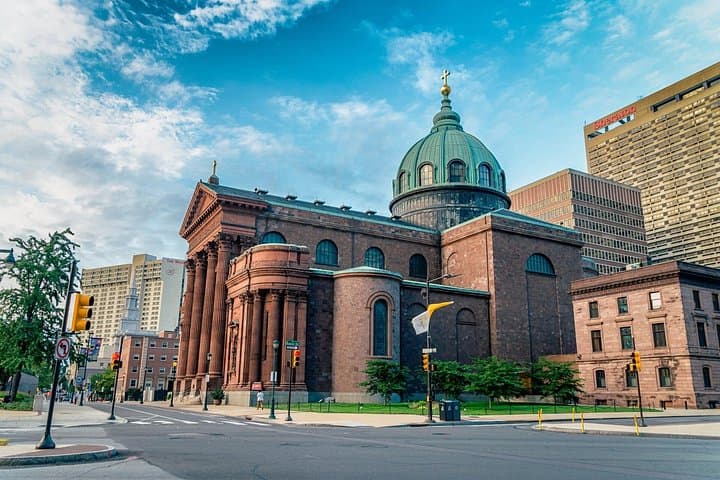
Culturally, the Franklin Institute sits at the intersection of civic storytelling and hands-on learning—expect family crowds, school groups, and serious science buffs. Your guide will move between architectural notes (City Hall’s Second Empire silhouette, the Cathedral Basilica’s unexpected scale) and museum tech: interactive exhibits, the planetarium schedule, and conservation-minded display practices.
Practical guidance: bring proof of booking and a government ID for skip-the-line access, arrive 10 minutes early to clear security, and plan at least an hour inside the main galleries. Wear comfortable walking shoes; floors are marble and can be slippery when wet. Photography is allowed in most areas but avoid flash near fragile displays. If you want quiet time with a particular exhibit, ask your guide to prioritize it—private tours are flexible by design.
This is a short, concentrated cultural walk with deep scientific payoffs: approachable, accessible, and paced to let curiosity lead.
easy.
2 hours.
Minimal fitness required; participants should be able to stand and walk for short periods
They bypass the ticket purchase line but you still pass through standard security screening; arrive on time to secure your slot.
Yes — the Franklin Institute and the meeting route are wheelchair accessible; notify the operator ahead for any specific needs.
Yes — private guides tailor commentary to interests like science, architecture, or Philadelphia history; communicate preferences when booking.
Yes — the museum is family-friendly and the tour accommodates infants and children; infants must sit on a lap per operator policy.
The Franklin Institute dates to 1824 and evolved into a major center for public science education; the Benjamin Franklin National Memorial anchors its civic identity.
The museum uses climate-controlled galleries to protect collections; visitors are encouraged to use public transit and respect exhibit rules to reduce wear.
New York City Tours operates guided outdoor trips and adventures with an emphasis on safety, stewardship, and memorable experiences.
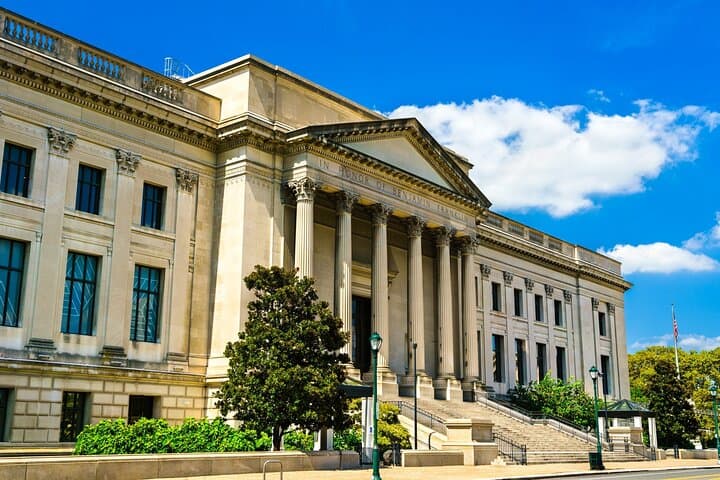

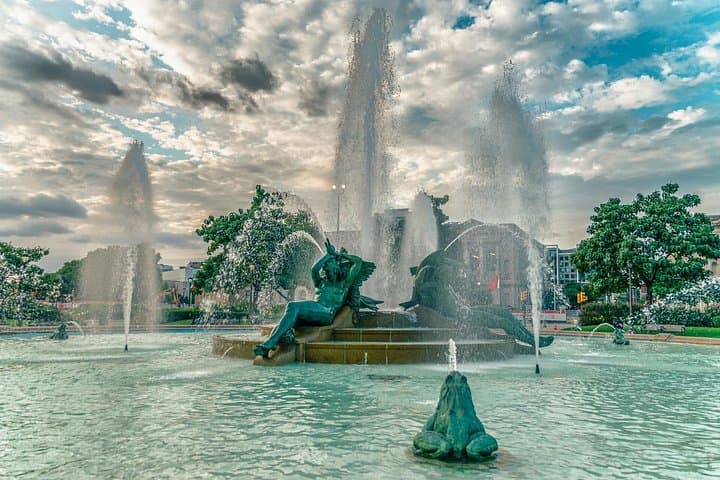
A crisp morning on Benjamin Franklin Parkway puts the city’s ambitions on full display: marble steps, a towering Benjamin Franklin Memorial, and the human buzz of a museum that still prizes experiments over exhibition-only displays.
A crisp morning on Benjamin Franklin Parkway puts the city’s ambitions on full display: marble steps, a towering Benjamin Franklin Memorial, and the human buzz of a museum that still prizes experiments over exhibition-only displays.
Walk in with a private guide and the museum’s main galleries unfold with context: the physics demonstrations, the history of electricity, and the circular rotunda that frames Franklin’s likeness. The Parkway itself is a product of 19th-century urban planning—broad, axial, and honest about its civic purpose. The Schuylkill River nearby has shaped the city’s industrial past, while the museum’s neoclassical wings echo an era when science and civic pride moved together.
Culturally, the Franklin Institute sits at the intersection of civic storytelling and hands-on learning—expect family crowds, school groups, and serious science buffs. Your guide will move between architectural notes (City Hall’s Second Empire silhouette, the Cathedral Basilica’s unexpected scale) and museum tech: interactive exhibits, the planetarium schedule, and conservation-minded display practices.
Practical guidance: bring proof of booking and a government ID for skip-the-line access, arrive 10 minutes early to clear security, and plan at least an hour inside the main galleries. Wear comfortable walking shoes; floors are marble and can be slippery when wet. Photography is allowed in most areas but avoid flash near fragile displays. If you want quiet time with a particular exhibit, ask your guide to prioritize it—private tours are flexible by design.
This is a short, concentrated cultural walk with deep scientific payoffs: approachable, accessible, and paced to let curiosity lead.