THE ADVENTURE COLLECTIVE® · Independent discovery and booking for outdoor travel

A focused two-hour guided tour of Pompeii that prioritizes the site’s major highlights with skip-the-line entry. Ideal for travelers who want expert context without committing a full day to the archaeological park.
A focused two-hour guided tour of Pompeii that prioritizes the site’s major highlights with skip-the-line entry. Ideal for travelers who want expert context without committing a full day to the archaeological park.
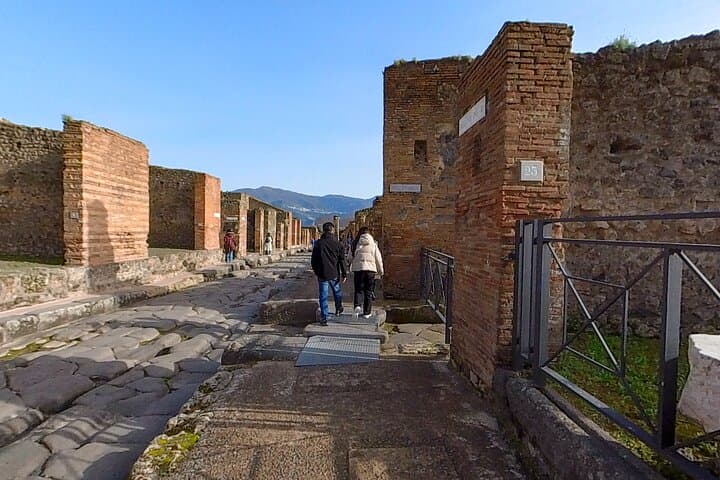
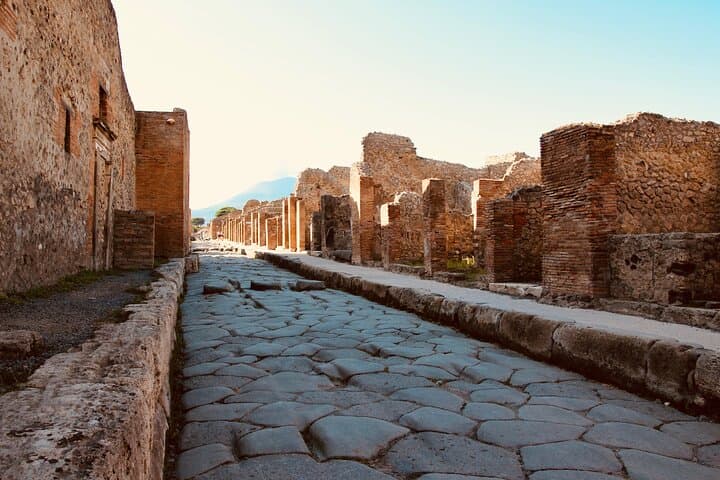
You step through a low stone arch and the street opens into a Roman neighborhood paused in the act of living: doorways shadowed by frescoes, a counter at a thermopolium still stained where food once cooled, and Mount Vesuvius brooding on the horizon as if watching history breathe.
Verified experiences and guided adventures in the surrounding area.
Operated by HP Travel · Pompeii, Campania
You step through a low stone arch and the street opens into a Roman neighborhood paused in the act of living: doorways shadowed by frescoes, a counter at a thermopolium still stained where food once cooled, and Mount Vesuvius brooding on the horizon as if watching history breathe.
The two-hour guided visit moves deliberately through Pompeii’s highlights—the Forum, the Lupanare, the Baths—each stop unpacked by a licensed guide who layers archaeology with the human details that make ruins feel inhabited again. Geologically, Pompeii is a ledger of volcanic violence: the AD 79 eruption delivered hot ash and pumice that sealed buildings and organic material, preserving floors, mosaics, and even voids that reveal human forms. Culturally, the city was a working Roman port town of merchants, artisans, and families whose everyday routines are visible in household layouts, shop counters, and public baths.
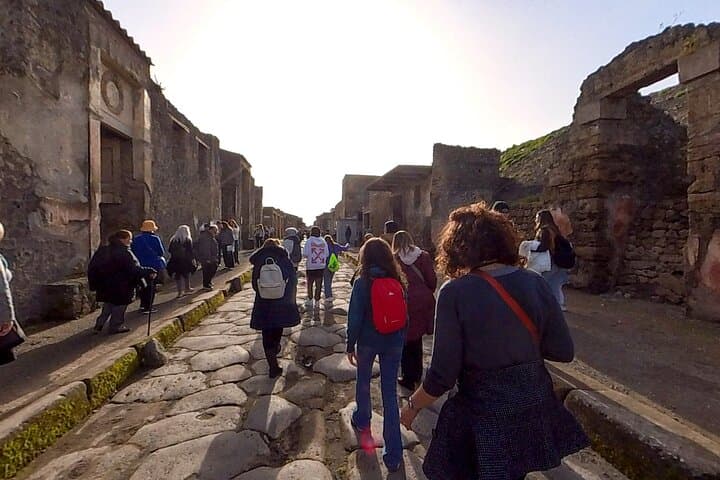
Expect compact storytelling and efficient pacing: wireless headsets keep groups cohesive while you walk uneven cobbles and open courtyards. The site is vast but the two-hour itinerary focuses on concentrated, interpretive stops—ideal for travelers short on time who still want depth.
Practical tips: wear closed, grippy shoes for irregular terrain, bring a sun hat and water in summer, and plan morning slots to avoid peak crowds. Photography is allowed but respect ropes and signs; frescoes are fragile. The skip-the-line access speeds entry, but conservation rules and narrow paths mean small groups and a steady walking pace. Leave time after the tour to revisit any panels or rooms that caught your attention.
easy.
2 hours.
Suitable for most fitness levels; you should be able to walk and stand for two hours on uneven ground.
Yes—this booking includes entry tickets to the Pompeii archaeological site and admission is covered in the tour price.
Some areas are stroller-accessible, but much of Pompeii has uneven surfaces and thresholds; check with the operator for tailored accessibility information.
You can reach Pompeii by Circumvesuviana regional train from Naples (Piazza Garibaldi) to Pompei Scavi station, or by car and regional buses; public transport options are available nearby.
Photography for personal use is generally allowed, but flash and touching frescoes or mosaics are prohibited; follow onsite signage and guide instructions.
Pompeii was buried in ash and pumice during the AD 79 eruption of Mount Vesuvius; systematic excavations since the 18th century have revealed daily Roman life preserved under volcanic deposits.
High visitor numbers stress fragile structures and pigments, so the park enforces pathways, restricted access to sensitive rooms, and ongoing conservation campaigns—respect signage and avoid touching surfaces.
HP Travel operates guided outdoor trips and adventures with an emphasis on safety, stewardship, and memorable experiences.

You step through a low stone arch and the street opens into a Roman neighborhood paused in the act of living: doorways shadowed by frescoes, a counter at a thermopolium still stained where food once cooled, and Mount Vesuvius brooding on the horizon as if watching history breathe.
You step through a low stone arch and the street opens into a Roman neighborhood paused in the act of living: doorways shadowed by frescoes, a counter at a thermopolium still stained where food once cooled, and Mount Vesuvius brooding on the horizon as if watching history breathe.
The two-hour guided visit moves deliberately through Pompeii’s highlights—the Forum, the Lupanare, the Baths—each stop unpacked by a licensed guide who layers archaeology with the human details that make ruins feel inhabited again. Geologically, Pompeii is a ledger of volcanic violence: the AD 79 eruption delivered hot ash and pumice that sealed buildings and organic material, preserving floors, mosaics, and even voids that reveal human forms. Culturally, the city was a working Roman port town of merchants, artisans, and families whose everyday routines are visible in household layouts, shop counters, and public baths.
Expect compact storytelling and efficient pacing: wireless headsets keep groups cohesive while you walk uneven cobbles and open courtyards. The site is vast but the two-hour itinerary focuses on concentrated, interpretive stops—ideal for travelers short on time who still want depth.
Practical tips: wear closed, grippy shoes for irregular terrain, bring a sun hat and water in summer, and plan morning slots to avoid peak crowds. Photography is allowed but respect ropes and signs; frescoes are fragile. The skip-the-line access speeds entry, but conservation rules and narrow paths mean small groups and a steady walking pace. Leave time after the tour to revisit any panels or rooms that caught your attention.