THE ADVENTURE COLLECTIVE® · Independent discovery and booking for outdoor travel

Skip the queues and glide above Lantau’s ridgelines on the Ngong Ping 360. This fast‑track tour pairs an efficient cable‑car experience with Po Lin Monastery and the Big Buddha, plus hotel transfers for a stress‑free half‑day.
Skip the queues and glide above Lantau’s ridgelines on the Ngong Ping 360. This fast‑track tour pairs an efficient cable‑car experience with Po Lin Monastery and the Big Buddha, plus hotel transfers for a stress‑free half‑day.
You step from an air‑conditioned shuttle into a thin, salty wind and the cable cars rise like glass bubbles above the green folds of Lantau. The Ngong Ping 360 span unrolls for 25 minutes, pushing you over jade ridges, the runway of Hong Kong International Airport, and the open South China Sea—an aerial approach that frames the island before you arrive at a compact village of tiled roofs and tea shops.
Verified experiences and guided adventures in the surrounding area.
Operated by KING STAR TRAVEL CO., LTD · Ngong Ping, Hong Kong
You step from an air‑conditioned shuttle into a thin, salty wind and the cable cars rise like glass bubbles above the green folds of Lantau. The Ngong Ping 360 span unrolls for 25 minutes, pushing you over jade ridges, the runway of Hong Kong International Airport, and the open South China Sea—an aerial approach that frames the island before you arrive at a compact village of tiled roofs and tea shops.
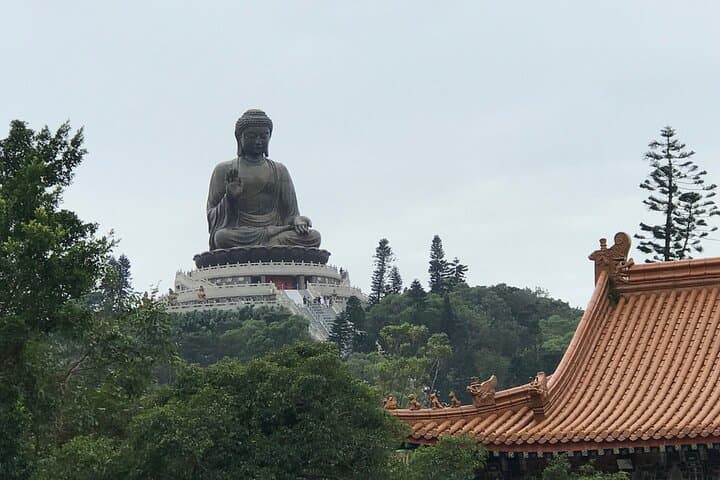
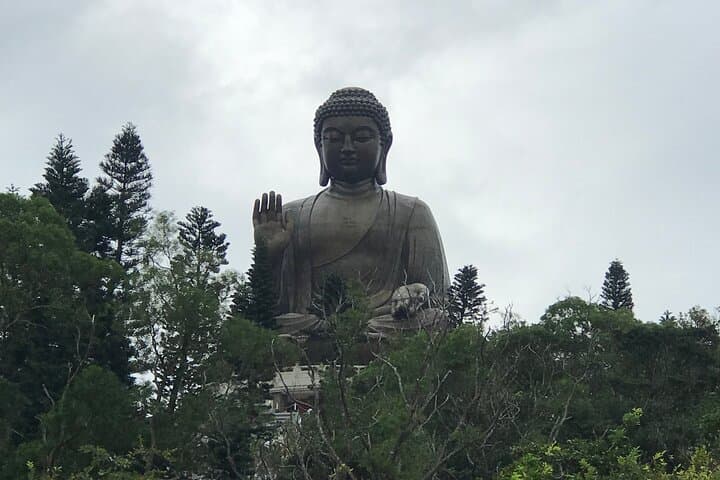
The plateau hosts the 34‑meter Tian Tan (Big) Buddha and the century‑old Po Lin Monastery, founded in 1906. The statue’s 268 steps demand a short, steady climb; the view from the platform turns the island’s volcanic hills and coastal flats into a mosaic of stone and sea. Geologically, Lantau is a mix of granite and volcanic outcrops carved by rain and wind, which produces steep ridgelines and sheltered valleys where Buddhist halls found quiet shelter.
Ngong Ping Village mixes tourist facilities with Cantonese temple culture—expect incense, red lacquer, and monks’ chants drifting through courtyards. Nearby, the Wisdom Path’s wooden steles and the traditional fishing hamlet of Tai O offer quieter contrasts to the main plaza.
Practical guidance: use the fast‑track ticket to avoid long lines at peak hours, arrive early for better light and cooler air, and be ready for a short stair climb to the Buddha. Cable cars can be paused or rerouted in high winds—build flexibility into your timing. Wear grippy shoes, bring a water bottle and sun protection, and respect monastery etiquette: quiet, modest dress, and remove hats inside prayer halls.
easy.
5 hours.
Suitable for most fitness levels; requires short stair climb and brief walking on uneven village paving.
The Ngong Ping 360 scenic cable car ride lasts about 25 minutes each way; this tour schedules roughly 25 minutes for the ascent as part of a 5‑hour itinerary.
The tour notes wheelchair accessibility for transport and some station areas, but the Big Buddha platform involves steps—contact the operator ahead for specific mobility needs.
The booking policy allows cancellations for bad weather; verify the operator’s 24‑hour cancellation window and refunds if the cable car is suspended.
This specific fast‑track package focuses on Ngong Ping; Tai O is nearby and best visited on a longer day trip or a separate tour.
Po Lin Monastery was established in 1906 and expanded after the Big Buddha was completed in the 1990s, linking modern pilgrimage with older monastic practice.
Lantau’s ecosystems are sensitive—stick to paths, avoid feeding wildlife, and follow monastery guidance to minimize cultural and environmental impact.
KING STAR TRAVEL CO., LTD operates guided outdoor trips and adventures with an emphasis on safety, stewardship, and memorable experiences.
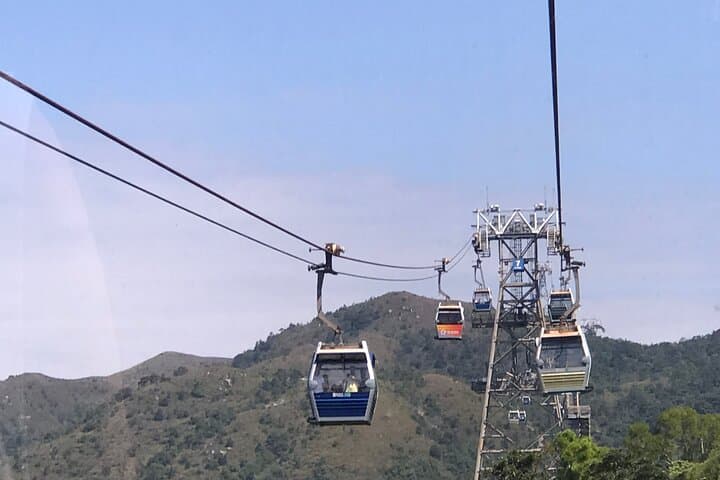
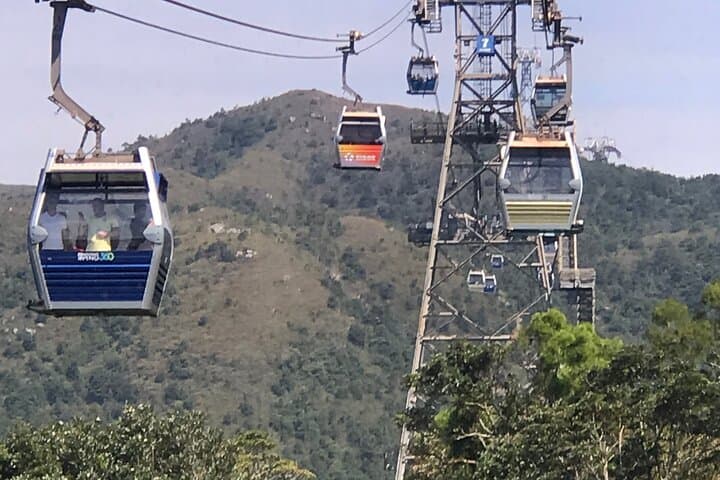
You step from an air‑conditioned shuttle into a thin, salty wind and the cable cars rise like glass bubbles above the green folds of Lantau. The Ngong Ping 360 span unrolls for 25 minutes, pushing you over jade ridges, the runway of Hong Kong International Airport, and the open South China Sea—an aerial approach that frames the island before you arrive at a compact village of tiled roofs and tea shops.
You step from an air‑conditioned shuttle into a thin, salty wind and the cable cars rise like glass bubbles above the green folds of Lantau. The Ngong Ping 360 span unrolls for 25 minutes, pushing you over jade ridges, the runway of Hong Kong International Airport, and the open South China Sea—an aerial approach that frames the island before you arrive at a compact village of tiled roofs and tea shops.
The plateau hosts the 34‑meter Tian Tan (Big) Buddha and the century‑old Po Lin Monastery, founded in 1906. The statue’s 268 steps demand a short, steady climb; the view from the platform turns the island’s volcanic hills and coastal flats into a mosaic of stone and sea. Geologically, Lantau is a mix of granite and volcanic outcrops carved by rain and wind, which produces steep ridgelines and sheltered valleys where Buddhist halls found quiet shelter.
Ngong Ping Village mixes tourist facilities with Cantonese temple culture—expect incense, red lacquer, and monks’ chants drifting through courtyards. Nearby, the Wisdom Path’s wooden steles and the traditional fishing hamlet of Tai O offer quieter contrasts to the main plaza.
Practical guidance: use the fast‑track ticket to avoid long lines at peak hours, arrive early for better light and cooler air, and be ready for a short stair climb to the Buddha. Cable cars can be paused or rerouted in high winds—build flexibility into your timing. Wear grippy shoes, bring a water bottle and sun protection, and respect monastery etiquette: quiet, modest dress, and remove hats inside prayer halls.