THE ADVENTURE COLLECTIVE® · Independent discovery and booking for outdoor travel

A condensed, five-day route from Pokhara to Annapurna Base Camp that compresses the classic Sanctuary experience—talus bowls, teahouse culture and sweeping peak views—into a fast-paced trek for fit, altitude-aware hikers.
A condensed, five-day route from Pokhara to Annapurna Base Camp that compresses the classic Sanctuary experience—talus bowls, teahouse culture and sweeping peak views—into a fast-paced trek for fit, altitude-aware hikers.
You set off before dawn in Pokhara, the lake city shrinking behind the minibus as terraces slide into rhododendron and oak. The road climbs to Jhinu Danda (1,780 m); from there the trail pushes into the Annapurna Sanctuary—narrow at times, suddenly opening to ice-raked bowls and the stacked faces of Annapurna South and Machapuchare. Rivers demand crossings; gullies push you upward; the mountains watch.
Verified experiences and guided adventures in the surrounding area.
Operated by Holiday Planner Treks · Pokhara, Gandaki Province
You set off before dawn in Pokhara, the lake city shrinking behind the minibus as terraces slide into rhododendron and oak. The road climbs to Jhinu Danda (1,780 m); from there the trail pushes into the Annapurna Sanctuary—narrow at times, suddenly opening to ice-raked bowls and the stacked faces of Annapurna South and Machapuchare. Rivers demand crossings; gullies push you upward; the mountains watch.
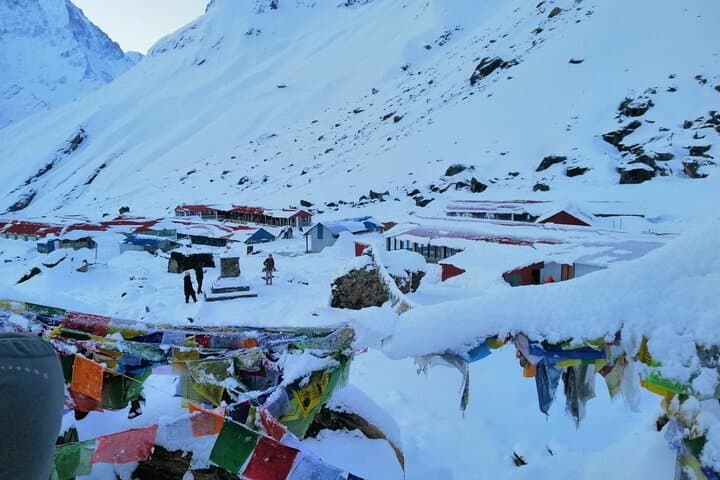
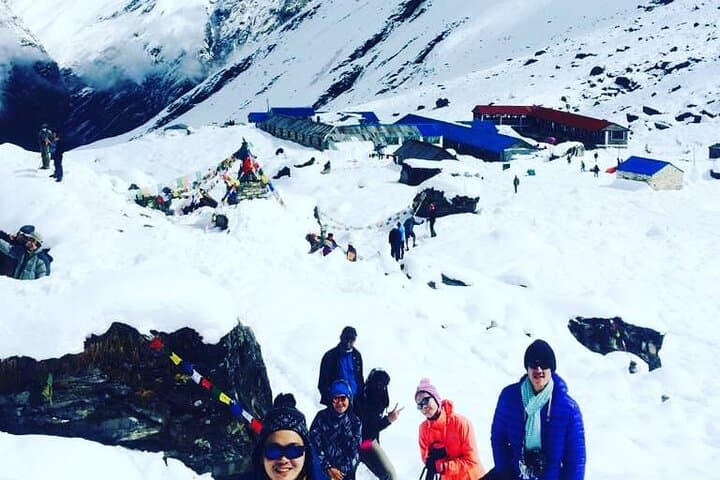
The route compresses classic Annapurna culture and geology: terraced farmland gives way to mid-hill forests, then alpine moraines and glacial debris near base camp. Local Gurung and Magar villages punctuate the trail—tea houses, carved prayer stones and communal dal bhat that feed long days. Geologically, the Sanctuary frames a cirque carved by past glaciation, with jagged granite and schist cliffs that funnel winter snow and summer monsoon flows.
Expect steady elevation gains: roughly 10 km to Sinuwa (2,340 m) on day one, 11 km to Deurali (3,200 m) on day two, then 7 km to Annapurna Base Camp (4,130 m). Descents are long—day four drops about 1,820 m over 15 km to Bamboo. The trail surface ranges from packed dirt and stone steps to loose scree near high camps.
Practical guidance: pace for altitude, drink frequently, and swap heavy packs for porters (one per two clients is typical). Start early to avoid afternoon weather, layer for large temperature swings, and budget extra time for acclimatization if you feel off. Lodges provide meals; carry cash for hot springs, snacks and tips. With careful pacing this five-day loop delivers big peaks, high plateaus and a concentrated taste of the Annapurna world.
challenging.
5 days.
Good cardiovascular fitness and experience with full-day hikes; prior high-elevation trekking recommended
The schedule is fast with significant daily elevation gain; it’s challenging and best for hikers who have done multi-day treks and can tolerate altitude.
Yes—Annapurna Conservation Area Permit (ACAP) and Trekkers’ Information Management System (TIMS) registration are required; guides usually handle this before departure.
Meals listed in the itinerary (breakfast, lunch, dinner as noted) are provided; tea-house accommodation is basic but warm and sufficient for recovery.
Acute mountain sickness is possible above 3,000 m; hydrate, ascend conservatively, communicate symptoms to your guide and descend if serious signs appear.
The Annapurna Sanctuary has long been occupied by local Gurung and Magar communities and later mapped by mountaineers; the region is protected within the Annapurna Conservation Area established in 1986.
ACAP emphasizes community-led conservation—stay on trails, pack out waste when possible and prioritize locally run lodges to support sustainable tourism.
Holiday Planner Treks operates guided outdoor trips and adventures with an emphasis on safety, stewardship, and memorable experiences.
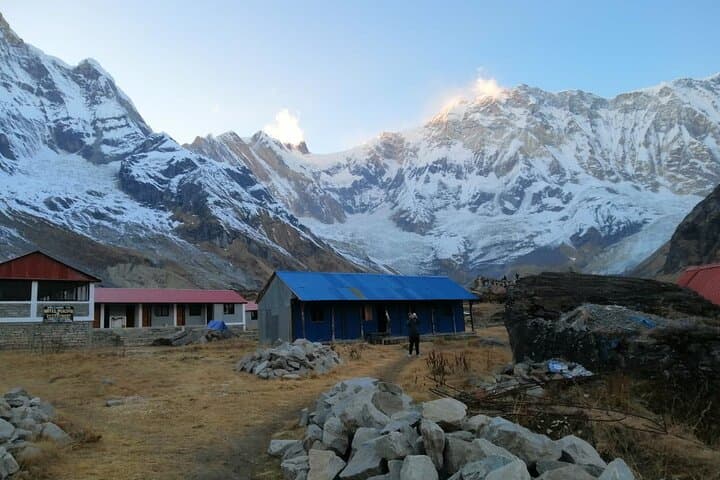
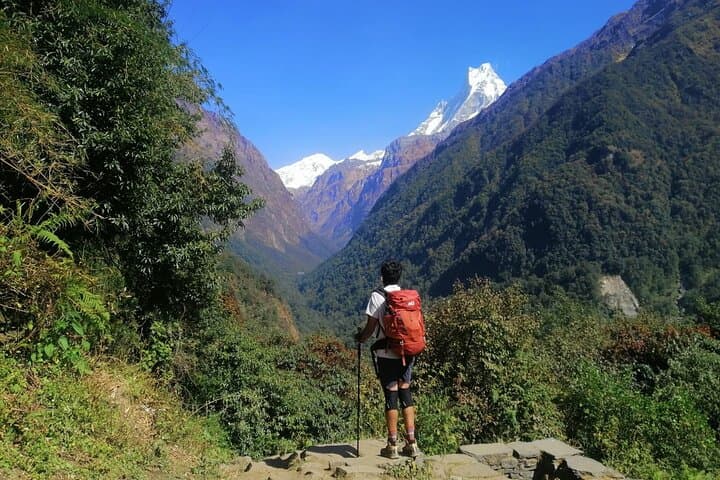
You set off before dawn in Pokhara, the lake city shrinking behind the minibus as terraces slide into rhododendron and oak. The road climbs to Jhinu Danda (1,780 m); from there the trail pushes into the Annapurna Sanctuary—narrow at times, suddenly opening to ice-raked bowls and the stacked faces of Annapurna South and Machapuchare. Rivers demand crossings; gullies push you upward; the mountains watch.
You set off before dawn in Pokhara, the lake city shrinking behind the minibus as terraces slide into rhododendron and oak. The road climbs to Jhinu Danda (1,780 m); from there the trail pushes into the Annapurna Sanctuary—narrow at times, suddenly opening to ice-raked bowls and the stacked faces of Annapurna South and Machapuchare. Rivers demand crossings; gullies push you upward; the mountains watch.
The route compresses classic Annapurna culture and geology: terraced farmland gives way to mid-hill forests, then alpine moraines and glacial debris near base camp. Local Gurung and Magar villages punctuate the trail—tea houses, carved prayer stones and communal dal bhat that feed long days. Geologically, the Sanctuary frames a cirque carved by past glaciation, with jagged granite and schist cliffs that funnel winter snow and summer monsoon flows.
Expect steady elevation gains: roughly 10 km to Sinuwa (2,340 m) on day one, 11 km to Deurali (3,200 m) on day two, then 7 km to Annapurna Base Camp (4,130 m). Descents are long—day four drops about 1,820 m over 15 km to Bamboo. The trail surface ranges from packed dirt and stone steps to loose scree near high camps.
Practical guidance: pace for altitude, drink frequently, and swap heavy packs for porters (one per two clients is typical). Start early to avoid afternoon weather, layer for large temperature swings, and budget extra time for acclimatization if you feel off. Lodges provide meals; carry cash for hot springs, snacks and tips. With careful pacing this five-day loop delivers big peaks, high plateaus and a concentrated taste of the Annapurna world.