THE ADVENTURE COLLECTIVE® · Independent discovery and booking for outdoor travel

Explore the Ria Formosa by quiet electric motor bike from Quinta do Lago to Faro Island. See flamingos, salt pans and a wide deserted beach on a guided 2–3 hour ride suitable for beginners.
Explore the Ria Formosa by quiet electric motor bike from Quinta do Lago to Faro Island. See flamingos, salt pans and a wide deserted beach on a guided 2–3 hour ride suitable for beginners.
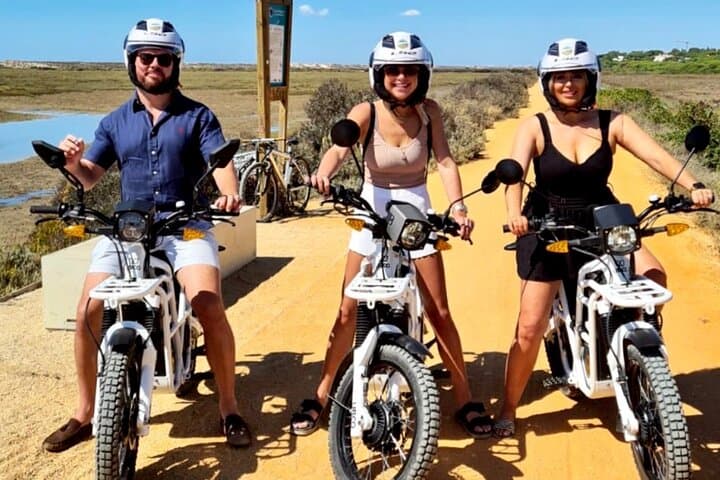
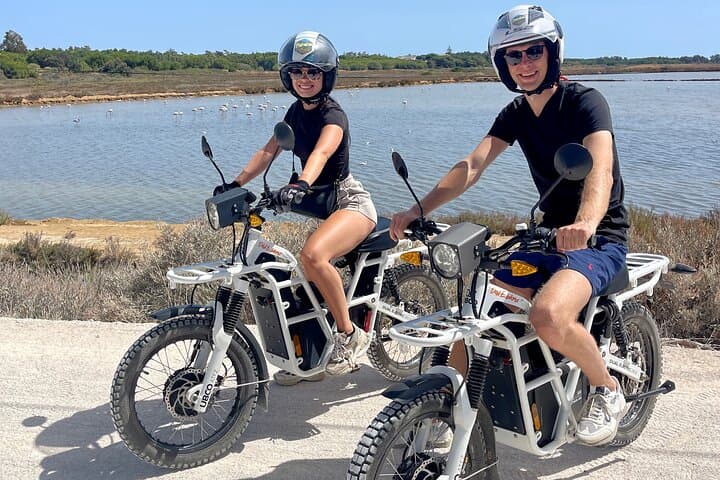
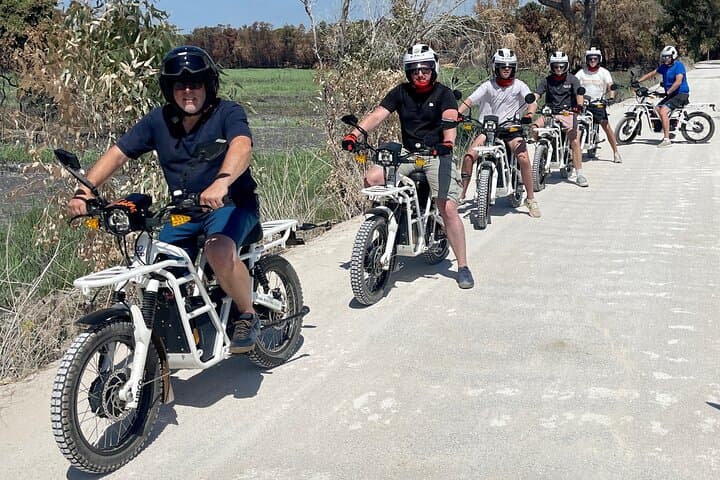
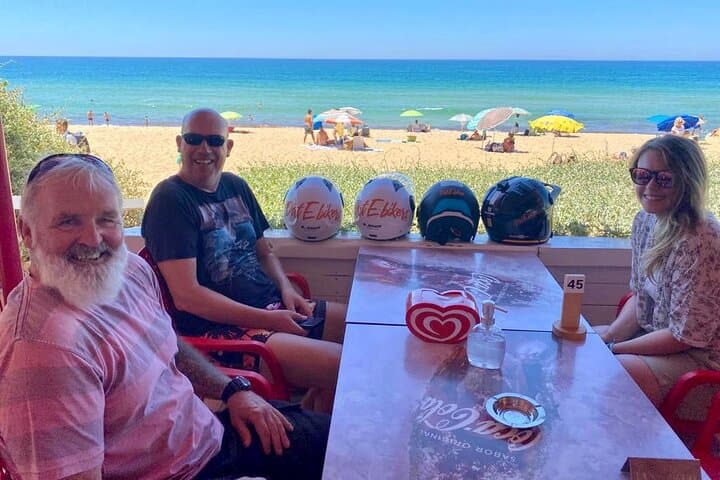
A flat salt plain opens like a pale map as the rider lifts off, the UBCO electric motor bike whispering instead of roaring. Tracks through low dunes and scrub lead out of Quinta do Lago, past glassy lagoons where flamingos stalk shallow water and terns wheel overhead. The narrow causeway to Faro Island arrives suddenly — a ribbon of asphalt and sand that ends at a wide, largely empty beach and a scattering of cafés.
Verified experiences and guided adventures in the surrounding area.
Operated by Dirtebikers Tours and Rentals Algarve · Faro, Algarve
A flat salt plain opens like a pale map as the rider lifts off, the UBCO electric motor bike whispering instead of roaring. Tracks through low dunes and scrub lead out of Quinta do Lago, past glassy lagoons where flamingos stalk shallow water and terns wheel overhead. The narrow causeway to Faro Island arrives suddenly — a ribbon of asphalt and sand that ends at a wide, largely empty beach and a scattering of cafés.
The Ria Formosa is a young coastal lagoon system shaped by shifting sands and steady Atlantic waves. For centuries locals have harvested salt and fished these sheltered channels; today the area is a protected natural park valued for migratory birds and small-scale fisheries. Geologically, the islands are barrier spits formed by longshore drift and occasional storm overwash; that makes the landscape changeable and open to wind and tide.
Culturally, you’ll pass salt pans and small fishing hamlets that still send out nets at dawn. Guides can point out the best birding spots and explain local salt production and conservation rules.
Practically, expect a 2–3 hour outing on sandy tracks and compacted service roads with short paved sections on the causeway. Bikes have no pedals and require a valid driving or moped licence; helmets and gloves are supplied. Bring sun protection, a light wind layer, and closed-toe shoes. Early morning or late afternoon rides offer cooler temperatures and the best chances to see flamingos and dolphins. Ride respectfully — the park is fragile and wildlife can be easily disturbed.
easy.
2–3 hours.
Light fitness — suitable for most people comfortable on two wheels for a few hours; ability to mount and balance on a low-center electric motorbike required.
Yes — riders must carry a valid driving licence or moped licence; operators check ID before departure.
These UBCO electric motor bikes are throttle-driven with no pedals; they’re quiet and simple to operate.
Minimum age to ride is 16; younger passengers are not permitted to operate the bike.
Yes — tours can be adapted for sunrise, sunset or a lunch option; check availability when booking.
Ria Formosa has long been a working coastline where salt pans and small-scale fishing shaped local livelihoods; the lagoon system has been protected since the 1980s for its importance to migratory birds.
The Ria Formosa is a designated Natural Park — stay on trails, avoid disturbing birds, and refrain from littering to protect sensitive breeding and feeding grounds.
Dirtebikers Tours and Rentals Algarve operates guided outdoor trips and adventures with an emphasis on safety, stewardship, and memorable experiences.
A flat salt plain opens like a pale map as the rider lifts off, the UBCO electric motor bike whispering instead of roaring. Tracks through low dunes and scrub lead out of Quinta do Lago, past glassy lagoons where flamingos stalk shallow water and terns wheel overhead. The narrow causeway to Faro Island arrives suddenly — a ribbon of asphalt and sand that ends at a wide, largely empty beach and a scattering of cafés.
A flat salt plain opens like a pale map as the rider lifts off, the UBCO electric motor bike whispering instead of roaring. Tracks through low dunes and scrub lead out of Quinta do Lago, past glassy lagoons where flamingos stalk shallow water and terns wheel overhead. The narrow causeway to Faro Island arrives suddenly — a ribbon of asphalt and sand that ends at a wide, largely empty beach and a scattering of cafés.
The Ria Formosa is a young coastal lagoon system shaped by shifting sands and steady Atlantic waves. For centuries locals have harvested salt and fished these sheltered channels; today the area is a protected natural park valued for migratory birds and small-scale fisheries. Geologically, the islands are barrier spits formed by longshore drift and occasional storm overwash; that makes the landscape changeable and open to wind and tide.
Culturally, you’ll pass salt pans and small fishing hamlets that still send out nets at dawn. Guides can point out the best birding spots and explain local salt production and conservation rules.
Practically, expect a 2–3 hour outing on sandy tracks and compacted service roads with short paved sections on the causeway. Bikes have no pedals and require a valid driving or moped licence; helmets and gloves are supplied. Bring sun protection, a light wind layer, and closed-toe shoes. Early morning or late afternoon rides offer cooler temperatures and the best chances to see flamingos and dolphins. Ride respectfully — the park is fragile and wildlife can be easily disturbed.