THE ADVENTURE COLLECTIVE® · Independent discovery and booking for outdoor travel

Head out from Faro Marina into the dynamic Ria Formosa and search for dolphins and other marine life on a three-hour small-boat excursion. Local skippers combine traditional knowledge with regulated, low-impact viewing to maximize sightings while protecting wildlife.
Head out from Faro Marina into the dynamic Ria Formosa and search for dolphins and other marine life on a three-hour small-boat excursion. Local skippers combine traditional knowledge with regulated, low-impact viewing to maximize sightings while protecting wildlife.
You step off the quay and the marina smells of salt and engine oil; gulls angle over the breakwater as a small boat rocks against its lines. In minutes the boat slips through the narrow channels of Ria Formosa, the estuary’s flats sliding past like pages, then the channel opens and the Atlantic stretches flat and immediate.
Verified experiences and guided adventures in the surrounding area.
Operated by Pudim Real Boat Tours · Faro, Algarve
You step off the quay and the marina smells of salt and engine oil; gulls angle over the breakwater as a small boat rocks against its lines. In minutes the boat slips through the narrow channels of Ria Formosa, the estuary’s flats sliding past like pages, then the channel opens and the Atlantic stretches flat and immediate.
Ria Formosa is a barrier-lagoon system carved by tides and sediment, a dynamic shoreline that has shaped Faro’s fishing culture for centuries. Local skippers—often from families who worked these waters—read currents and seabirds the way others read maps. Geology here is young: migrating sand bars and islands shield the lagoon and create shallow nurseries where fish and cetaceans feed.
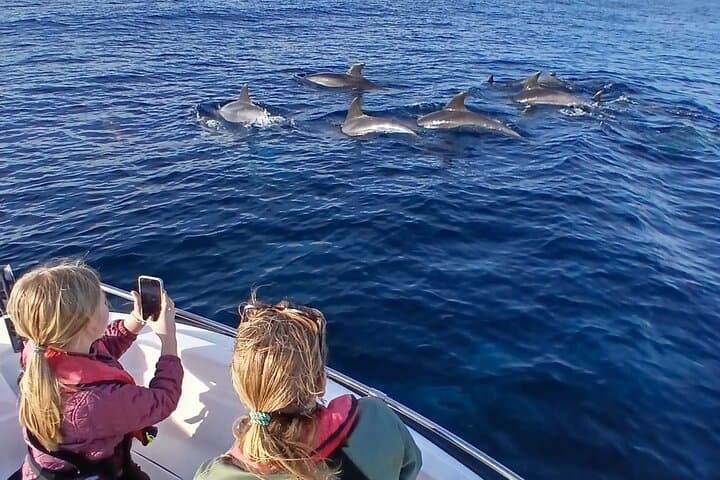
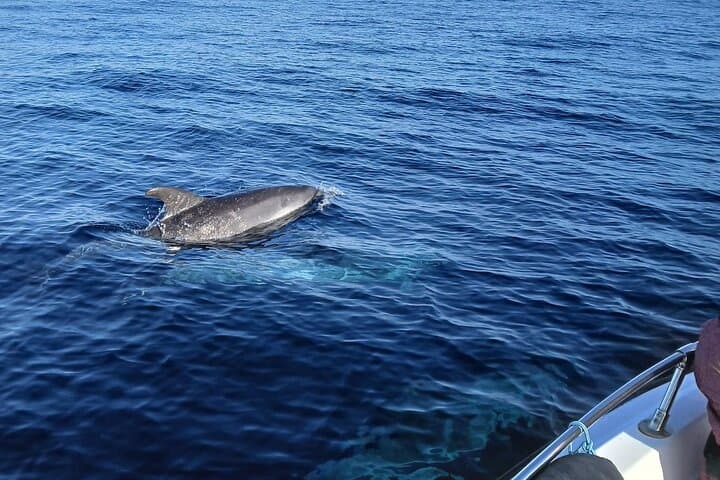
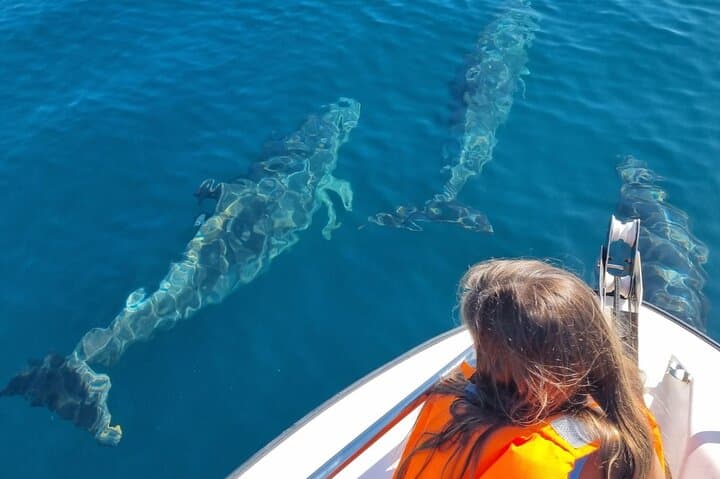
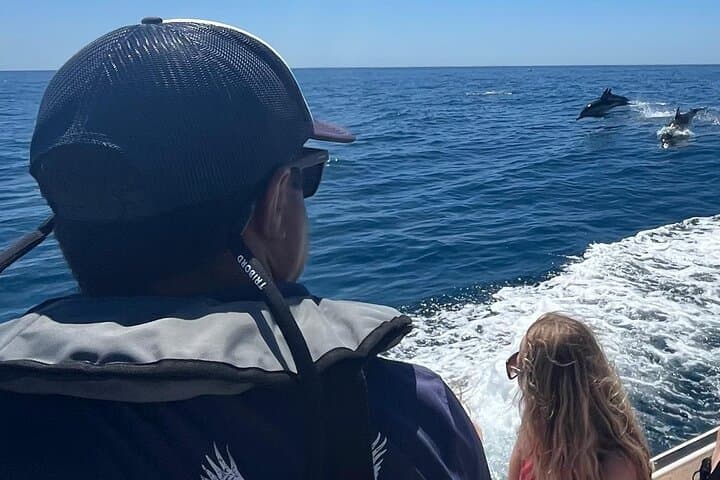
On this three-hour small-boat outing you’ll learn the park’s viewing rules before heading offshore to search for bottlenose dolphins, common dolphins and other marine life. The skipper’s local knowledge shortens the search time; sightings are never guaranteed, but the ride itself offers reed-lined channels, salt flats hosting waders, and the sudden exhilaration when dolphins appear and cut through the wake like punctuation.
Practicalities matter: boats are small (max eight), wear layered windproof clothing, and expect spray and variable seas. Bring sunscreen, binoculars, and motion-sickness remedies if you’re sensitive. The tour emphasizes minimal-impact viewing—approach distances and low-speed observation—to keep animals safe. Whether you photograph a pod or simply listen to the sea pushing at the hull, this trip frames Faro’s maritime landscape and the living coastline that sustains it.
easy.
3 hours.
Suitable for all fitness levels; ability to board a small boat and stand for short periods is required
Tours run about three hours and depart from the south side of Faro Marina, at the Faro Naval Club Gymnasium (Shop B). Arrive 10 minutes early for boarding and safety briefing.
Common sightings include bottlenose and common dolphins; observers occasionally report porpoises, sea turtles, and, very rarely, larger whales or orcas offshore.
Yes—tours are rated physically easy; infants must sit on laps and life vests are provided, but the small-boat environment may be unsuitable for people with serious back or heart conditions.
Trips are cancelled in rough or unsafe conditions; operators follow park regulations and safety protocols and will refund if the tour is cancelled for weather.
Ria Formosa has been a working estuary for Faro for centuries and was designated a Natural Park in 1987 to protect its shifting barrier islands and rich biodiversity.
Cetacean watching in Portugal is regulated—boats must maintain distance and follow speed limits to minimize disturbance; visitors are encouraged to avoid littering and to support local conservation initiatives.
Pudim Real Boat Tours operates guided outdoor trips and adventures with an emphasis on safety, stewardship, and memorable experiences.
You step off the quay and the marina smells of salt and engine oil; gulls angle over the breakwater as a small boat rocks against its lines. In minutes the boat slips through the narrow channels of Ria Formosa, the estuary’s flats sliding past like pages, then the channel opens and the Atlantic stretches flat and immediate.
You step off the quay and the marina smells of salt and engine oil; gulls angle over the breakwater as a small boat rocks against its lines. In minutes the boat slips through the narrow channels of Ria Formosa, the estuary’s flats sliding past like pages, then the channel opens and the Atlantic stretches flat and immediate.
Ria Formosa is a barrier-lagoon system carved by tides and sediment, a dynamic shoreline that has shaped Faro’s fishing culture for centuries. Local skippers—often from families who worked these waters—read currents and seabirds the way others read maps. Geology here is young: migrating sand bars and islands shield the lagoon and create shallow nurseries where fish and cetaceans feed.
On this three-hour small-boat outing you’ll learn the park’s viewing rules before heading offshore to search for bottlenose dolphins, common dolphins and other marine life. The skipper’s local knowledge shortens the search time; sightings are never guaranteed, but the ride itself offers reed-lined channels, salt flats hosting waders, and the sudden exhilaration when dolphins appear and cut through the wake like punctuation.
Practicalities matter: boats are small (max eight), wear layered windproof clothing, and expect spray and variable seas. Bring sunscreen, binoculars, and motion-sickness remedies if you’re sensitive. The tour emphasizes minimal-impact viewing—approach distances and low-speed observation—to keep animals safe. Whether you photograph a pod or simply listen to the sea pushing at the hull, this trip frames Faro’s maritime landscape and the living coastline that sustains it.