THE ADVENTURE COLLECTIVE® · Independent discovery and booking for outdoor travel

Learn to cook tagines, couscous and pastilla on a working farm just outside Marrakech. This five-hour, transfer‑included class pairs hands‑on technique with a shared meal and a view of the High Atlas.
Learn to cook tagines, couscous and pastilla on a working farm just outside Marrakech. This five-hour, transfer‑included class pairs hands‑on technique with a shared meal and a view of the High Atlas.
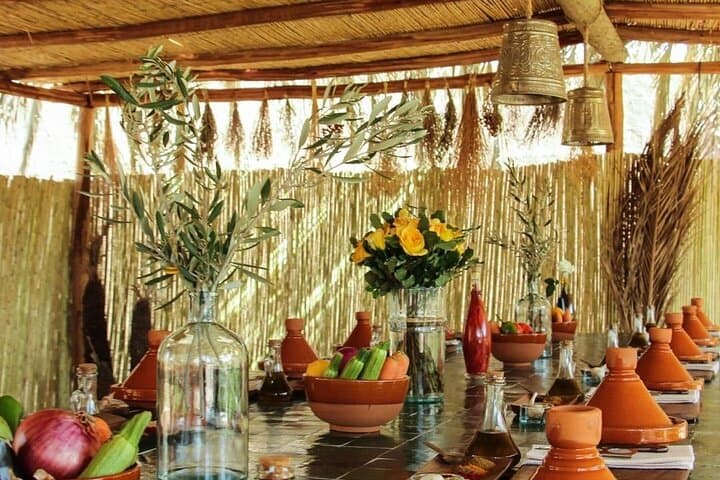
The sun pours across a small agricultural terrace outside Marrakech, and the High Atlas stands like a patient audience on the horizon. Guests arrive by air‑conditioned transfer to a family-run farm where olive trees shade a courtyard and a low kitchen hums with the scent of preserved lemons and toasted cumin.
Verified experiences and guided adventures in the surrounding area.
Operated by Lalla Zahra Cooking Class - Atelier de cuisine · Marrakech, Marrakech-Safi
The sun pours across a small agricultural terrace outside Marrakech, and the High Atlas stands like a patient audience on the horizon. Guests arrive by air‑conditioned transfer to a family-run farm where olive trees shade a courtyard and a low kitchen hums with the scent of preserved lemons and toasted cumin.
The class begins with an introduction to Moroccan staples: slow-simmered tagines, layered couscous, pastilla techniques and traditional bread. The region’s history — a crossroads of Berber, Arab and Andalusian influences — shows in the use of spices, preserved citrus and sweet-savory pairings. Geologically, the red soils around Marrakech come from ancient sediment and mountain runoff, supporting olive and vegetable beds that supply the lesson’s ingredients.
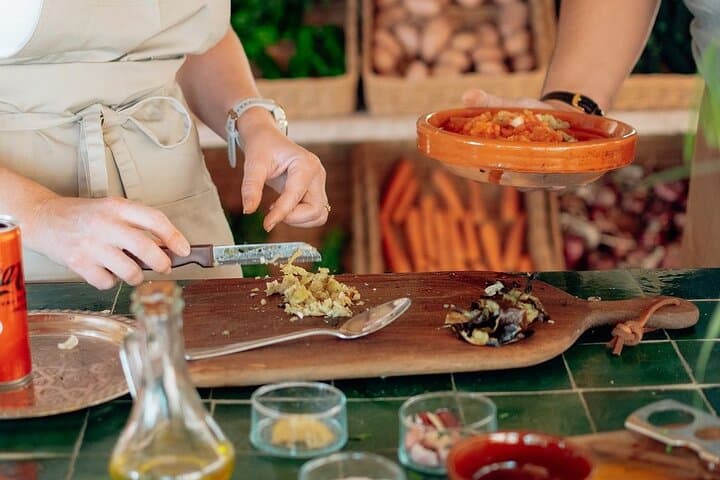
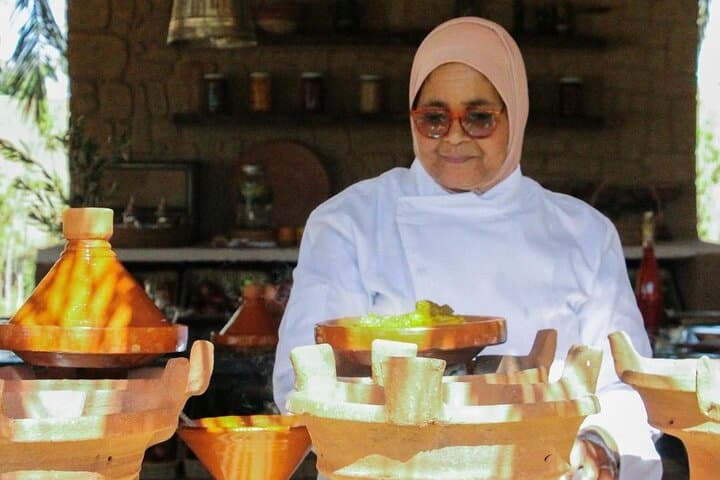
Culturally, the experience mixes practical demonstration with convivial sharing: students knead dough, learn the rhythm of a tagine lid lift, and sit to eat the meal alongside hosts who explain pairings and tea ceremony etiquette.
Practical guidance: the class is roughly five hours including transport; expect standing cooking time and simple hands-on tasks rather than fine dining technique. Arrive hydrated, wear closed-toe shoes for the farm and sun protection for transfers and open courtyards. Dietary requests (vegetarian, vegan) can be accommodated with advance notice.
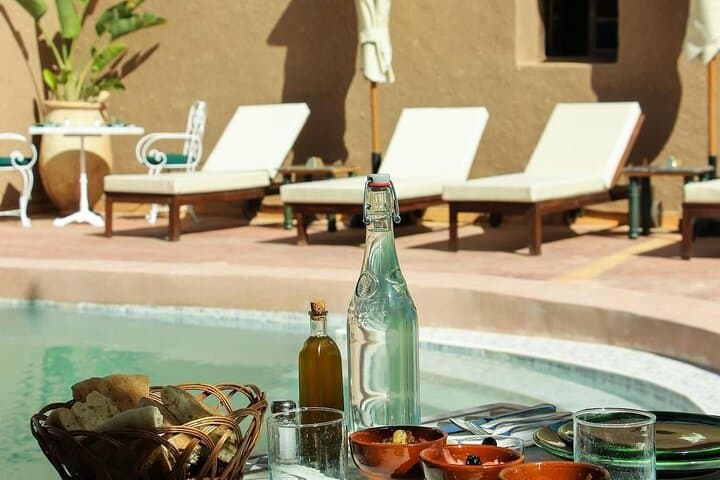
After lunch, participants are invited to cool off in the pool or walk small farm paths to view citrus groves and mountain silhouettes. The session suits first-time cooks wanting a grounded, sensory introduction to Moroccan home cuisine — active, social, and focused on techniques you can reproduce at home.
easy.
5 hours.
Light activity; standing and some kneading involved—suitable for most fitness levels
Yes—private, air‑conditioned transfers to and from central Marrakech are included in the booking.
Hosts can typically accommodate vegetarian and vegan diets with advance notice; state restrictions during booking.
Expect active participation—kneading, chopping and stovetop work under instructor guidance rather than observational cooking.
The listing indicates wheelchair and stroller accessibility for the property and transport; check specific pickup point details with the operator.
The area reflects traditional Moroccan agrarian life with recipes shaped by Berber and Andalusian influences; preserved lemons and spice blends arrived through centuries of trade.
The farm source ingredients locally and encourages low-impact visits; guests are asked to respect planting areas and avoid single-use plastics where possible.
Lalla Zahra Cooking Class - Atelier de cuisine operates guided outdoor trips and adventures with an emphasis on safety, stewardship, and memorable experiences.
The sun pours across a small agricultural terrace outside Marrakech, and the High Atlas stands like a patient audience on the horizon. Guests arrive by air‑conditioned transfer to a family-run farm where olive trees shade a courtyard and a low kitchen hums with the scent of preserved lemons and toasted cumin.
The sun pours across a small agricultural terrace outside Marrakech, and the High Atlas stands like a patient audience on the horizon. Guests arrive by air‑conditioned transfer to a family-run farm where olive trees shade a courtyard and a low kitchen hums with the scent of preserved lemons and toasted cumin.
The class begins with an introduction to Moroccan staples: slow-simmered tagines, layered couscous, pastilla techniques and traditional bread. The region’s history — a crossroads of Berber, Arab and Andalusian influences — shows in the use of spices, preserved citrus and sweet-savory pairings. Geologically, the red soils around Marrakech come from ancient sediment and mountain runoff, supporting olive and vegetable beds that supply the lesson’s ingredients.
Culturally, the experience mixes practical demonstration with convivial sharing: students knead dough, learn the rhythm of a tagine lid lift, and sit to eat the meal alongside hosts who explain pairings and tea ceremony etiquette.
Practical guidance: the class is roughly five hours including transport; expect standing cooking time and simple hands-on tasks rather than fine dining technique. Arrive hydrated, wear closed-toe shoes for the farm and sun protection for transfers and open courtyards. Dietary requests (vegetarian, vegan) can be accommodated with advance notice.
After lunch, participants are invited to cool off in the pool or walk small farm paths to view citrus groves and mountain silhouettes. The session suits first-time cooks wanting a grounded, sensory introduction to Moroccan home cuisine — active, social, and focused on techniques you can reproduce at home.