THE ADVENTURE COLLECTIVE® · Independent discovery and booking for outdoor travel

Spend a half day in the fields outside Siem Reap exploring a local market and learning to cook Cambodian favorites like Amok and banana flower salad. This hands-on farm cooking class pairs a guided market tour with practical technique and a recipe booklet to take home.
Spend a half day in the fields outside Siem Reap exploring a local market and learning to cook Cambodian favorites like Amok and banana flower salad. This hands-on farm cooking class pairs a guided market tour with practical technique and a recipe booklet to take home.
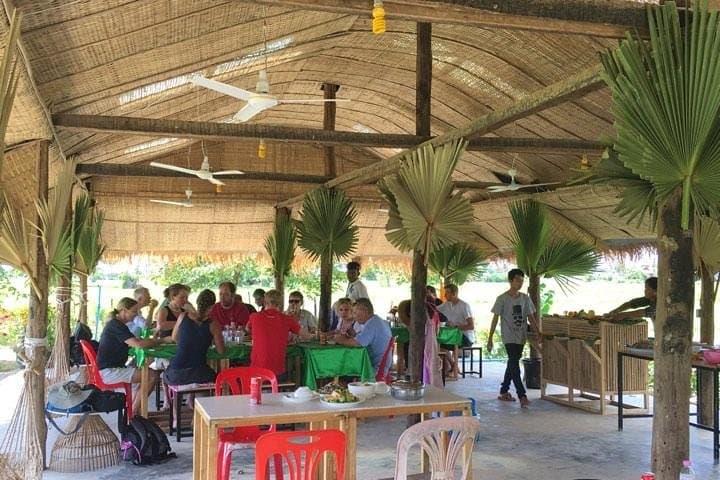
Morning light spills across red-dirt lanes as the minivan pulls off Route 66 and into a patchwork of rice paddies and low wooden houses. The scent of lime and palm smoke moves ahead of you: vendors arranging dragon fruit, bundles of herbs and fresh fish on a sticky plastic tarp. This is the start of a half-day village cooking class that pairs a guided market tour with a hands-on session in a purpose-built garden pavilion about 6 km southeast of Siem Reap town.
Verified experiences and guided adventures in the surrounding area.
Operated by Agro Tourism Cambodia · Siem Reap, Siem Reap Province
Morning light spills across red-dirt lanes as the minivan pulls off Route 66 and into a patchwork of rice paddies and low wooden houses. The scent of lime and palm smoke moves ahead of you: vendors arranging dragon fruit, bundles of herbs and fresh fish on a sticky plastic tarp. This is the start of a half-day village cooking class that pairs a guided market tour with a hands-on session in a purpose-built garden pavilion about 6 km southeast of Siem Reap town.
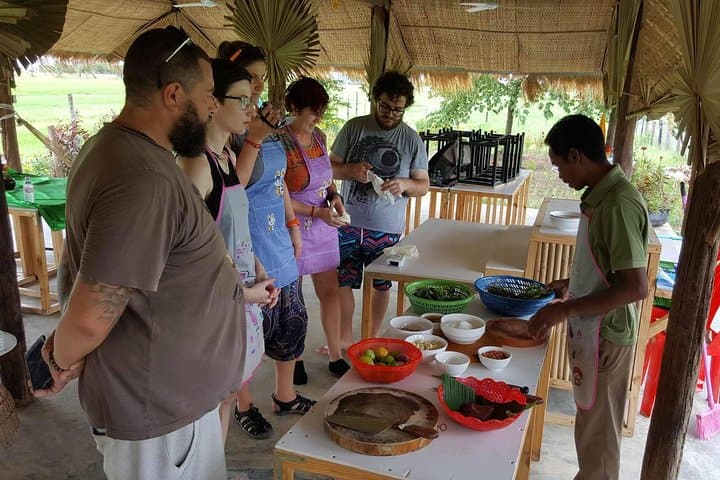
The class opens with local foodways—how Khmer cuisine folded freshwater fish, coconut cream and fermented pastes into dishes that sustained Angkor’s empires and today fuel farmers and tuk-tuk drivers alike. The chef explains ingredients: kroeung (aromatic paste), banana flower, taro and why Amok is both technique and ritual. The small-group format emphasizes technique: you pound spice pastes, fold banana leaves, and simmer fish in coconut until the curry sets like a custard.
Practicalities are simple: the experience lasts roughly 2.5 hours, includes pickup and drop-off, bottled water, and a recipe booklet to take home. Expect uneven dirt paths at the farm, partial shade in the pavilion, and hands-on food prep rather than a show. Bring closed-toe shoes, a hat for market time and a flexible appetite—the class ends with tasting what you make and a short debrief about sourcing local produce.
This is a traveler's bridge to Cambodian daily life: part market anthropology, part cooking school, all rooted in seasonal ingredients. Arrive curious, ready to chop, and leave with recipes and a clearer sense of Khmer flavors.
easy.
2–3 hours.
Suitable for most fitness levels; participants should be able to stand and move around a kitchen work area for 60–90 minutes.
Yes, the tour includes pickup and drop-off from central Siem Reap; confirm your pickup point when booking.
Yes—notify the operator in advance and they will adapt dishes where possible to accommodate allergies or preferences.
Participants receive a recipe booklet with the dishes prepared in class so they can recreate them at home.
The operator notes wheelchair-accessible options; contact them ahead of time to confirm pickup and on-site access details.
Khmer cuisine reflects centuries of rice-based agriculture and freshwater ingredients; dishes like Amok evolved as a way to steam curried fish using banana leaves and coconut.
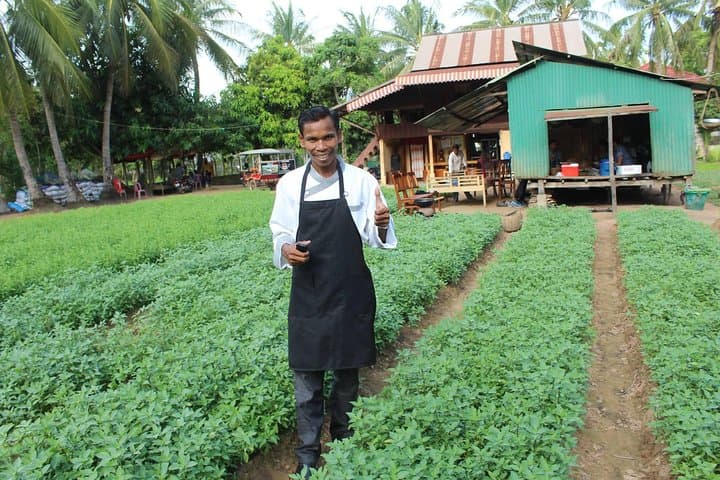
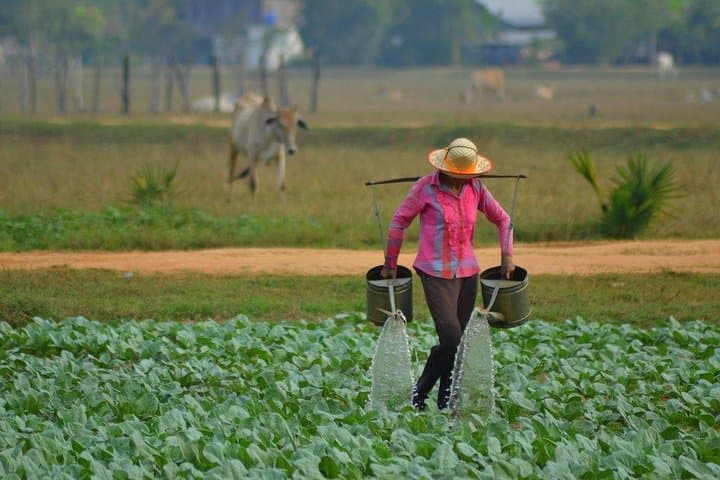
The class sources produce from local farms—supporting it helps smallholders; participants can reduce impact by avoiding single-use plastics and sampling seasonal ingredients.
Agro Tourism Cambodia operates guided outdoor trips and adventures with an emphasis on safety, stewardship, and memorable experiences.
Morning light spills across red-dirt lanes as the minivan pulls off Route 66 and into a patchwork of rice paddies and low wooden houses. The scent of lime and palm smoke moves ahead of you: vendors arranging dragon fruit, bundles of herbs and fresh fish on a sticky plastic tarp. This is the start of a half-day village cooking class that pairs a guided market tour with a hands-on session in a purpose-built garden pavilion about 6 km southeast of Siem Reap town.
Morning light spills across red-dirt lanes as the minivan pulls off Route 66 and into a patchwork of rice paddies and low wooden houses. The scent of lime and palm smoke moves ahead of you: vendors arranging dragon fruit, bundles of herbs and fresh fish on a sticky plastic tarp. This is the start of a half-day village cooking class that pairs a guided market tour with a hands-on session in a purpose-built garden pavilion about 6 km southeast of Siem Reap town.
The class opens with local foodways—how Khmer cuisine folded freshwater fish, coconut cream and fermented pastes into dishes that sustained Angkor’s empires and today fuel farmers and tuk-tuk drivers alike. The chef explains ingredients: kroeung (aromatic paste), banana flower, taro and why Amok is both technique and ritual. The small-group format emphasizes technique: you pound spice pastes, fold banana leaves, and simmer fish in coconut until the curry sets like a custard.
Practicalities are simple: the experience lasts roughly 2.5 hours, includes pickup and drop-off, bottled water, and a recipe booklet to take home. Expect uneven dirt paths at the farm, partial shade in the pavilion, and hands-on food prep rather than a show. Bring closed-toe shoes, a hat for market time and a flexible appetite—the class ends with tasting what you make and a short debrief about sourcing local produce.
This is a traveler's bridge to Cambodian daily life: part market anthropology, part cooking school, all rooted in seasonal ingredients. Arrive curious, ready to chop, and leave with recipes and a clearer sense of Khmer flavors.