THE ADVENTURE COLLECTIVE® · Independent discovery and booking for outdoor travel

Take a full-day scenic ride from Santiago into the snowy high Andes. This non-ski tour visits Curva 32 viewpoint and one of the mountain resorts (Farellones, La Parva, or El Colorado) for easy snow walks, photos, and alpine views.
Take a full-day scenic ride from Santiago into the snowy high Andes. This non-ski tour visits Curva 32 viewpoint and one of the mountain resorts (Farellones, La Parva, or El Colorado) for easy snow walks, photos, and alpine views.
A thin winter sun slides over the ridgeline as the minivan climbs out of Santiago, the city shrinking into a grid of glass and concrete. By the time the road reaches Curva 32, wind-twirled drifts streak the slopes and the Andes open into a hard, high plain of light and stone. Visitors step onto compacted snow, breath clouding, and the mountain feels almost conversational—peaks nudging you to look higher, gullies daring you to listen to the silence.
Verified experiences and guided adventures in the surrounding area.
Operated by Gray Line Chile · Farellones, Región Metropolitana (Santiago)
A thin winter sun slides over the ridgeline as the minivan climbs out of Santiago, the city shrinking into a grid of glass and concrete. By the time the road reaches Curva 32, wind-twirled drifts streak the slopes and the Andes open into a hard, high plain of light and stone. Visitors step onto compacted snow, breath clouding, and the mountain feels almost conversational—peaks nudging you to look higher, gullies daring you to listen to the silence.
The road to Farellones follows paths carved by centuries of runoff from the central Andes; volcanic and metamorphic rock underlies the snowfields and the range’s uplift tells a story of tectonic collision. The area’s winter culture grew around mining and later mountain recreation—small highland settlements evolved into resort hubs like Farellones, La Parva, and El Colorado. Local guides often share both Spanish and English perspectives: practical notes about altitude and warm drinks, alongside stories of the first lift operators and mule tracks that became service roads.
This is a non-ski scenic day trip designed for quiet immersion rather than sport. Expect multiple photo stops, a rental shop option for warm clothing, and 2–3 hours at a mountain resort to stroll, eat, or simply watch clouds move across ridgelines.
Practical guidance: layer for rapid temperature change, bring sun protection (UV is strong at altitude), and allow time to acclimate if you’re sensitive to elevation. Pickup is from central Santiago neighborhoods early in the morning; the full excursion runs about eight hours round-trip. Roads and access depend on weather—operators will reroute or refund if conditions make travel unsafe.
easy.
8 hours.
Suitable for most fitness levels; participants should be able to stand and walk short distances on snow for up to an hour at a time.
No—this is a scenic, non-ski tour focused on viewpoints and light snow walking; no ski skills required.
Lunch is not included; tours typically stop near a mountain resort where there are cafés and restaurants to buy food.
Pickup usually begins between 5:15 AM and 6:00 AM from hotels near central subway Line 1 stations; exact time depends on your location.
If roads are unsafe due to weather, the operator will offer an alternative date or a full refund per their cancellation policy.
High mountain tracks began as mule and miner routes; later 20th-century development turned key sites into recreational resorts tied to Santiago’s winter culture.
Operators encourage ‘leave no trace’ practices; stay on established paths to protect fragile alpine vegetation and avoid disturbing wildlife.
Gray Line Chile operates guided outdoor trips and adventures with an emphasis on safety, stewardship, and memorable experiences.
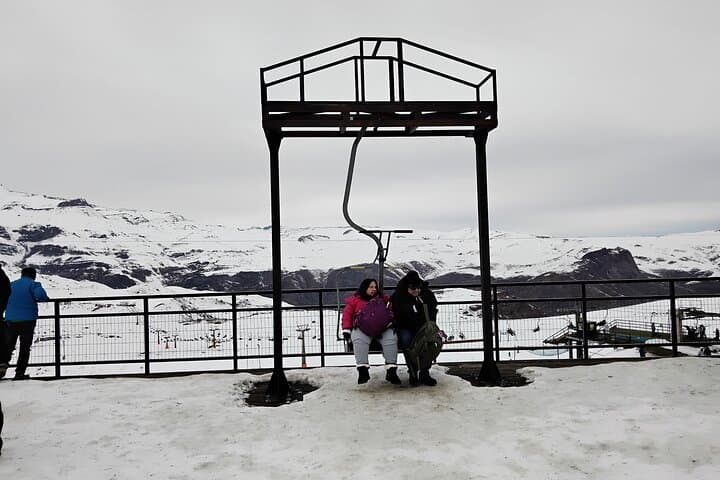
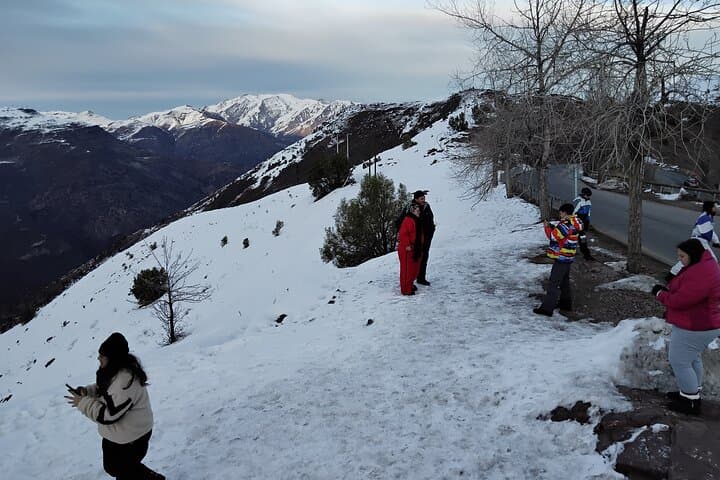
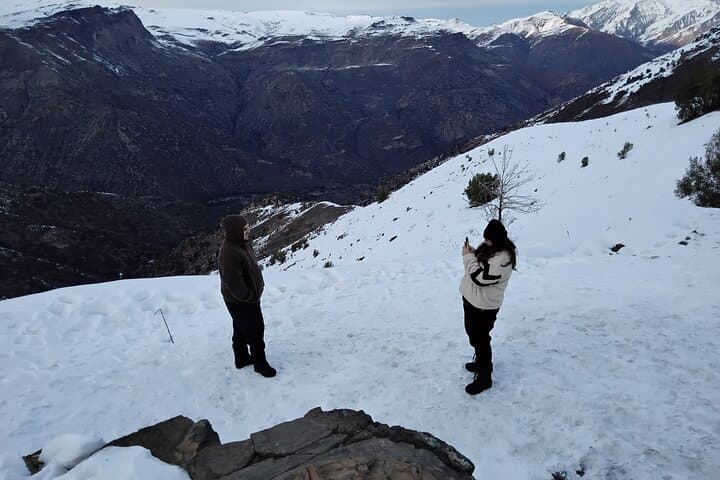
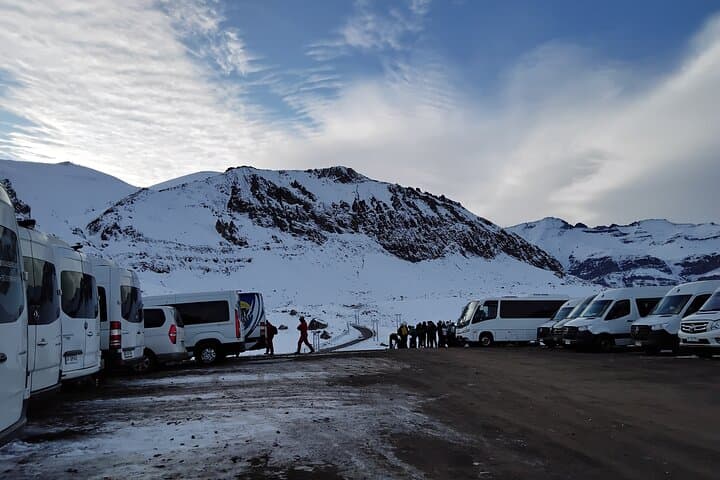
A thin winter sun slides over the ridgeline as the minivan climbs out of Santiago, the city shrinking into a grid of glass and concrete. By the time the road reaches Curva 32, wind-twirled drifts streak the slopes and the Andes open into a hard, high plain of light and stone. Visitors step onto compacted snow, breath clouding, and the mountain feels almost conversational—peaks nudging you to look higher, gullies daring you to listen to the silence.
A thin winter sun slides over the ridgeline as the minivan climbs out of Santiago, the city shrinking into a grid of glass and concrete. By the time the road reaches Curva 32, wind-twirled drifts streak the slopes and the Andes open into a hard, high plain of light and stone. Visitors step onto compacted snow, breath clouding, and the mountain feels almost conversational—peaks nudging you to look higher, gullies daring you to listen to the silence.
The road to Farellones follows paths carved by centuries of runoff from the central Andes; volcanic and metamorphic rock underlies the snowfields and the range’s uplift tells a story of tectonic collision. The area’s winter culture grew around mining and later mountain recreation—small highland settlements evolved into resort hubs like Farellones, La Parva, and El Colorado. Local guides often share both Spanish and English perspectives: practical notes about altitude and warm drinks, alongside stories of the first lift operators and mule tracks that became service roads.
This is a non-ski scenic day trip designed for quiet immersion rather than sport. Expect multiple photo stops, a rental shop option for warm clothing, and 2–3 hours at a mountain resort to stroll, eat, or simply watch clouds move across ridgelines.
Practical guidance: layer for rapid temperature change, bring sun protection (UV is strong at altitude), and allow time to acclimate if you’re sensitive to elevation. Pickup is from central Santiago neighborhoods early in the morning; the full excursion runs about eight hours round-trip. Roads and access depend on weather—operators will reroute or refund if conditions make travel unsafe.