THE ADVENTURE COLLECTIVE® · Independent discovery and booking for outdoor travel

Step from a RIB into the crisp Arctic waters of Lofoten and float through kelp gardens alive with jellyfish, starfish, and curious seals. This three-hour, family-friendly snorkel pairs minimal training with expert guides for a safe, unforgettable introduction to Norway’s underwater world.
Step from a RIB into the crisp Arctic waters of Lofoten and float through kelp gardens alive with jellyfish, starfish, and curious seals. This three-hour, family-friendly snorkel pairs minimal training with expert guides for a safe, unforgettable introduction to Norway’s underwater world.
The RIB slices the cold blue of a Lofoten fjord and the air tastes of salt and iron. Kids press faces to neoprene hoods and masks as the guide gestures toward a shallow channel where kelp fronds sway like slow, green flags; below the surface, an overlooked world waits—jellyfish pulsing, starfish clinging to rocks, crabs skittering among holdfasts.
Verified experiences and guided adventures in the surrounding area.
Operated by Lofoten Diving · Svolvær, Nordland
The RIB slices the cold blue of a Lofoten fjord and the air tastes of salt and iron. Kids press faces to neoprene hoods and masks as the guide gestures toward a shallow channel where kelp fronds sway like slow, green flags; below the surface, an overlooked world waits—jellyfish pulsing, starfish clinging to rocks, crabs skittering among holdfasts.
Geology here is blunt and ancient: exposed Precambrian rock towers around narrow waterways carved by glaciers, creating sheltered coves where kelp forests take root. Fishing culture shaped these islands for centuries—cod, not tourism, set the rhythm of life—and local guides often weave stories of seasonal cod migrations and the old boat sheds that dot the shoreline.
This family-friendly snorkel launches from a RIB and runs about three hours, focused on shallow, sheltered sites typically 1–10 meters deep. The experience is deliberately accessible: minimal training, full rental gear, and expert guides who brief on signals and currents.
Practical pointers: water is cold year-round (often 4–12°C), so plan a proper wetsuit, hood, and layers for after the swim. Expect short swims from the boat to the shore, quick safety checks, and plenty of time watching wildlife from the surface. Bring a warm change of clothes, a waterproof bag, and patience—tides and weather determine exact sites.
For families, the reward is immediate: curious seals approaching the boat, sea eagles circling, and children learning to read the water. Respect the kelp and shorelines—observe, don’t touch—to keep this underwater neighborhood healthy for the next generation.
easy.
3 hours.
Suitable for people of average fitness; participants should be comfortable in open water and able to swim short distances.
Yes—this tour is designed for families; guides assess each child’s comfort and pair them with adults or guides, but children must meet operator age/weight requirements.
Expect 4–12°C depending on season; a thick wetsuit and hood are provided or should be used to prevent hypothermia.
No advanced skills are required, but participants should be comfortable in the water and able to follow basic breathing and buoyancy guidance.
Common sightings include seals, sea eagles, starfish, urchins, jellyfish, and various fish around the kelp beds; wildlife is never guaranteed.
Lofoten’s communities grew around cod fisheries; seasonal stock migrations shaped settlement patterns and boat-building traditions that guides still reference today.
Kelp forests are sensitive—avoid contact, use reef-safe sunscreen, and follow guides’ instructions to minimize disturbance to marine life.
Lofoten Diving operates guided outdoor trips and adventures with an emphasis on safety, stewardship, and memorable experiences.


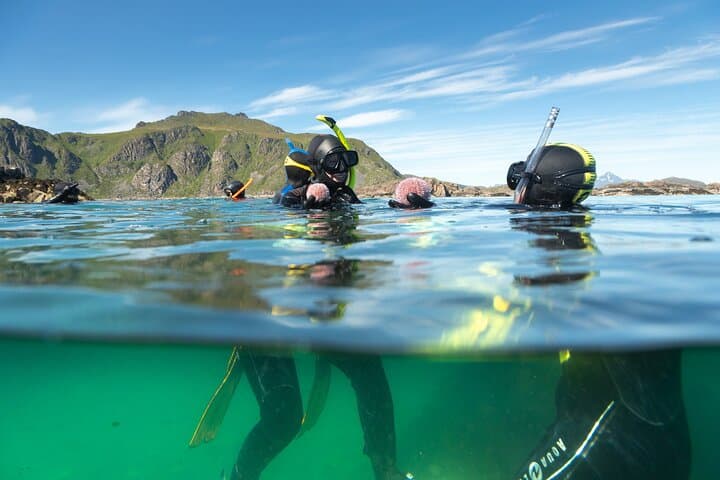

The RIB slices the cold blue of a Lofoten fjord and the air tastes of salt and iron. Kids press faces to neoprene hoods and masks as the guide gestures toward a shallow channel where kelp fronds sway like slow, green flags; below the surface, an overlooked world waits—jellyfish pulsing, starfish clinging to rocks, crabs skittering among holdfasts.
The RIB slices the cold blue of a Lofoten fjord and the air tastes of salt and iron. Kids press faces to neoprene hoods and masks as the guide gestures toward a shallow channel where kelp fronds sway like slow, green flags; below the surface, an overlooked world waits—jellyfish pulsing, starfish clinging to rocks, crabs skittering among holdfasts.
Geology here is blunt and ancient: exposed Precambrian rock towers around narrow waterways carved by glaciers, creating sheltered coves where kelp forests take root. Fishing culture shaped these islands for centuries—cod, not tourism, set the rhythm of life—and local guides often weave stories of seasonal cod migrations and the old boat sheds that dot the shoreline.
This family-friendly snorkel launches from a RIB and runs about three hours, focused on shallow, sheltered sites typically 1–10 meters deep. The experience is deliberately accessible: minimal training, full rental gear, and expert guides who brief on signals and currents.
Practical pointers: water is cold year-round (often 4–12°C), so plan a proper wetsuit, hood, and layers for after the swim. Expect short swims from the boat to the shore, quick safety checks, and plenty of time watching wildlife from the surface. Bring a warm change of clothes, a waterproof bag, and patience—tides and weather determine exact sites.
For families, the reward is immediate: curious seals approaching the boat, sea eagles circling, and children learning to read the water. Respect the kelp and shorelines—observe, don’t touch—to keep this underwater neighborhood healthy for the next generation.