THE ADVENTURE COLLECTIVE® · Independent discovery and booking for outdoor travel

Drive (or ride) through Guanacaste’s cattle country in a family-ready side-by-side UTV tour. Expect river crossings, mountain tracks, centuries-old churches and an accessible slice of rural Costa Rica—perfect for multigenerational groups.
Drive (or ride) through Guanacaste’s cattle country in a family-ready side-by-side UTV tour. Expect river crossings, mountain tracks, centuries-old churches and an accessible slice of rural Costa Rica—perfect for multigenerational groups.
Engine humming, dust lifting against a blue Guanacaste sky, a line of side-by-side UTVs threads a dirt lane between cattle pastures and gallery forest. Riders glance at sun-warmed corrals, then at a wooden church spire that has watched the valley for two centuries. The ride moves from broad, grassy fincas into tighter mountain trails, a shallow river daring the convoy to ford a current and send a spray across helmets.
Verified experiences and guided adventures in the surrounding area.
Operated by Skyline Canopy Tour · Tamarindo, Guanacaste
Engine humming, dust lifting against a blue Guanacaste sky, a line of side-by-side UTVs threads a dirt lane between cattle pastures and gallery forest. Riders glance at sun-warmed corrals, then at a wooden church spire that has watched the valley for two centuries. The ride moves from broad, grassy fincas into tighter mountain trails, a shallow river daring the convoy to ford a current and send a spray across helmets.
Guanacaste is a province shaped by cattle culture and seasonal rains; Spanish colonial churches and haciendas mark towns where cowboys once drove herds to market. The local geology is simple: volcanic foothills giving way to low ridges, with alluvial riverbeds that cut quick, rocky crossings. Culture here is plainspoken—traditional sodas (family eateries), folk music, and a strong ranching identity visible in every meadow.
Practical guidance: tours run about 3–4 hours, suitable for children from 2 years old when infant seats are supplied. Expect unpaved, sometimes rutted terrain and at least moderate physical fitness—you’ll climb on and off vehicles and feel bumps through the seat. Wear closed-toe shoes, sun protection, and bring a lightweight rain shell in the wet season. Operators typically provide water and a local guide; confirm if you’ll drive or ride as passenger.
This is an active, accessible way to see Guanacaste’s rural life—plan for sun, mud, and photo stops at roadside chapels and river overlooks.
moderate.
3–4 hours.
Moderate—able to climb in/out of vehicles and tolerate bumps; not suitable for travelers with serious spinal or heart conditions.
Yes—children from 2 years old can participate when infant seats are reserved; mention ages at booking.
Policies vary; some tours allow licensed adults to drive while others provide a driver. Confirm when you book.
Not recommended for pregnant travelers, people with serious spinal or heart conditions, or those unable to transfer into a UTV.
Tours operate in mixed weather; expect muddy sections. Cancellation policies vary—check operator terms for same-day weather refunds.
Guanacaste’s identity grew from cattle ranching and a 19th-century annexation from Nicaragua; many small churches and ranches date back over 150–200 years.
The region’s dry tropical forest is sensitive—stick to designated trails, avoid disturbing wildlife, and support operators who minimize off-trail impacts.
Skyline Canopy Tour operates guided outdoor trips and adventures with an emphasis on safety, stewardship, and memorable experiences.
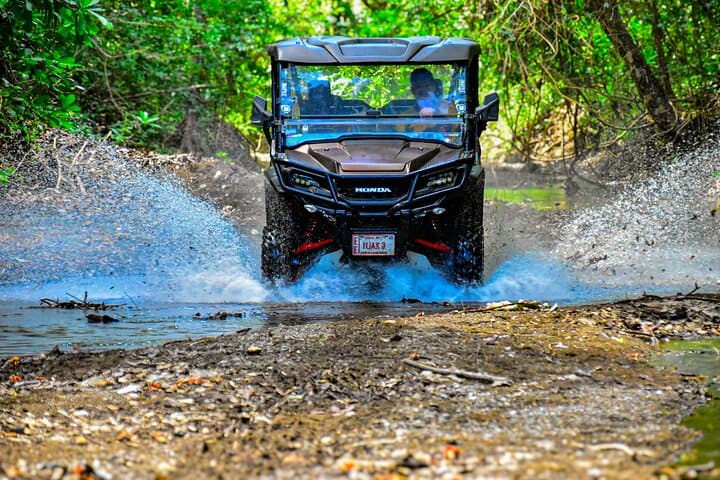
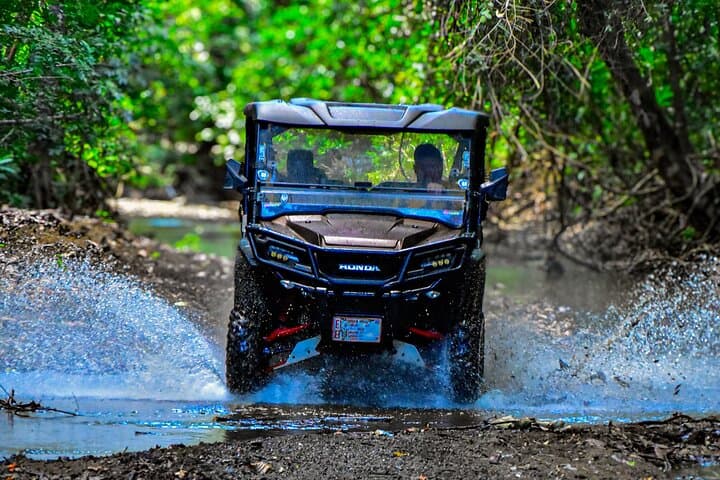
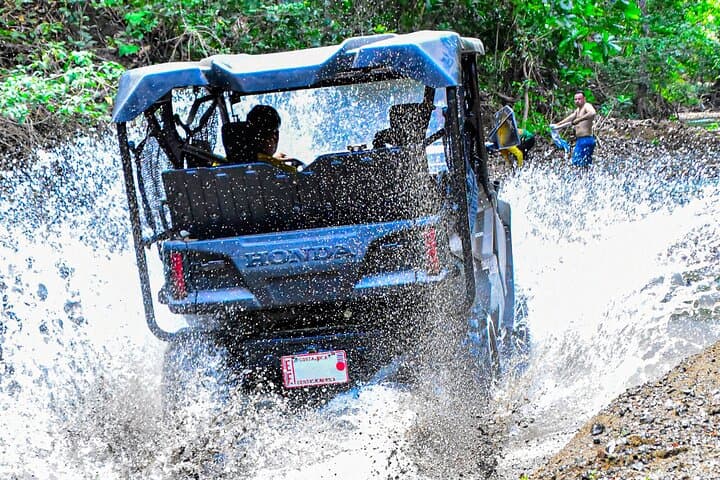
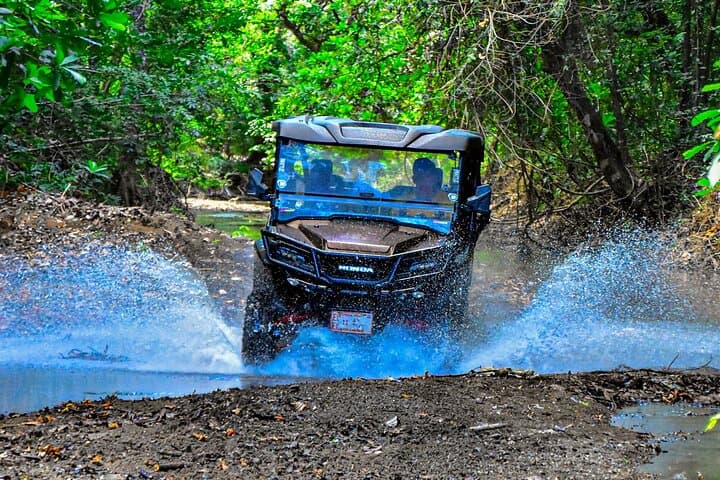
Engine humming, dust lifting against a blue Guanacaste sky, a line of side-by-side UTVs threads a dirt lane between cattle pastures and gallery forest. Riders glance at sun-warmed corrals, then at a wooden church spire that has watched the valley for two centuries. The ride moves from broad, grassy fincas into tighter mountain trails, a shallow river daring the convoy to ford a current and send a spray across helmets.
Engine humming, dust lifting against a blue Guanacaste sky, a line of side-by-side UTVs threads a dirt lane between cattle pastures and gallery forest. Riders glance at sun-warmed corrals, then at a wooden church spire that has watched the valley for two centuries. The ride moves from broad, grassy fincas into tighter mountain trails, a shallow river daring the convoy to ford a current and send a spray across helmets.
Guanacaste is a province shaped by cattle culture and seasonal rains; Spanish colonial churches and haciendas mark towns where cowboys once drove herds to market. The local geology is simple: volcanic foothills giving way to low ridges, with alluvial riverbeds that cut quick, rocky crossings. Culture here is plainspoken—traditional sodas (family eateries), folk music, and a strong ranching identity visible in every meadow.
Practical guidance: tours run about 3–4 hours, suitable for children from 2 years old when infant seats are supplied. Expect unpaved, sometimes rutted terrain and at least moderate physical fitness—you’ll climb on and off vehicles and feel bumps through the seat. Wear closed-toe shoes, sun protection, and bring a lightweight rain shell in the wet season. Operators typically provide water and a local guide; confirm if you’ll drive or ride as passenger.
This is an active, accessible way to see Guanacaste’s rural life—plan for sun, mud, and photo stops at roadside chapels and river overlooks.