THE ADVENTURE COLLECTIVE® · Independent discovery and booking for outdoor travel

Watch balloons float above ancient brick spires, meet monks at a local monastery, and make a hand-crafted sand painting on this full-day family tour of Bagan. Practical for parents, rich in culture for kids—this itinerary balances sunrise spectacle with hands-on learning.
Watch balloons float above ancient brick spires, meet monks at a local monastery, and make a hand-crafted sand painting on this full-day family tour of Bagan. Practical for parents, rich in culture for kids—this itinerary balances sunrise spectacle with hands-on learning.
Dawn arrives over the Bagan plain like a slow exhale: warm light pours across brick stupas, and hot-air balloons drift low enough to frame temple spires. Families move quietly through narrow temple corridors while guides point out carved guardians and mural fragments; later, kids concentrate over vessels of colored sand, shaping a souvenir with hands still warm from the morning sun.
Verified experiences and guided adventures in the surrounding area.
Operated by Three Treasures Responsible Tourism Bagan · Nyaung-U, Mandalay Region
Dawn arrives over the Bagan plain like a slow exhale: warm light pours across brick stupas, and hot-air balloons drift low enough to frame temple spires. Families move quietly through narrow temple corridors while guides point out carved guardians and mural fragments; later, kids concentrate over vessels of colored sand, shaping a souvenir with hands still warm from the morning sun.
Bagan was the heart of the Pagan Kingdom (9th–13th centuries), a landscape of over 2,000 surviving temples built from local laterite and brick. The plain’s geology—ancient river sediments from the Ayeyarwady—made brick construction practical and left the site unusually flat, so views are wide and uninterrupted. Daily life here remains tied to Buddhist practice: monasteries with saffron robes, village markets, and lacquerware artisans maintain craft traditions you’ll see up close.
Practical guide: expect a full-day itinerary that starts before sunrise and includes light walking on uneven stone surfaces and compacted dirt. Respect dress codes at religious sites—shoulders and knees covered for everyone—and bring a hat, sturdy closed-toe shoes, and sunscreen. Hydrate: bottled water is provided, but a refillable bottle is handy. Photography is welcomed, though ask before photographing monks. The tour includes hotel pickup and a guide able to tailor storytelling for children. Timing matters—plan the balloon-viewing for early morning and allow downtime after midday heat. Cash in small denominations is useful for tips, snacks, and local artisans. For families, brief activities like the sand painting class and short village visits keep younger travelers engaged while adults absorb the history and sweeping temple views.
easy.
24 hours.
Suitable for most fitness levels; requires short walks on uneven temple steps and some standing during visits.
Yes—the itinerary is designed for families with light walking, tailored activities like sand painting, and a guide who engages children; infants may sit in strollers.
No; balloon flights are a separate activity booked through licensed operators—this tour offers excellent viewpoints for watching balloons from the ground.
Interactions are possible but contingent on monastery rules and monk availability; the guide will request permission and advise on respectful behavior.
Yes—private hotel pickup and drop-off are included in the tour’s inclusions.
Bagan was the capital of the Pagan Kingdom from the 9th to 13th centuries; its temple construction boom left a dense archaeological landscape that reflects early Theravada Buddhist influence in Myanmar.
Rising visitor numbers strain fragile brick structures—follow site rules, avoid climbing restricted ruins, and support local conservation fees and community-run craft programs.
Three Treasures Responsible Tourism Bagan operates guided outdoor trips and adventures with an emphasis on safety, stewardship, and memorable experiences.
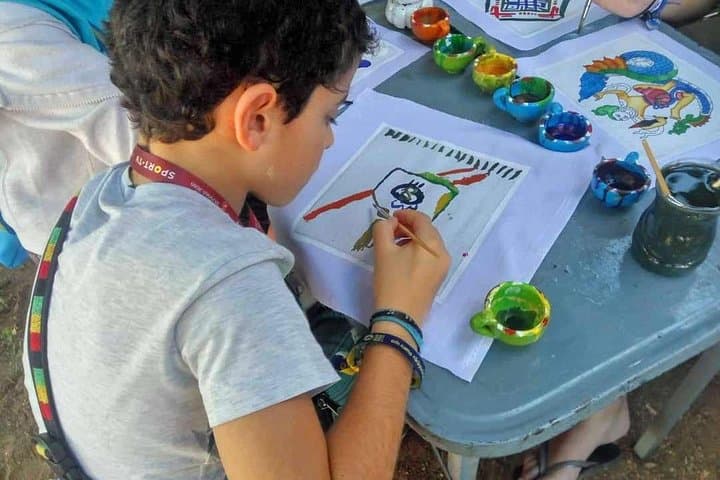

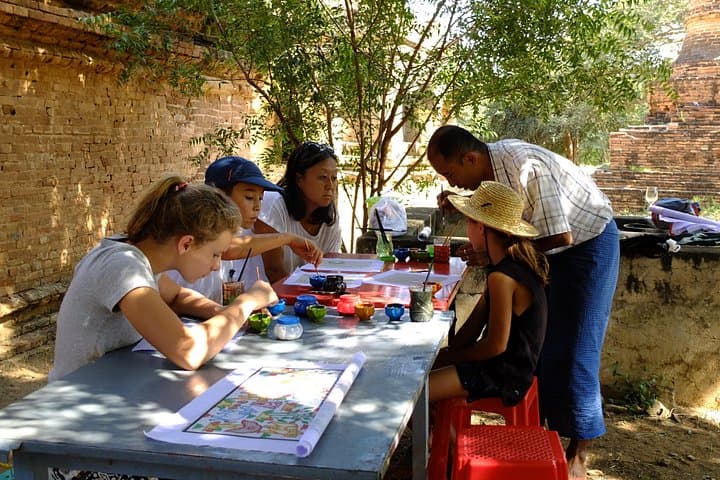
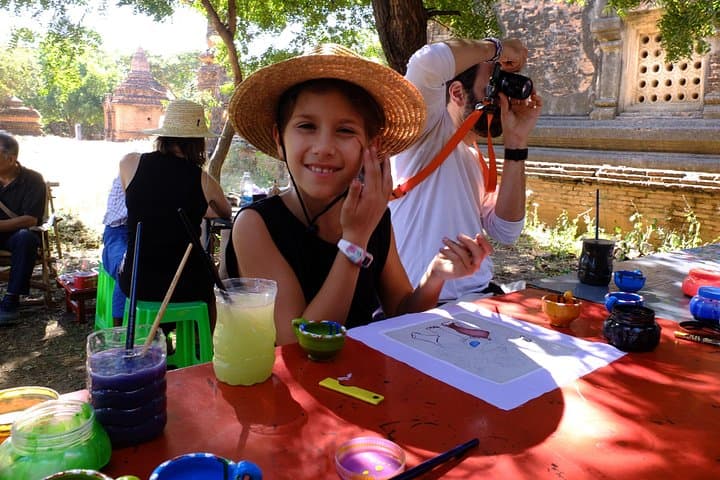
Dawn arrives over the Bagan plain like a slow exhale: warm light pours across brick stupas, and hot-air balloons drift low enough to frame temple spires. Families move quietly through narrow temple corridors while guides point out carved guardians and mural fragments; later, kids concentrate over vessels of colored sand, shaping a souvenir with hands still warm from the morning sun.
Dawn arrives over the Bagan plain like a slow exhale: warm light pours across brick stupas, and hot-air balloons drift low enough to frame temple spires. Families move quietly through narrow temple corridors while guides point out carved guardians and mural fragments; later, kids concentrate over vessels of colored sand, shaping a souvenir with hands still warm from the morning sun.
Bagan was the heart of the Pagan Kingdom (9th–13th centuries), a landscape of over 2,000 surviving temples built from local laterite and brick. The plain’s geology—ancient river sediments from the Ayeyarwady—made brick construction practical and left the site unusually flat, so views are wide and uninterrupted. Daily life here remains tied to Buddhist practice: monasteries with saffron robes, village markets, and lacquerware artisans maintain craft traditions you’ll see up close.
Practical guide: expect a full-day itinerary that starts before sunrise and includes light walking on uneven stone surfaces and compacted dirt. Respect dress codes at religious sites—shoulders and knees covered for everyone—and bring a hat, sturdy closed-toe shoes, and sunscreen. Hydrate: bottled water is provided, but a refillable bottle is handy. Photography is welcomed, though ask before photographing monks. The tour includes hotel pickup and a guide able to tailor storytelling for children. Timing matters—plan the balloon-viewing for early morning and allow downtime after midday heat. Cash in small denominations is useful for tips, snacks, and local artisans. For families, brief activities like the sand painting class and short village visits keep younger travelers engaged while adults absorb the history and sweeping temple views.