THE ADVENTURE COLLECTIVE® · Independent discovery and booking for outdoor travel

Introduce children to ancient Greece with a private, kid-focused tour of Olympia’s museum and ruins. Story-driven activities, museum artifacts, and the Ancient Stadium bring history to life during this 2½-hour family experience.
Introduce children to ancient Greece with a private, kid-focused tour of Olympia’s museum and ruins. Story-driven activities, museum artifacts, and the Ancient Stadium bring history to life during this 2½-hour family experience.
Morning sun finds its way between olive branches and fallen columns as a small group steps through the gates of Olympia. The guide pulls children forward with a story—how athletes once sprinted across packed earth, how a statue of Zeus towered above worshippers—and the ruins stop being stone and become characters in a larger story.
Verified experiences and guided adventures in the surrounding area.
Operated by Tour with Kids · Olympia, Western Greece
Morning sun finds its way between olive branches and fallen columns as a small group steps through the gates of Olympia. The guide pulls children forward with a story—how athletes once sprinted across packed earth, how a statue of Zeus towered above worshippers—and the ruins stop being stone and become characters in a larger story.
The Archaeological Museum of Olympia houses carved marbles, votive offerings and bronze tools that trace daily life across centuries; outside, the Altis and the Ancient Stadium map Greece’s first organized sporting culture. Geologically, the site sits on the alluvial plain of the Alfeios River, where soft limestone and clay preserved columns and foundations rather than towering peaks. Culturally, Olympia was less a city than a sacred landscape shaped by ritual, politics and competition—the Temple of Zeus once held Phidias’s lost chryselephantine colossus.
This private, kid-focused tour combines museum time with hands-on storytelling and games that make inscriptions, statues and the stadium accessible to children. Guides adapt pacing and vocabulary, focusing on tactile details and imagination as much as facts.
Practical notes: the experience runs about 2½ hours and includes entrance to both museum and site, so wear comfortable shoes, sun protection and bring water. Midday heat is real on summer afternoons; mornings or late afternoons are cooler and quieter. Expect light walking over uneven surfaces—strollers are impractical inside the ruins. By keeping to marked paths and listening to the guide, families get a rich, low-stress introduction to one of Greece’s most important archaeological places.
easy.
2–3 hours.
Light walking ability suitable for families and children; able to manage short uneven stretches.
Yes — the tour is designed for families and uses age-appropriate storytelling and activities, but infants should be carried as strollers are often impractical on uneven surfaces.
Yes — the tour price includes admission to the Archaeological Museum and the Archaeological Site of Olympia.
Parts of the museum are accessible, but the outdoor ruins have uneven ground and limited ramps; contact the operator in advance to discuss accommodations.
The tour operates in most weather; bring sun/rain protection. Note that bookings may be non-refundable per the provider’s policy.
Olympia was a pan-Hellenic sanctuary where the ancient Olympic Games began in the 8th century BC; the site once hosted the monumental Temple of Zeus containing Phidias’s famed statue.
The ruins are fragile—stay on marked paths, avoid touching exposed carvings, and support preservation by following guide instructions and using local services.
Tour with Kids operates guided outdoor trips and adventures with an emphasis on safety, stewardship, and memorable experiences.
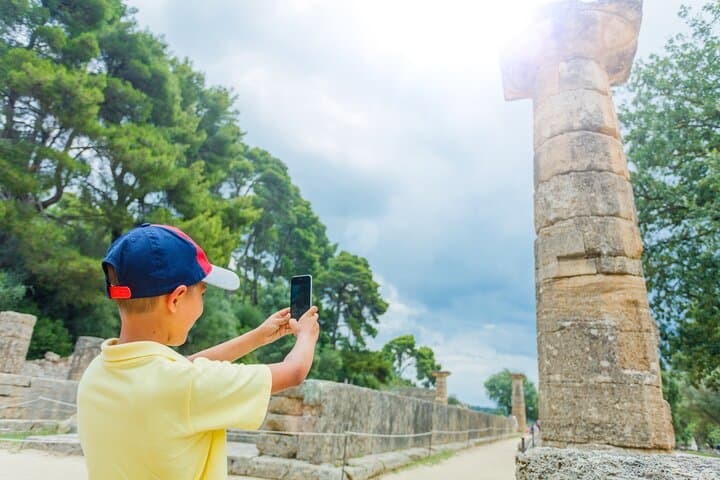
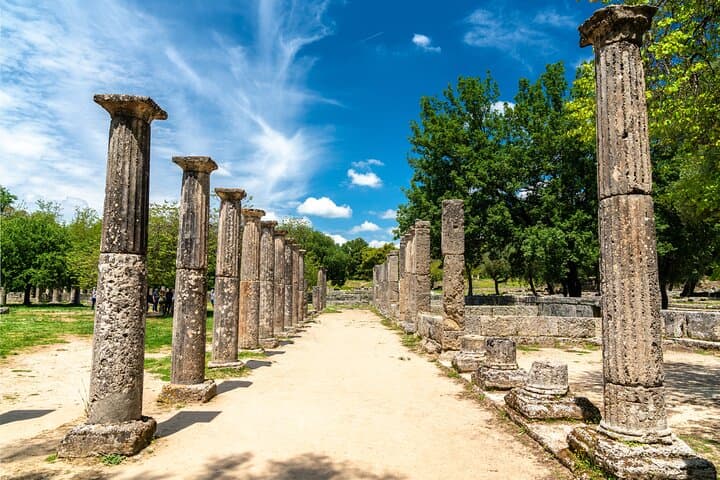
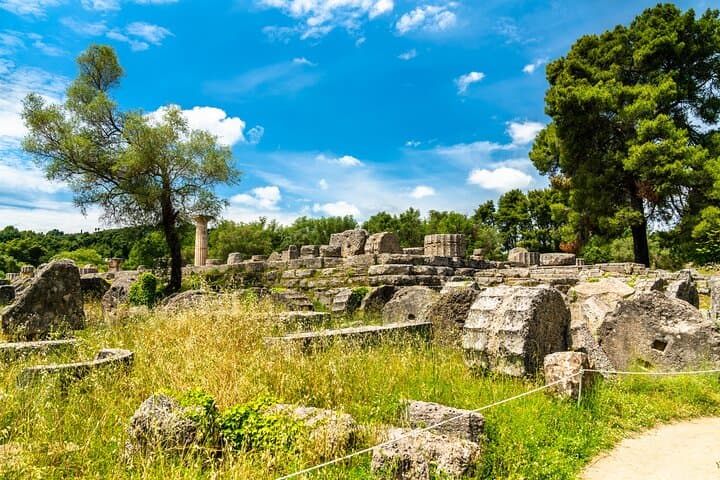
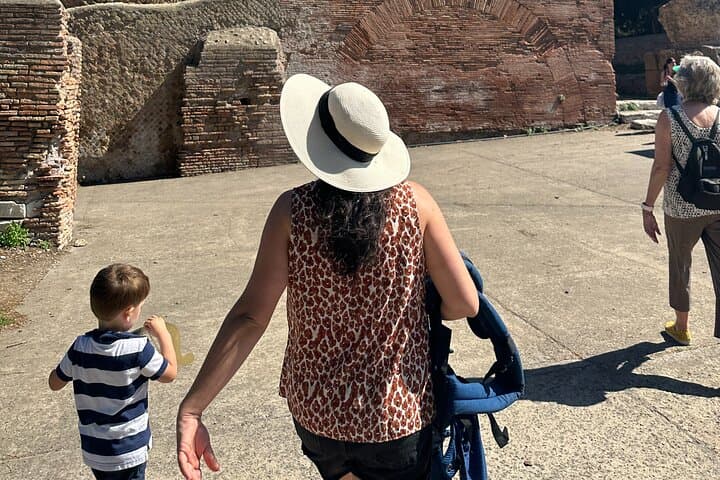
Morning sun finds its way between olive branches and fallen columns as a small group steps through the gates of Olympia. The guide pulls children forward with a story—how athletes once sprinted across packed earth, how a statue of Zeus towered above worshippers—and the ruins stop being stone and become characters in a larger story.
Morning sun finds its way between olive branches and fallen columns as a small group steps through the gates of Olympia. The guide pulls children forward with a story—how athletes once sprinted across packed earth, how a statue of Zeus towered above worshippers—and the ruins stop being stone and become characters in a larger story.
The Archaeological Museum of Olympia houses carved marbles, votive offerings and bronze tools that trace daily life across centuries; outside, the Altis and the Ancient Stadium map Greece’s first organized sporting culture. Geologically, the site sits on the alluvial plain of the Alfeios River, where soft limestone and clay preserved columns and foundations rather than towering peaks. Culturally, Olympia was less a city than a sacred landscape shaped by ritual, politics and competition—the Temple of Zeus once held Phidias’s lost chryselephantine colossus.
This private, kid-focused tour combines museum time with hands-on storytelling and games that make inscriptions, statues and the stadium accessible to children. Guides adapt pacing and vocabulary, focusing on tactile details and imagination as much as facts.
Practical notes: the experience runs about 2½ hours and includes entrance to both museum and site, so wear comfortable shoes, sun protection and bring water. Midday heat is real on summer afternoons; mornings or late afternoons are cooler and quieter. Expect light walking over uneven surfaces—strollers are impractical inside the ruins. By keeping to marked paths and listening to the guide, families get a rich, low-stress introduction to one of Greece’s most important archaeological places.