THE ADVENTURE COLLECTIVE® · Independent discovery and booking for outdoor travel

Walk Pompeii’s streets with a family-friendly guide and bring Roman life into focus—frescoed houses, baths and theaters tell everyday stories preserved by Vesuvius. This two-hour private tour is paced for children 6+ with hands-on interpretation and easy walking.
Walk Pompeii’s streets with a family-friendly guide and bring Roman life into focus—frescoed houses, baths and theaters tell everyday stories preserved by Vesuvius. This two-hour private tour is paced for children 6+ with hands-on interpretation and easy walking.
You step through a low stone arch and the air changes—dusty sunlight cuts across a long street, and voices from an expert guide pull fragments of 2,000-year-old daily life into focus.
Verified experiences and guided adventures in the surrounding area.
Operated by Kids Tours of Rome · Pompeii, Campania
You step through a low stone arch and the air changes—dusty sunlight cuts across a long street, and voices from an expert guide pull fragments of 2,000-year-old daily life into focus.
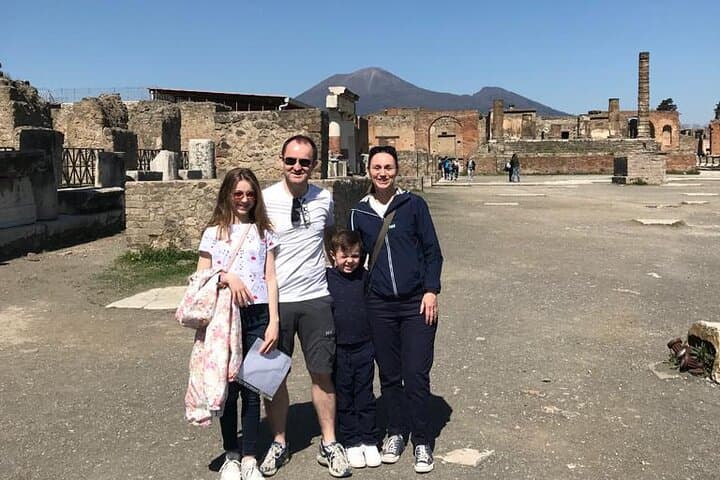
This two-hour family tour threads through Pompeii’s main artery and side alleys, pausing at the House of Menander, the Small Theatre, Roman Baths and the Forum. Mount Vesuvius looms beyond the ruins, a geological actor whose eruption in 79 CE froze plaster casts, frescoes and storefronts in abrupt detail. The site’s volcanic ash preserved urban planning: paved roads with stepping stones, shops with counters still stained by use, and painted homes that reveal social rituals of the Roman middle class.
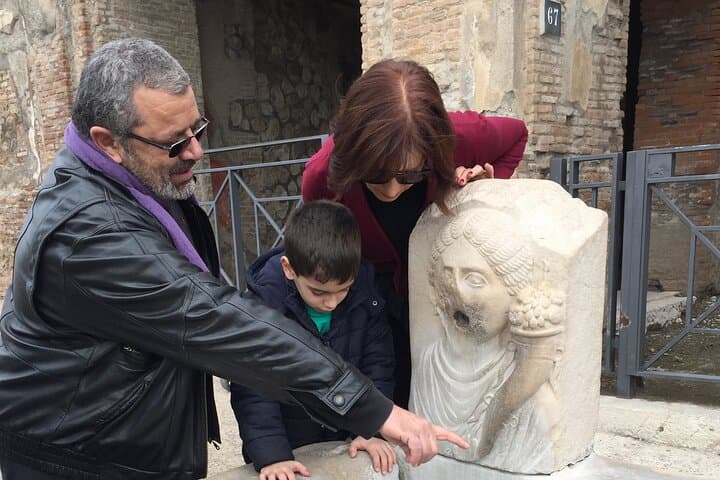
Culturally, Pompeii is a classroom—kids can imagine market trade, public performance and hygiene practices while guides translate artifacts into everyday stories. Architecturally, note the opus reticulatum walls and basalt paving; geologically, the pumice and tuff layers explain how the city was entombed.
Practical guidance: wear sturdy shoes for uneven lava-stone streets, bring water and sun protection (there’s limited shade), and expect gentle walking with short stops tailored for family engagement. The route is largely flat but surfaces are irregular and can be hot in summer; strollers are usable in some sections but a child carrier is often more practical. Book a private, family-focused guide to keep explanations age-appropriate and move at a comfortable pace. Early morning or late afternoon visits reduce heat and crowds and give clearer sightlines for photography. With a little preparation, Pompeii turns from an archaeological site into a tangible, curious world that invites questions and leaves a lasting impression on young travelers.
easy.
2 hours.
Light walking ability; participants should be comfortable on uneven ground for up to two hours.
This product description indicates admission is included as part of the tour package.
Yes; the tour is designed for families with children aged 6 and older and includes age-appropriate commentary.
Strollers are usable on some main thoroughfares but narrow alleys and steps mean a carrier may be more practical for full access.
The tour lasts approximately two hours and is offered as a private family experience according to the listing.
Pompeii was buried by the 79 CE eruption of Mount Vesuvius, preserving urban life in ash and pumice; its excavation since the 18th century shaped modern archaeology.
Heavy foot traffic threatens fragile frescoes and pavements—follow marked paths, avoid touching walls, and support guided visits that fund ongoing preservation.
Kids Tours of Rome operates guided outdoor trips and adventures with an emphasis on safety, stewardship, and memorable experiences.
You step through a low stone arch and the air changes—dusty sunlight cuts across a long street, and voices from an expert guide pull fragments of 2,000-year-old daily life into focus.
You step through a low stone arch and the air changes—dusty sunlight cuts across a long street, and voices from an expert guide pull fragments of 2,000-year-old daily life into focus.
This two-hour family tour threads through Pompeii’s main artery and side alleys, pausing at the House of Menander, the Small Theatre, Roman Baths and the Forum. Mount Vesuvius looms beyond the ruins, a geological actor whose eruption in 79 CE froze plaster casts, frescoes and storefronts in abrupt detail. The site’s volcanic ash preserved urban planning: paved roads with stepping stones, shops with counters still stained by use, and painted homes that reveal social rituals of the Roman middle class.
Culturally, Pompeii is a classroom—kids can imagine market trade, public performance and hygiene practices while guides translate artifacts into everyday stories. Architecturally, note the opus reticulatum walls and basalt paving; geologically, the pumice and tuff layers explain how the city was entombed.
Practical guidance: wear sturdy shoes for uneven lava-stone streets, bring water and sun protection (there’s limited shade), and expect gentle walking with short stops tailored for family engagement. The route is largely flat but surfaces are irregular and can be hot in summer; strollers are usable in some sections but a child carrier is often more practical. Book a private, family-focused guide to keep explanations age-appropriate and move at a comfortable pace. Early morning or late afternoon visits reduce heat and crowds and give clearer sightlines for photography. With a little preparation, Pompeii turns from an archaeological site into a tangible, curious world that invites questions and leaves a lasting impression on young travelers.