THE ADVENTURE COLLECTIVE® · Independent discovery and booking for outdoor travel

Spend a full day tracing centuries of history from the ruined streets of Salamis to the frozen shoreline of Varosha and the fortified heart of Famagusta. This guided tour mixes archaeology, Byzantine icons and modern political history with easy walking and bus transfers.
Spend a full day tracing centuries of history from the ruined streets of Salamis to the frozen shoreline of Varosha and the fortified heart of Famagusta. This guided tour mixes archaeology, Byzantine icons and modern political history with easy walking and bus transfers.
Morning light slices across the eastern Cypriot coast as a small convoy leaves Agia Napa, the Mediterranean stretching blue to the right and the low, scrubby coastal plain unfolding ahead. The tour places you first among the stone streets of Salamis, where cracked columns and a partially rebuilt amphitheatre still push their stories into the open air; footsteps echo on packed earth where chariot wheels once cut furrows.
Verified experiences and guided adventures in the surrounding area.
Operated by Destination Services Cyprus · Famagusta, Famagusta District
Morning light slices across the eastern Cypriot coast as a small convoy leaves Agia Napa, the Mediterranean stretching blue to the right and the low, scrubby coastal plain unfolding ahead. The tour places you first among the stone streets of Salamis, where cracked columns and a partially rebuilt amphitheatre still push their stories into the open air; footsteps echo on packed earth where chariot wheels once cut furrows.
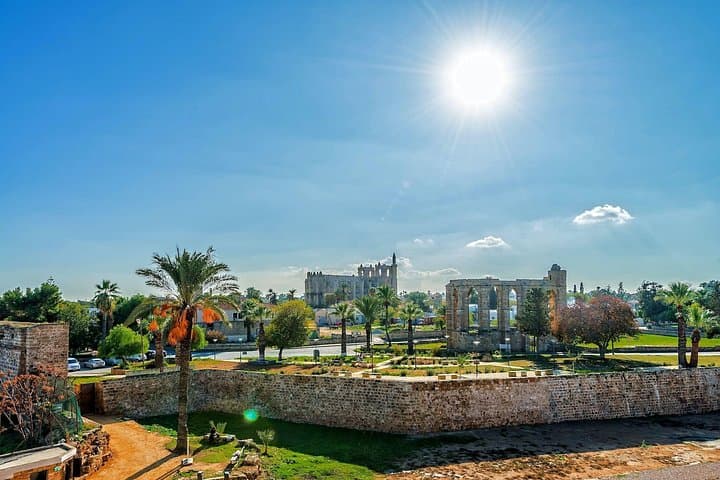
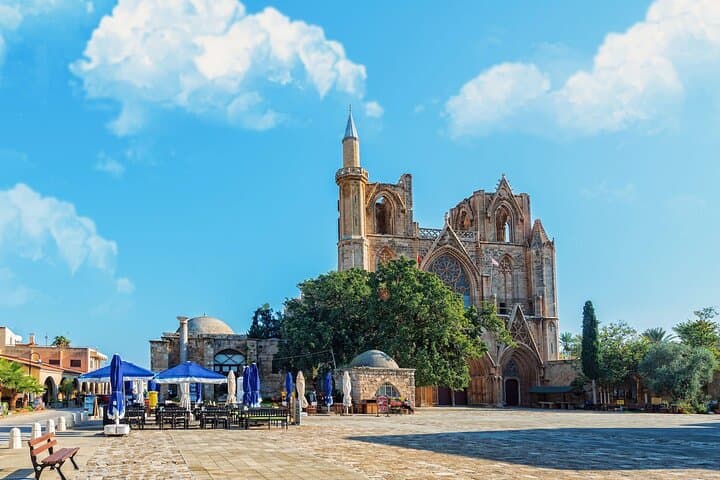
The route threads history—classical Salamis, a 5th‑century Monastery of St Barnabas with its compact icon museum, then the ghostly beaches of Varosha and the fortified walls of Famagusta with its Venetian castle and Gothic cathedral‑turned‑mosque. Geologically the area is flat coastal plain and limestone bedrock; expect easy grades but uneven, archaeological terrain underfoot.
Culturally the day maps shifting borders: medieval trade wealth, Byzantine faith, and the 1974 abandonment that froze Varosha. Practicalities shape the rhythm—this is a full‑day, guided excursion with short walks at each stop and bus transfers between sites (the drive from Agia Napa to Salamis is roughly 20–30 minutes). Visitors must carry passports/ID to cross the checkpoint into the northern area and note nationality restrictions at Strovillia; family documentation rules apply for minors.
Bring sturdy walking shoes, sun protection, and a refillable water bottle; plan for eight hours with breaks for lunch in Famagusta. Respect fragile ruins and follow guide directions—this trip is as much about listening to layered history as it is about seeing it.
easy.
8 hours.
Suitable for most fitness levels; involves multiple short walks (some on uneven ground) and long periods on a coach
Yes — you must carry a passport or national ID to cross the checkpoint into the northern part of Cyprus; some nationalities have additional restrictions.
Admission fees are included in the tour price, and the itinerary notes the Monastery of St Barnabas visit as an included stop.
Lunch is not provided; the schedule includes free time for lunch in Famagusta so bring cash or plan for a café meal.
This tour is marked as not suitable for guests with reduced mobility due to uneven surfaces and steps at archaeological sites.
Famagusta grew wealthy in the medieval period as a major Mediterranean port; Varosha was a popular resort until its abandonment in 1974 following the island’s division.
Archaeological sites are fragile—stay on marked paths, avoid climbing excavated structures, and support local preservation by following guide instructions.
Destination Services Cyprus operates guided outdoor trips and adventures with an emphasis on safety, stewardship, and memorable experiences.
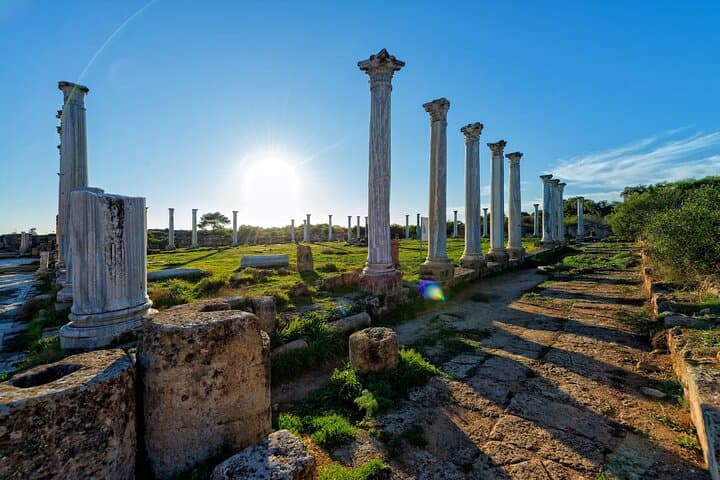
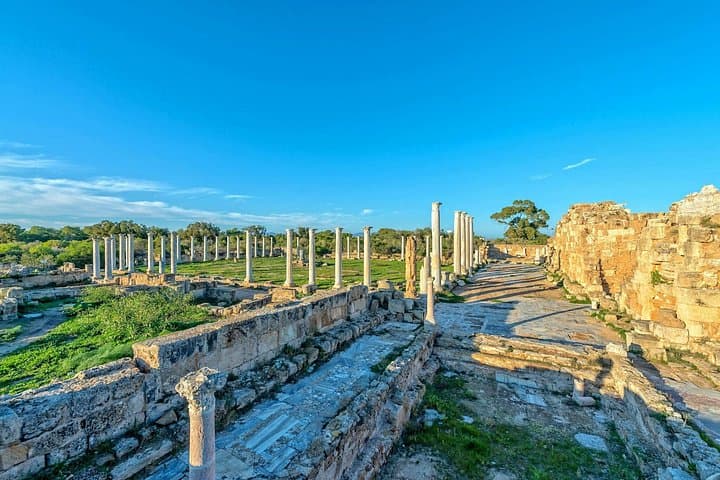
Morning light slices across the eastern Cypriot coast as a small convoy leaves Agia Napa, the Mediterranean stretching blue to the right and the low, scrubby coastal plain unfolding ahead. The tour places you first among the stone streets of Salamis, where cracked columns and a partially rebuilt amphitheatre still push their stories into the open air; footsteps echo on packed earth where chariot wheels once cut furrows.
Morning light slices across the eastern Cypriot coast as a small convoy leaves Agia Napa, the Mediterranean stretching blue to the right and the low, scrubby coastal plain unfolding ahead. The tour places you first among the stone streets of Salamis, where cracked columns and a partially rebuilt amphitheatre still push their stories into the open air; footsteps echo on packed earth where chariot wheels once cut furrows.
The route threads history—classical Salamis, a 5th‑century Monastery of St Barnabas with its compact icon museum, then the ghostly beaches of Varosha and the fortified walls of Famagusta with its Venetian castle and Gothic cathedral‑turned‑mosque. Geologically the area is flat coastal plain and limestone bedrock; expect easy grades but uneven, archaeological terrain underfoot.
Culturally the day maps shifting borders: medieval trade wealth, Byzantine faith, and the 1974 abandonment that froze Varosha. Practicalities shape the rhythm—this is a full‑day, guided excursion with short walks at each stop and bus transfers between sites (the drive from Agia Napa to Salamis is roughly 20–30 minutes). Visitors must carry passports/ID to cross the checkpoint into the northern area and note nationality restrictions at Strovillia; family documentation rules apply for minors.
Bring sturdy walking shoes, sun protection, and a refillable water bottle; plan for eight hours with breaks for lunch in Famagusta. Respect fragile ruins and follow guide directions—this trip is as much about listening to layered history as it is about seeing it.