THE ADVENTURE COLLECTIVE® · Independent discovery and booking for outdoor travel

An atmospheric one-hour walking tour around Falmouth’s harbour and narrow streets, blending maritime history, shipwreck tales and local folklore. Ideal for evening visitors who want a theatrical, accessible introduction to the town’s darker past.
An atmospheric one-hour walking tour around Falmouth’s harbour and narrow streets, blending maritime history, shipwreck tales and local folklore. Ideal for evening visitors who want a theatrical, accessible introduction to the town’s darker past.
Night draws a low tide across Falmouth’s quay and the harbour dares you to look twice; the squeeze box tugs a slow, minor key behind the guide’s voice as lanterns pick out damp cobbles and weathered timbers. This one-hour walking tour moves from the harbour’s edge into narrow streets, where stories of shipwrecked sailors, desperate men and a surprisingly comic corpse are told with theatrical timing and local color.
Verified experiences and guided adventures in the surrounding area.
Operated by Falmouth Uncovered · Falmouth, Cornwall
Night draws a low tide across Falmouth’s quay and the harbour dares you to look twice; the squeeze box tugs a slow, minor key behind the guide’s voice as lanterns pick out damp cobbles and weathered timbers. This one-hour walking tour moves from the harbour’s edge into narrow streets, where stories of shipwrecked sailors, desperate men and a surprisingly comic corpse are told with theatrical timing and local color.
Falmouth’s history is maritime and blunt — a deep, natural harbor formed by the drowned valley of the Carrick Roads, shaped against granite outcrops and slate edges. The town grew on packet ships and global trade, and its past carries darker chapters: wrecks, press gangs and stories tied to the slave trade that still surface in the tellings. The guide layers local lore with pointed context, rooting tall tales in actual places: quaysides, alleys and a small, hard-to-forget cemetery stop.
Practically speaking, the route is paved and flat, suitable for most walkers and wheelchair accessible; expect close quarters in the narrow streets and groups of up to 35. Tours run an hour and often start at dusk — bring a warm, waterproof layer, sensible shoes and a small torch for uneven curbs. Photography is welcome, but be mindful of residential privacy and historic markers. The experience balances theater with responsible history: you’ll leave with a clearer sense of how this coastal town’s geology, economy and misfortunes shaped its stories — and why some of them still refuse to lie down.
easy.
1 hour.
Suitable for most fitness levels; involves standing and walking on paved surfaces for up to an hour
Most departures gather on the main quayside by the harbour; the exact meeting point is confirmed on your booking voucher and the guide will be waiting nearby.
Yes; content varies but the company notes it’s suitable for families — use discretion for very young children as some stories are graphic.
Yes; the operator lists the route as wheelchair accessible, though some historic surfaces can be uneven — contact the operator if you need specific accommodations.
Service animals are permitted; other dogs may not be suitable due to narrow streets and evening crowds—check with the operator in advance.
Falmouth grew as a packet-ship port in the 18th–19th centuries; its deep natural harbour drew trade, naval activity and, inevitably, tales of wrecks and maritime hardship.
Stick to paved routes and avoid trampling any shoreline vegetation; small coastal towns rely on respectful tourism to protect historic structures and the marine environment.
Falmouth Uncovered operates guided outdoor trips and adventures with an emphasis on safety, stewardship, and memorable experiences.
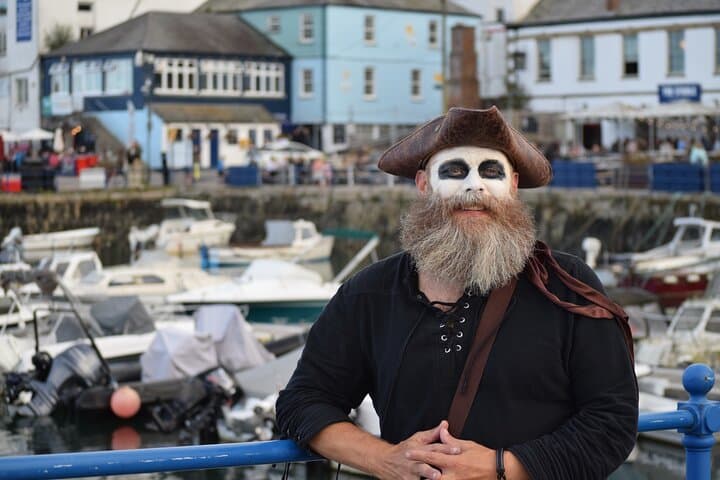
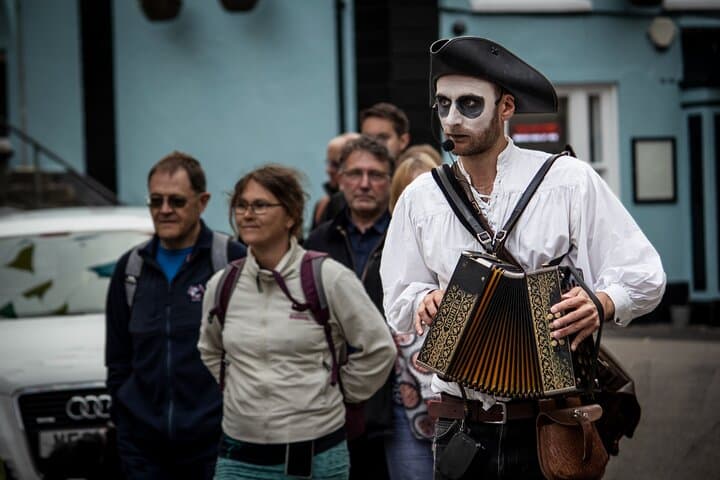

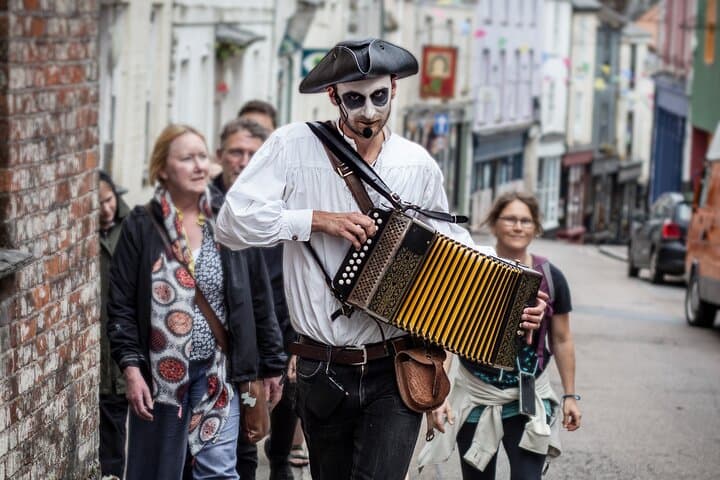
Night draws a low tide across Falmouth’s quay and the harbour dares you to look twice; the squeeze box tugs a slow, minor key behind the guide’s voice as lanterns pick out damp cobbles and weathered timbers. This one-hour walking tour moves from the harbour’s edge into narrow streets, where stories of shipwrecked sailors, desperate men and a surprisingly comic corpse are told with theatrical timing and local color.
Night draws a low tide across Falmouth’s quay and the harbour dares you to look twice; the squeeze box tugs a slow, minor key behind the guide’s voice as lanterns pick out damp cobbles and weathered timbers. This one-hour walking tour moves from the harbour’s edge into narrow streets, where stories of shipwrecked sailors, desperate men and a surprisingly comic corpse are told with theatrical timing and local color.
Falmouth’s history is maritime and blunt — a deep, natural harbor formed by the drowned valley of the Carrick Roads, shaped against granite outcrops and slate edges. The town grew on packet ships and global trade, and its past carries darker chapters: wrecks, press gangs and stories tied to the slave trade that still surface in the tellings. The guide layers local lore with pointed context, rooting tall tales in actual places: quaysides, alleys and a small, hard-to-forget cemetery stop.
Practically speaking, the route is paved and flat, suitable for most walkers and wheelchair accessible; expect close quarters in the narrow streets and groups of up to 35. Tours run an hour and often start at dusk — bring a warm, waterproof layer, sensible shoes and a small torch for uneven curbs. Photography is welcome, but be mindful of residential privacy and historic markers. The experience balances theater with responsible history: you’ll leave with a clearer sense of how this coastal town’s geology, economy and misfortunes shaped its stories — and why some of them still refuse to lie down.