THE ADVENTURE COLLECTIVE® · Independent discovery and booking for outdoor travel

A private day trip from Cairo that pairs desert scenery with rare paleontology: explore Qarun Lake, Wadi El Rayan’s waterfalls and the fossil beds of Wadi Al-Hitan. Expect short hikes, sandy tracks, and a 6-hour itinerary suited to moderately fit travelers.
A private day trip from Cairo that pairs desert scenery with rare paleontology: explore Qarun Lake, Wadi El Rayan’s waterfalls and the fossil beds of Wadi Al-Hitan. Expect short hikes, sandy tracks, and a 6-hour itinerary suited to moderately fit travelers.
You push away from Cairo’s traffic and the highway unfurls — the city noise thins and the desert breathes around you. By midmorning the road bends toward green patches and salt flats, and the golden sand begins to claim the horizon. At Qarun Lake white gulls wheel over shallow water while dunes keep a patient watch; further west, Wadi El Rayan’s stepped lakes and seasonal waterfalls dare you to pause.
Verified experiences and guided adventures in the surrounding area.
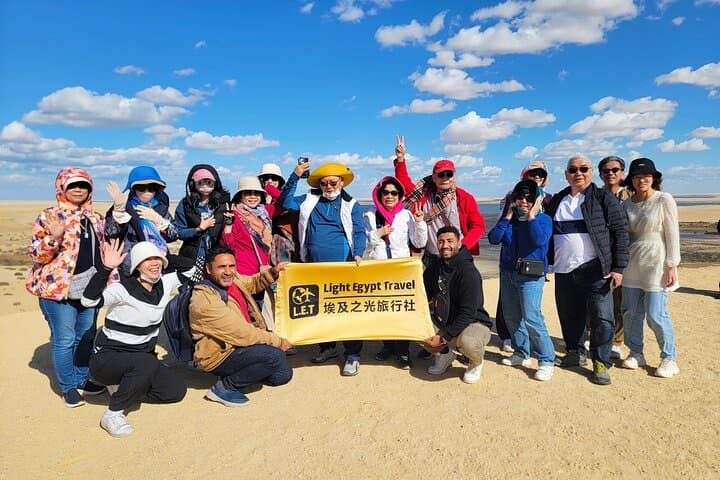
Operated by Light Egypt Travel · Faiyum, Faiyum Governorate
You push away from Cairo’s traffic and the highway unfurls — the city noise thins and the desert breathes around you. By midmorning the road bends toward green patches and salt flats, and the golden sand begins to claim the horizon. At Qarun Lake white gulls wheel over shallow water while dunes keep a patient watch; further west, Wadi El Rayan’s stepped lakes and seasonal waterfalls dare you to pause.
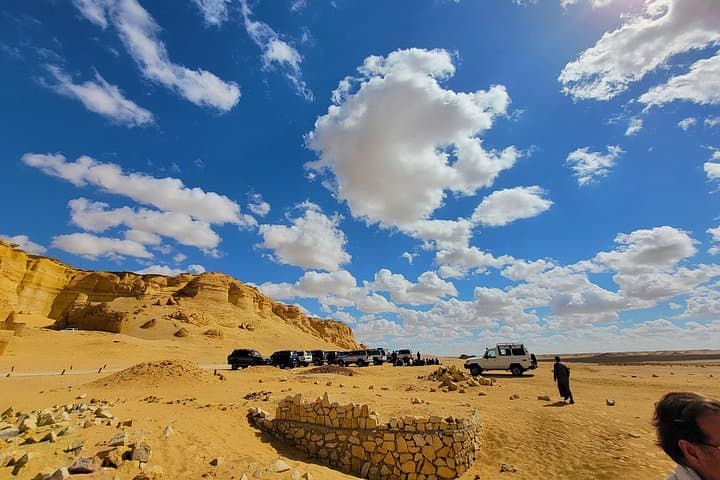
This circuit traces millennia: Qarun Lake is a basin with ancient irrigation stories, Wadi El Rayan is a modern, man-made reserve formed by drainage waters, and Wadi Al-Hitan (Valley of the Whales) preserves 40-million-year-old whale fossils that map an evolutionary journey from land to sea. Geology here reads like a field notebook — limestone beds, fossilized vertebrae, and wind-sanded escarpments.
Local culture is pragmatic: small farming villages around the oasis tend palm groves and cultivate desert-adapted crops; guides often point out pottery shards and irrigation channels that show long-term human ingenuity.
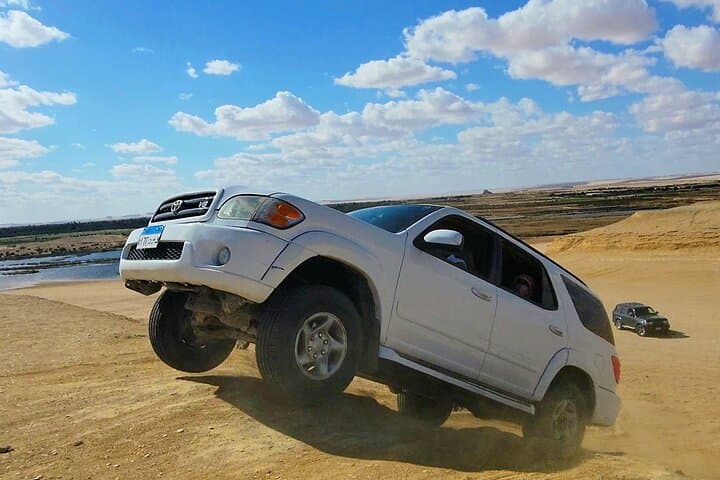
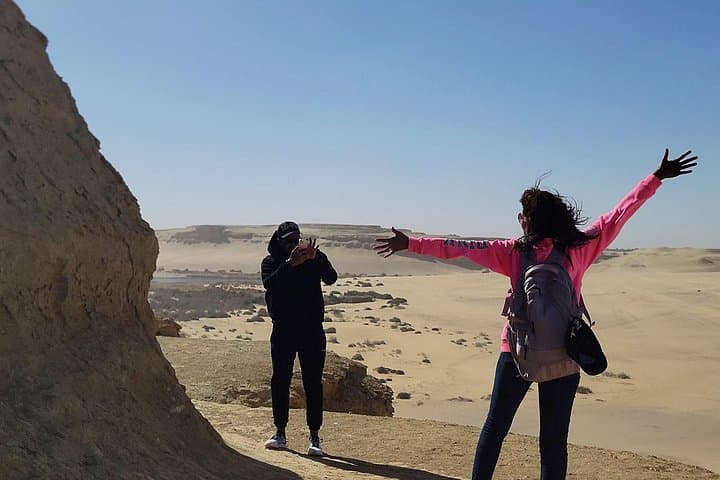
Practical guidance: expect a full, roughly 6-hour private tour with short hikes on uneven ground and sandy tracks. Bring sun protection, layered clothing for wind, and at least 1.5–2 liters of water. Photography is excellent around dawn or late afternoon light; fossils at Wadi Al-Hitan are exposed and fragile, so observe but don’t touch. The route is accessible by standard vehicle and suits travelers with moderate fitness — you’ll step over rocks, climb short rises, and stand in exposed sun. Timing your visit outside the peak summer heat makes the landscapes more comfortable and the wildlife sightings more likely.
moderate.
6 hours.
Moderate — able to walk short distances over uneven, sandy or rocky terrain and stand for observation periods
The private tour lasts about 6 hours; it includes a licensed guide, private vehicle transfers from the pickup point, and visits to Wadi El Rayan and Wadi Al-Hitan as described.
The tour notes stroller and basic wheelchair accessibility for vehicle transfers, but fossil sites and short hikes involve uneven ground — assistance may be required for full participation.
Swimming is generally not encouraged due to water quality and protected reserve rules; check with your guide for current local regulations.
Carry your passport or ID as requested at booking for entrance formalities; no special permits are needed for standard tourist access to these sites.
Faiyum has been an agricultural center since Pharaonic times; Qarun (Lake Moeris in antiquity) was once part of an engineered irrigation system that supported ancient settlements.
Wadi Al-Hitan is UNESCO-listed and protected for its paleontological value — visitors should stay on marked paths; Wadi El Rayan balances human drainage use with wetland habitat conservation.
Light Egypt Travel operates guided outdoor trips and adventures with an emphasis on safety, stewardship, and memorable experiences.
You push away from Cairo’s traffic and the highway unfurls — the city noise thins and the desert breathes around you. By midmorning the road bends toward green patches and salt flats, and the golden sand begins to claim the horizon. At Qarun Lake white gulls wheel over shallow water while dunes keep a patient watch; further west, Wadi El Rayan’s stepped lakes and seasonal waterfalls dare you to pause.
You push away from Cairo’s traffic and the highway unfurls — the city noise thins and the desert breathes around you. By midmorning the road bends toward green patches and salt flats, and the golden sand begins to claim the horizon. At Qarun Lake white gulls wheel over shallow water while dunes keep a patient watch; further west, Wadi El Rayan’s stepped lakes and seasonal waterfalls dare you to pause.
This circuit traces millennia: Qarun Lake is a basin with ancient irrigation stories, Wadi El Rayan is a modern, man-made reserve formed by drainage waters, and Wadi Al-Hitan (Valley of the Whales) preserves 40-million-year-old whale fossils that map an evolutionary journey from land to sea. Geology here reads like a field notebook — limestone beds, fossilized vertebrae, and wind-sanded escarpments.
Local culture is pragmatic: small farming villages around the oasis tend palm groves and cultivate desert-adapted crops; guides often point out pottery shards and irrigation channels that show long-term human ingenuity.
Practical guidance: expect a full, roughly 6-hour private tour with short hikes on uneven ground and sandy tracks. Bring sun protection, layered clothing for wind, and at least 1.5–2 liters of water. Photography is excellent around dawn or late afternoon light; fossils at Wadi Al-Hitan are exposed and fragile, so observe but don’t touch. The route is accessible by standard vehicle and suits travelers with moderate fitness — you’ll step over rocks, climb short rises, and stand in exposed sun. Timing your visit outside the peak summer heat makes the landscapes more comfortable and the wildlife sightings more likely.