THE ADVENTURE COLLECTIVE® · Independent discovery and booking for outdoor travel

Climb into a Fairchild PT-19 for a 30-minute private flight over Middletown and Caesar Creek — a hands-on taste of WWII pilot training with an on-site museum. Weather-dependent and ideal for aviation fans.
Climb into a Fairchild PT-19 for a 30-minute private flight over Middletown and Caesar Creek — a hands-on taste of WWII pilot training with an on-site museum. Weather-dependent and ideal for aviation fans.
The engine settles into a steady hum and the world narrows to a patchwork of fields and the ribbon of Caesar Creek daring you below. In the single-seat feel of the PT-19 — framed by a simple cockpit and a wooden propeller that still remembers wartime RPMs — passengers gain a pilot’s-eye view of southwest Ohio: farmland, the edge of Dayton’s sprawl, and the slow, glinting turns of the river.
Verified experiences and guided adventures in the surrounding area.
Operated by Butler County Warbirds Inc. · Middletown, Ohio
The engine settles into a steady hum and the world narrows to a patchwork of fields and the ribbon of Caesar Creek daring you below. In the single-seat feel of the PT-19 — framed by a simple cockpit and a wooden propeller that still remembers wartime RPMs — passengers gain a pilot’s-eye view of southwest Ohio: farmland, the edge of Dayton’s sprawl, and the slow, glinting turns of the river.
The Fairchild PT-19 was a primary trainer for WWII cadets; its straight-tail design and simple controls introduced thousands to basic flight. Geologically, the route highlights glacially scoured river valleys and low rolling ridges carved by tributaries of the Great Miami River. Culturally, the flight ties into the region’s aviation legacy — nearby Dayton’s history of innovation and the “Cradle of Heroes” lore that trained America’s wartime pilots.
Expect a tightly scheduled experience: a preflight briefing, a 30-minute airborne segment with opportunities to take the controls under instructor supervision, then time in a small WWII museum packed with artifacts. Weather governs operations — wind limits and no-precipitation rules protect the wooden prop and airframe — so flexibility is essential.
Practical guidance: arrive early with a photo ID and your weight disclosed; wear closed-toe shoes and layers for the open-cockpit feel. Bring a small camera (secure it), and plan for roughly 1–2 hours on site including the museum visit. The flight is gentle but thrilling — a short, direct connection to the mechanics and history of early military flight.
easy.
1–2 hours.
Suitable for most people in general good health; no strenuous activity required but stable mobility for boarding a low cockpit is helpful.
Standard maximum is 235 lbs; the operator can sometimes accommodate up to 265 lbs with advance notice to rebalance the aircraft.
Flights are canceled for precipitation, winds above 20 knots, or outside-air temperatures below 40°F to protect the wooden prop and engine oil performance.
Yes — under instructor supervision passengers can experience basic control inputs to feel how WWII cadets learned to fly.
Not recommended for pregnant travelers; suitability for children depends on weight and ability to follow safety briefings — verify age and weight restrictions when booking.
The PT-19 was a primary trainer during WWII used at civilian and military flight schools; the local operation ties directly into southwest Ohio’s long aviation heritage centered on nearby Dayton.
Operators avoid flying in precipitation to preserve the aircraft’s wooden components; the on-site museum promotes restoration and responsible preservation of historic aircraft.
Butler County Warbirds Inc. operates guided outdoor trips and adventures with an emphasis on safety, stewardship, and memorable experiences.
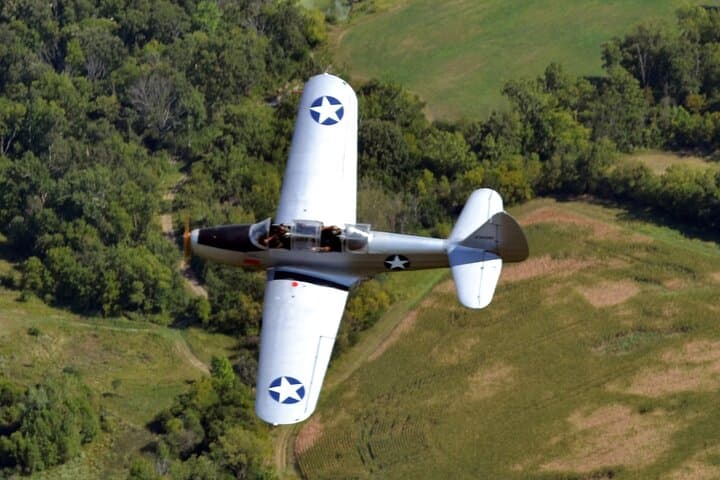
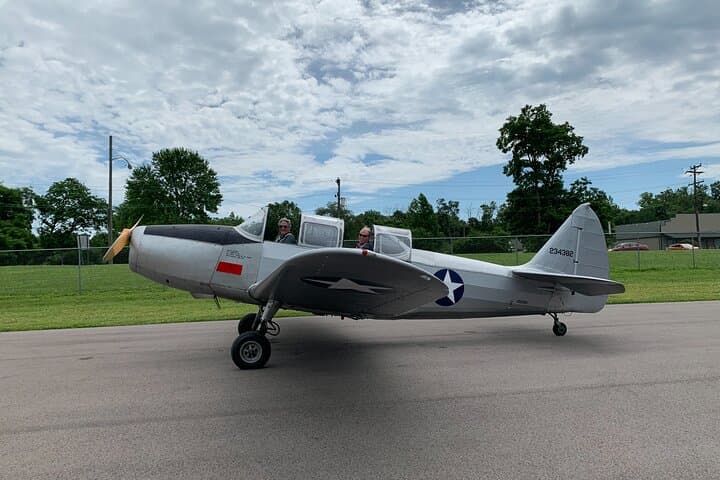
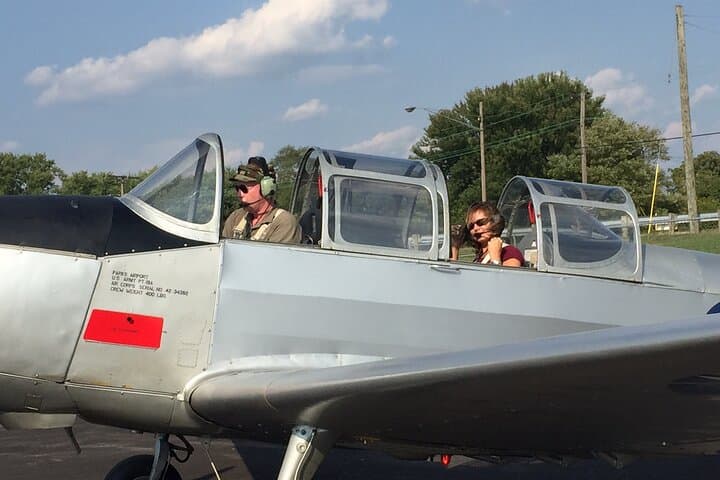
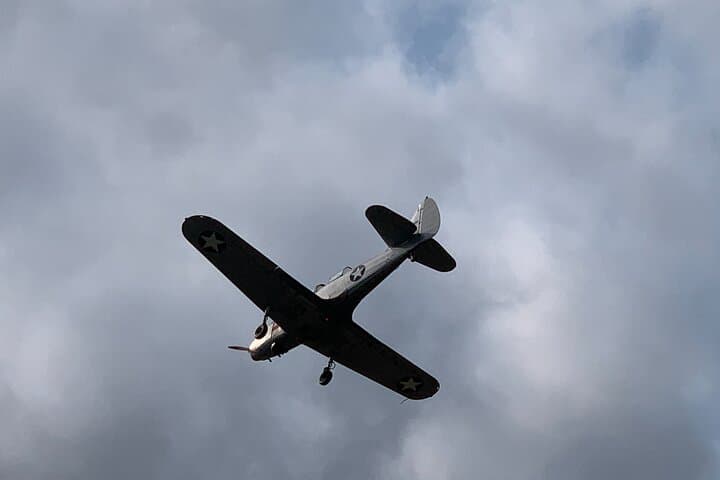
The engine settles into a steady hum and the world narrows to a patchwork of fields and the ribbon of Caesar Creek daring you below. In the single-seat feel of the PT-19 — framed by a simple cockpit and a wooden propeller that still remembers wartime RPMs — passengers gain a pilot’s-eye view of southwest Ohio: farmland, the edge of Dayton’s sprawl, and the slow, glinting turns of the river.
The engine settles into a steady hum and the world narrows to a patchwork of fields and the ribbon of Caesar Creek daring you below. In the single-seat feel of the PT-19 — framed by a simple cockpit and a wooden propeller that still remembers wartime RPMs — passengers gain a pilot’s-eye view of southwest Ohio: farmland, the edge of Dayton’s sprawl, and the slow, glinting turns of the river.
The Fairchild PT-19 was a primary trainer for WWII cadets; its straight-tail design and simple controls introduced thousands to basic flight. Geologically, the route highlights glacially scoured river valleys and low rolling ridges carved by tributaries of the Great Miami River. Culturally, the flight ties into the region’s aviation legacy — nearby Dayton’s history of innovation and the “Cradle of Heroes” lore that trained America’s wartime pilots.
Expect a tightly scheduled experience: a preflight briefing, a 30-minute airborne segment with opportunities to take the controls under instructor supervision, then time in a small WWII museum packed with artifacts. Weather governs operations — wind limits and no-precipitation rules protect the wooden prop and airframe — so flexibility is essential.
Practical guidance: arrive early with a photo ID and your weight disclosed; wear closed-toe shoes and layers for the open-cockpit feel. Bring a small camera (secure it), and plan for roughly 1–2 hours on site including the museum visit. The flight is gentle but thrilling — a short, direct connection to the mechanics and history of early military flight.