THE ADVENTURE COLLECTIVE® · Independent discovery and booking for outdoor travel

Chase the aurora in a private, small-group photography workshop from Fairbanks. This 6–8 hour guided tour focuses on remote viewing spots and hands-on instruction for all skill levels.
Chase the aurora in a private, small-group photography workshop from Fairbanks. This 6–8 hour guided tour focuses on remote viewing spots and hands-on instruction for all skill levels.
A cold hush settles over the boreal forest as headlights slip off the Parks Highway and the dome of night opens above Fairbanks. On a clear night here — at roughly 65°N, directly beneath the northern auroral oval — curtains of green and purple can appear without warning, folding and unfurling across a wide, dark sky. This private, small-group tour moves by vehicle to remote vantage points along the Parks, Elliott and Richardson highways, giving you room to set a tripod and let slow exposures do the work.
Verified experiences and guided adventures in the surrounding area.
Operated by Far North Aurora Tours · Fairbanks, Alaska
A cold hush settles over the boreal forest as headlights slip off the Parks Highway and the dome of night opens above Fairbanks. On a clear night here — at roughly 65°N, directly beneath the northern auroral oval — curtains of green and purple can appear without warning, folding and unfurling across a wide, dark sky. This private, small-group tour moves by vehicle to remote vantage points along the Parks, Elliott and Richardson highways, giving you room to set a tripod and let slow exposures do the work.
Interior Alaska’s landscape is simple and honest: wide lakes, black spruce, and distant mountain ridgelines carved by glaciation and time. Fairbanks was founded in the early 20th-century gold rush and remains a gateway town to Denali and the Alaska Range; the region’s Indigenous Athabascan heritage and subsistence traditions persist in local place names and seasonal rhythms. Geologically, the open northern aspect and sparse light pollution create one of the world’s most reliable aurora-viewing corridors.
Practical notes: the tour runs 6–8 hours with pickup in Fairbanks, limited to two guests for individualized instruction. Expect hands-on lessons in long-exposure settings, composition for aurora portraits, and in-field troubleshooting; tripods and camera rentals are available. Dress for prolonged cold — insulated boots, layered outerwear, warm gloves, and warm pockets for batteries are essential. Keep batteries warm, use a sturdy tripod, and allow time for your eyes to adapt to darkness. Drivers should be prepared for variable winter road conditions; the guide adjusts routes nightly based on cloud cover and KP activity. With preparation, this trip pairs technical skill-building and quiet, wide-sky moments under one of the planet’s most dramatic natural light shows.
easy.
6–8 hours.
Suitable for most fitness levels; involves standing and moving short distances outdoors in cold for extended periods
Aurora season in Fairbanks runs roughly from late August through April; the darkest months (November–February) offer the most nighttime visibility.
No—guides tailor instruction for all skill levels and camera rentals are available if you need equipment.
Pickup and drop-off are provided in Fairbanks; exact pickup point is confirmed at booking and tours depart after local dusk.
Tours may be canceled for poor conditions; the operator monitors cloud cover and KP forecasts and will cancel for safety or lack of visibility (refunds per policy).
Fairbanks grew as a gold-rush supply town in the early 1900s and sits in the traditional territory of Athabascan peoples; its latitude places it beneath the auroral oval.
Minimize local impact by avoiding idling vehicles, packing out trash, and keeping a respectful distance from wildlife; low light-use helps preserve dark-sky quality.
Far North Aurora Tours operates guided outdoor trips and adventures with an emphasis on safety, stewardship, and memorable experiences.
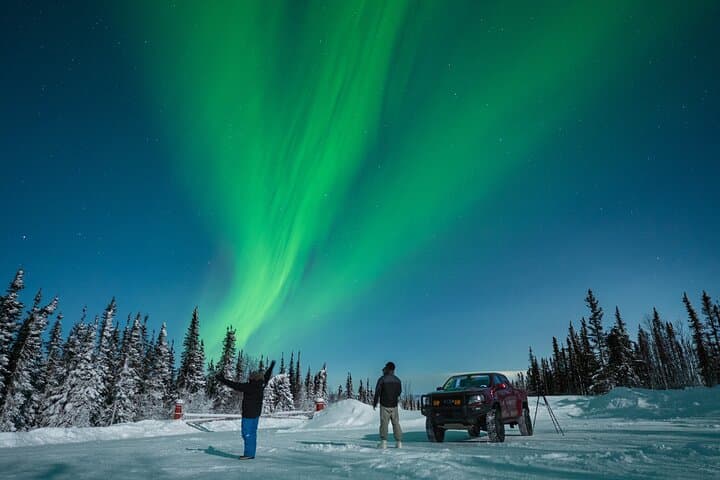

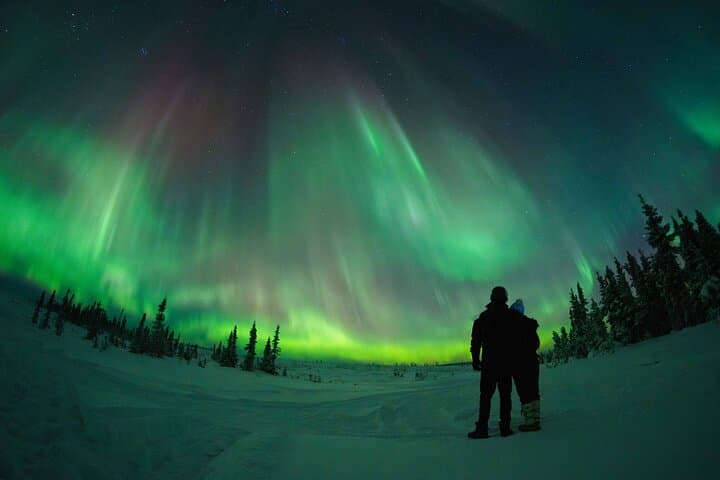
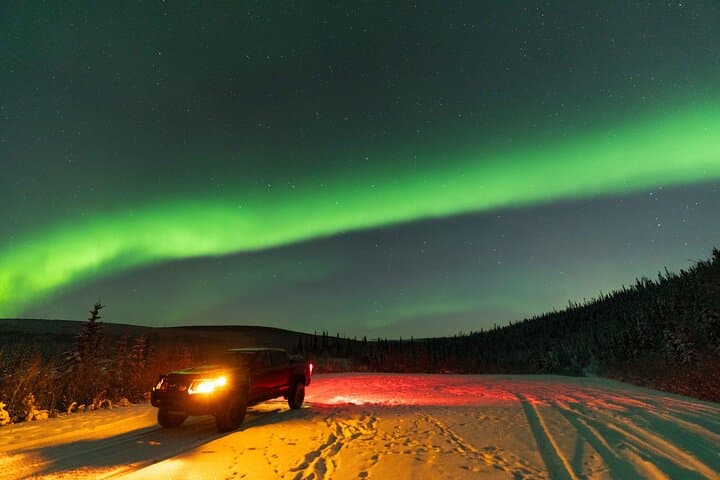
A cold hush settles over the boreal forest as headlights slip off the Parks Highway and the dome of night opens above Fairbanks. On a clear night here — at roughly 65°N, directly beneath the northern auroral oval — curtains of green and purple can appear without warning, folding and unfurling across a wide, dark sky. This private, small-group tour moves by vehicle to remote vantage points along the Parks, Elliott and Richardson highways, giving you room to set a tripod and let slow exposures do the work.
A cold hush settles over the boreal forest as headlights slip off the Parks Highway and the dome of night opens above Fairbanks. On a clear night here — at roughly 65°N, directly beneath the northern auroral oval — curtains of green and purple can appear without warning, folding and unfurling across a wide, dark sky. This private, small-group tour moves by vehicle to remote vantage points along the Parks, Elliott and Richardson highways, giving you room to set a tripod and let slow exposures do the work.
Interior Alaska’s landscape is simple and honest: wide lakes, black spruce, and distant mountain ridgelines carved by glaciation and time. Fairbanks was founded in the early 20th-century gold rush and remains a gateway town to Denali and the Alaska Range; the region’s Indigenous Athabascan heritage and subsistence traditions persist in local place names and seasonal rhythms. Geologically, the open northern aspect and sparse light pollution create one of the world’s most reliable aurora-viewing corridors.
Practical notes: the tour runs 6–8 hours with pickup in Fairbanks, limited to two guests for individualized instruction. Expect hands-on lessons in long-exposure settings, composition for aurora portraits, and in-field troubleshooting; tripods and camera rentals are available. Dress for prolonged cold — insulated boots, layered outerwear, warm gloves, and warm pockets for batteries are essential. Keep batteries warm, use a sturdy tripod, and allow time for your eyes to adapt to darkness. Drivers should be prepared for variable winter road conditions; the guide adjusts routes nightly based on cloud cover and KP activity. With preparation, this trip pairs technical skill-building and quiet, wide-sky moments under one of the planet’s most dramatic natural light shows.