THE ADVENTURE COLLECTIVE® · Independent discovery and booking for outdoor travel

Small-group, private aurora workshops based in Fairbanks that prioritize remote shooting locations and one-on-one camera instruction. Expect late-night fieldwork, hot drinks, and practical coaching on long-exposure techniques.
Small-group, private aurora workshops based in Fairbanks that prioritize remote shooting locations and one-on-one camera instruction. Expect late-night fieldwork, hot drinks, and practical coaching on long-exposure techniques.
A cold wind moves across the Tanana Valley and the sky begins to stir—threads of green unfurling above spruce and open tundra. On a private workshop out of Fairbanks you’ll sit in a heated Grand Wagoneer, watch the horizon for breaks in cloud, then step out to frame the aurora’s motion against ridgelines and frozen lakes.
Verified experiences and guided adventures in the surrounding area.
Operated by Capture Wild Alaska · Fairbanks, Alaska
A cold wind moves across the Tanana Valley and the sky begins to stir—threads of green unfurling above spruce and open tundra. On a private workshop out of Fairbanks you’ll sit in a heated Grand Wagoneer, watch the horizon for breaks in cloud, then step out to frame the aurora’s motion against ridgelines and frozen lakes.
This region sits on continuous permafrost and was a crossroads for Athabascan peoples long before the gold rush made Fairbanks a supply hub in the early 1900s. The aurora itself is a visible echo of geomagnetic energy from the sun interacting with Earth’s atmosphere; photographers chase that charged light where human-made glow is lowest—on back roads and low-traffic dome sites north and east of town.
Expect long exposures and deliberate pacing: set up your tripod, lock down composition, and pay attention to battery life in cold air. Guides choose vantage points to minimize light pollution and provide one-on-one instruction on aperture, ISO and shutter speeds so beginners produce usable images while advanced shooters push for timelapse and stacking techniques.
Practicalities matter here—hot drinks and snacks are provided, and pickup from Fairbanks lodging simplifies logistics. Rentals (cameras, tripods) are available, but bring spare batteries and insulated layers. Plan for a late-night window—solar activity is unpredictable—so be flexible and prioritize safety when leaving the vehicle. With small groups, experienced guides, and the right kit, this workshop turns raw northern chaos into composed photographs you can print and keep.
easy.
5–6 hours.
Suitable for most fitness levels; requires standing and walking short distances on uneven, possibly icy ground.
Yes — guides pick up guests from central Fairbanks lodging; exact pickup point is confirmed at booking.
Yes — rental cameras and tripods can be provided; request them in advance when you book.
Aurora season in Interior Alaska runs late August through April, with peak darkness and clearer skies in winter months.
Yes — the workshop welcomes beginners and includes individualized instruction on camera settings and composition.
Fairbanks grew rapidly during the early 20th-century gold rush and sits on lands long used by Athabascan communities; the aurora has been observed and interpreted here for generations.
Guides aim to minimize light pollution by choosing low-traffic sites; visitors should follow leave-no-trace practices and avoid disturbing wildlife.
Capture Wild Alaska operates guided outdoor trips and adventures with an emphasis on safety, stewardship, and memorable experiences.
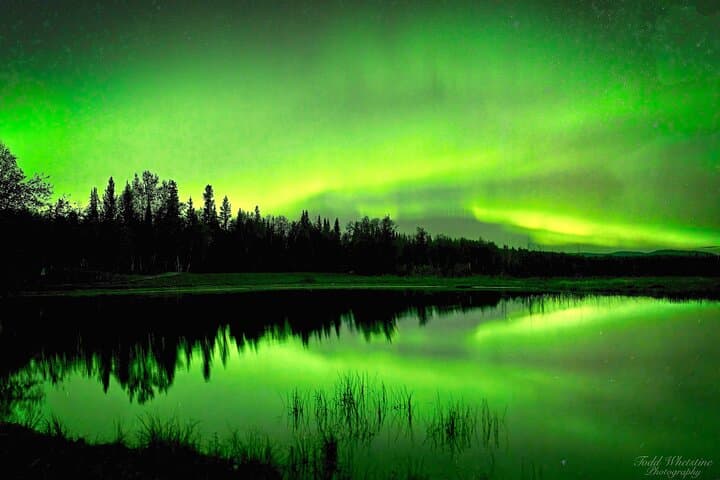
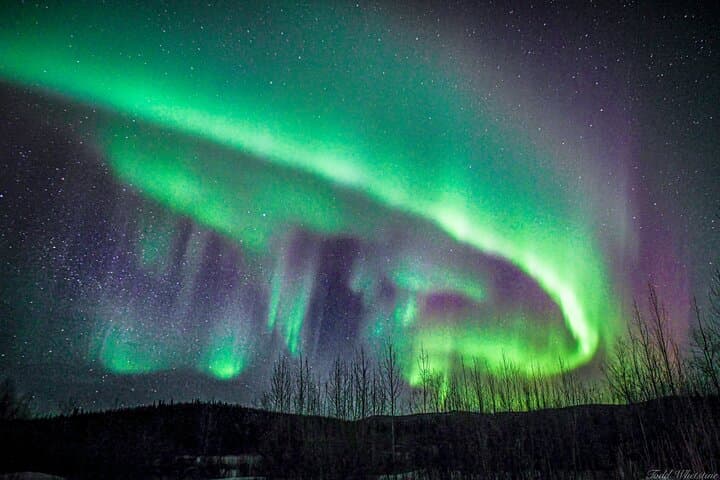
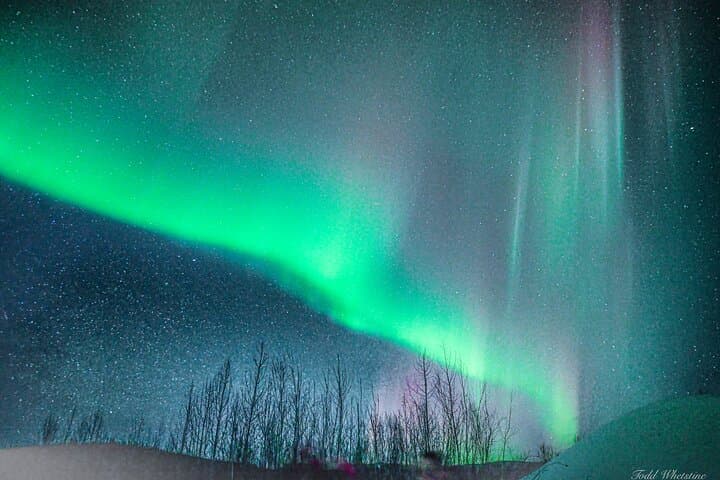
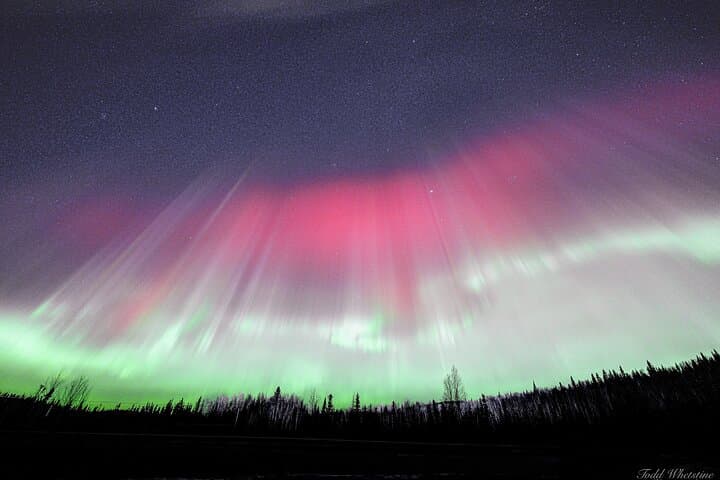
A cold wind moves across the Tanana Valley and the sky begins to stir—threads of green unfurling above spruce and open tundra. On a private workshop out of Fairbanks you’ll sit in a heated Grand Wagoneer, watch the horizon for breaks in cloud, then step out to frame the aurora’s motion against ridgelines and frozen lakes.
A cold wind moves across the Tanana Valley and the sky begins to stir—threads of green unfurling above spruce and open tundra. On a private workshop out of Fairbanks you’ll sit in a heated Grand Wagoneer, watch the horizon for breaks in cloud, then step out to frame the aurora’s motion against ridgelines and frozen lakes.
This region sits on continuous permafrost and was a crossroads for Athabascan peoples long before the gold rush made Fairbanks a supply hub in the early 1900s. The aurora itself is a visible echo of geomagnetic energy from the sun interacting with Earth’s atmosphere; photographers chase that charged light where human-made glow is lowest—on back roads and low-traffic dome sites north and east of town.
Expect long exposures and deliberate pacing: set up your tripod, lock down composition, and pay attention to battery life in cold air. Guides choose vantage points to minimize light pollution and provide one-on-one instruction on aperture, ISO and shutter speeds so beginners produce usable images while advanced shooters push for timelapse and stacking techniques.
Practicalities matter here—hot drinks and snacks are provided, and pickup from Fairbanks lodging simplifies logistics. Rentals (cameras, tripods) are available, but bring spare batteries and insulated layers. Plan for a late-night window—solar activity is unpredictable—so be flexible and prioritize safety when leaving the vehicle. With small groups, experienced guides, and the right kit, this workshop turns raw northern chaos into composed photographs you can print and keep.