THE ADVENTURE COLLECTIVE® · Independent discovery and booking for outdoor travel

Spend a winter night outside Fairbanks in a wood-heated yurt, swapping hot cocoa for a half-hour dog-sled mush under the Northern Lights. This compact, two-hour outing mixes aurora viewing with guided sled runs through black spruce and frozen ponds.
Spend a winter night outside Fairbanks in a wood-heated yurt, swapping hot cocoa for a half-hour dog-sled mush under the Northern Lights. This compact, two-hour outing mixes aurora viewing with guided sled runs through black spruce and frozen ponds.
Snow presses low against the yurt’s wood stove as the night tightens around the boreal forest. Inside, steam rises from hot cocoa and the guides tighten harnesses; outside, teams of eager Siberian huskies paw the snow, ready to pull. The experience alternates quiet stargazing from a Mongolian yurt built for unobstructed sky views with short, thrilling dog-sled runs that push you through black spruce, across frozen ponds and over open tundra.
Verified experiences and guided adventures in the surrounding area.
Operated by Last Frontier Mushing Co-op · Fairbanks, Alaska
Snow presses low against the yurt’s wood stove as the night tightens around the boreal forest. Inside, steam rises from hot cocoa and the guides tighten harnesses; outside, teams of eager Siberian huskies paw the snow, ready to pull. The experience alternates quiet stargazing from a Mongolian yurt built for unobstructed sky views with short, thrilling dog-sled runs that push you through black spruce, across frozen ponds and over open tundra.
This edge-of-Arctic landscape has sustained Athabascan people and mushers for generations; sled dogs were once essential transport and remain cultural touchstones in interior Alaska. Geologically the Fairbanks region sits on alluvial terraces and permafrost features—flat river valleys framed by low hills—that create broad northern horizons ideal for aurora watching. Local guides combine mushing heritage with modern hospitality: expect smoky coffee, smoked salmon snacks and a patient focus on safety.
Practically, tours run at night and are weather-dependent; guides position guests away from city light for the best aurora odds. Temperatures can drop well below freezing and wind will magnify cold on open sleds, so insulating layers and windproof shells are essential. The dog runs are short (about 20–30 minutes per group) and guided; no sledding experience is required, but a moderate level of fitness helps for standing and bracing on the runners.
Plan travel time carefully—the property’s access roads are specific and misrouting is common. Bring a headlamp with red filter, hand warmers, and a camera tripod if you want usable aurora photos. The reward is simple and immediate: the sky shifts color while dogs glance up, impatient to run again.
moderate.
2 hours.
Suitable for travelers in reasonably good health who can stand on a sled runner and manage cold-weather conditions
Each group completes approximately a 20–30 minute guided mush on groomed trails; the full experience includes time in the yurt and rotations for both groups.
No—aurora sightings depend on solar activity and clear skies; guides maximize odds by operating away from light pollution but cannot guarantee sightings.
Operators typically set limits for safety—bookings collect weight and ages; infants must sit on laps and guests with serious health issues are advised not to participate.
Dress in insulated layers, windproof outerwear, warm boots, and bring hand warmers, a headlamp with red mode, and spare batteries for cameras.
Sled dogs were central to Athabascan travel and later to Fairbanks’ gold-era logistics; modern mushing preserves both cultural practice and recreational sport.
Guides emphasize low light use and pack-in/pack-out practices to protect dark-sky quality and minimize disturbance to wildlife and sled dogs.
Last Frontier Mushing Co-op operates guided outdoor trips and adventures with an emphasis on safety, stewardship, and memorable experiences.
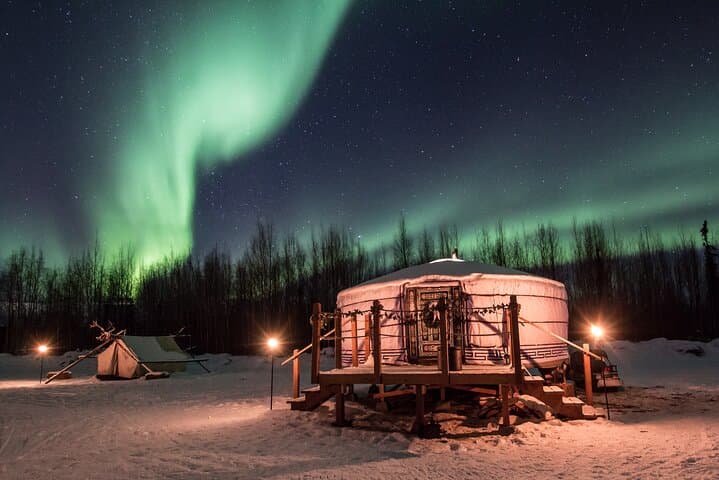
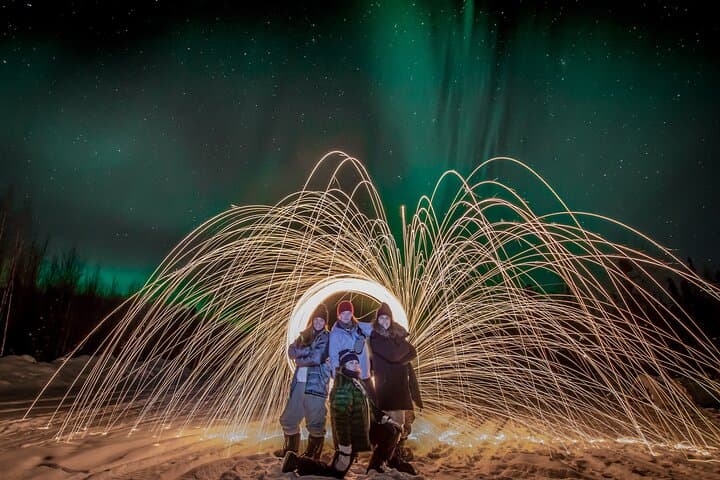
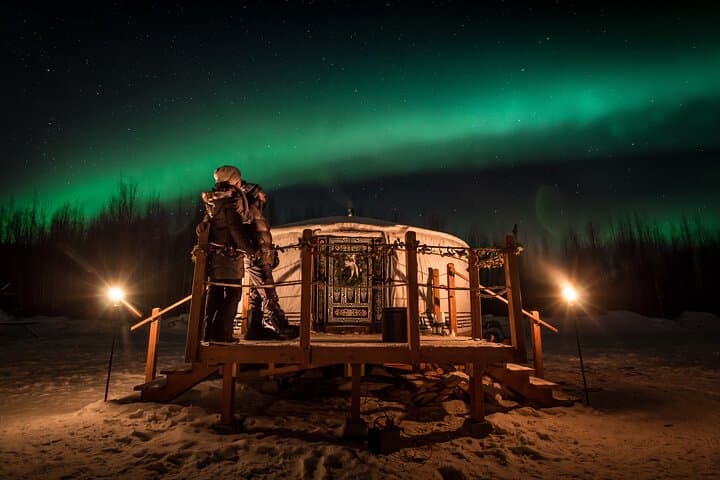
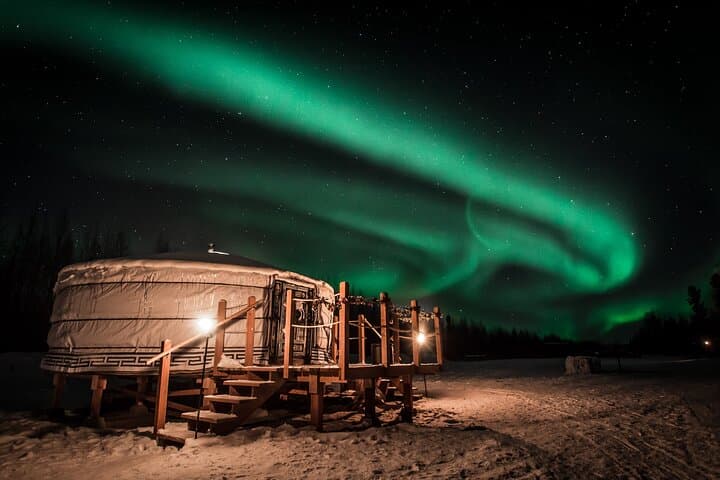
Snow presses low against the yurt’s wood stove as the night tightens around the boreal forest. Inside, steam rises from hot cocoa and the guides tighten harnesses; outside, teams of eager Siberian huskies paw the snow, ready to pull. The experience alternates quiet stargazing from a Mongolian yurt built for unobstructed sky views with short, thrilling dog-sled runs that push you through black spruce, across frozen ponds and over open tundra.
Snow presses low against the yurt’s wood stove as the night tightens around the boreal forest. Inside, steam rises from hot cocoa and the guides tighten harnesses; outside, teams of eager Siberian huskies paw the snow, ready to pull. The experience alternates quiet stargazing from a Mongolian yurt built for unobstructed sky views with short, thrilling dog-sled runs that push you through black spruce, across frozen ponds and over open tundra.
This edge-of-Arctic landscape has sustained Athabascan people and mushers for generations; sled dogs were once essential transport and remain cultural touchstones in interior Alaska. Geologically the Fairbanks region sits on alluvial terraces and permafrost features—flat river valleys framed by low hills—that create broad northern horizons ideal for aurora watching. Local guides combine mushing heritage with modern hospitality: expect smoky coffee, smoked salmon snacks and a patient focus on safety.
Practically, tours run at night and are weather-dependent; guides position guests away from city light for the best aurora odds. Temperatures can drop well below freezing and wind will magnify cold on open sleds, so insulating layers and windproof shells are essential. The dog runs are short (about 20–30 minutes per group) and guided; no sledding experience is required, but a moderate level of fitness helps for standing and bracing on the runners.
Plan travel time carefully—the property’s access roads are specific and misrouting is common. Bring a headlamp with red filter, hand warmers, and a camera tripod if you want usable aurora photos. The reward is simple and immediate: the sky shifts color while dogs glance up, impatient to run again.