THE ADVENTURE COLLECTIVE® · Independent discovery and booking for outdoor travel

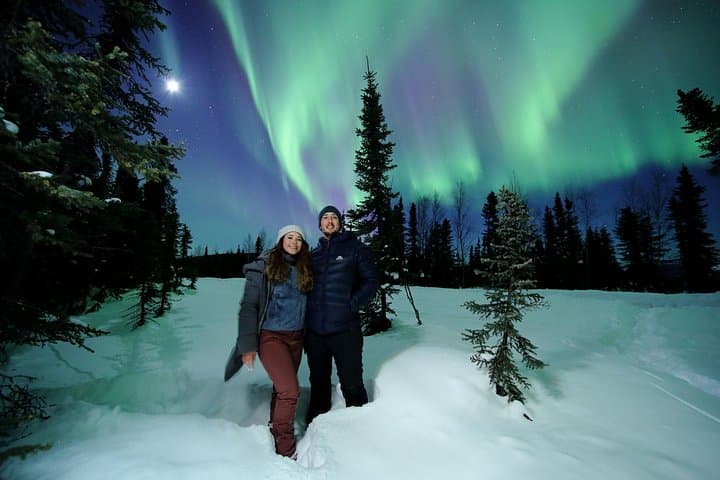
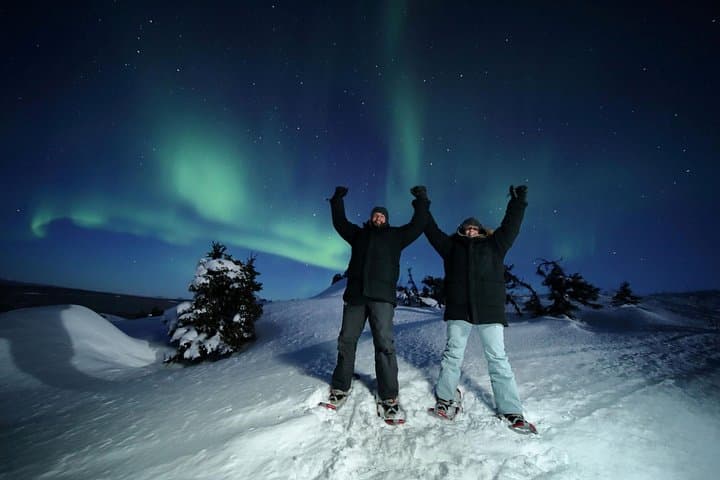
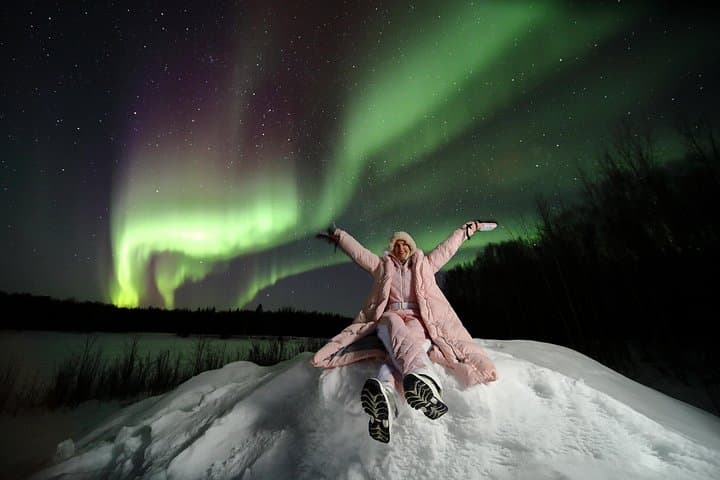
Drive north from Fairbanks for a small-group aurora chase led by a professional portrait photographer. Expect studio-quality portraits under the northern lights, a heated shelter, and fresh stone-fired pizza while you wait for the sky to move.
Drive north from Fairbanks for a small-group aurora chase led by a professional portrait photographer. Expect studio-quality portraits under the northern lights, a heated shelter, and fresh stone-fired pizza while you wait for the sky to move.
A cold breath of Arctic air hits the windshield as the van slips north out of Fairbanks, headlights cutting a path through hard-packed snow. Around you the horizon is low and dark; the sky above dares color into motion. On this small-group outing a professional portrait photographer directs light and pose beneath the aurora, while a stone-fired oven keeps a steady line of hot pizza on the side.
Verified experiences and guided adventures in the surrounding area.
Operated by Electric Moose Studios · Fairbanks, Alaska
A cold breath of Arctic air hits the windshield as the van slips north out of Fairbanks, headlights cutting a path through hard-packed snow. Around you the horizon is low and dark; the sky above dares color into motion. On this small-group outing a professional portrait photographer directs light and pose beneath the aurora, while a stone-fired oven keeps a steady line of hot pizza on the side.
The aurora over Interior Alaska is driven by solar wind striking Earth’s magnetic field — a luminous interaction that has guided Athabascan hunters, gold-rush prospectors, and modern sky-watchers for centuries. The land here is glacially scoured tundra and riverine flats; roads roll through forests of black spruce and thaw-lifted permafrost that give the night texture and depth.
Culturally, Fairbanks is equal parts frontier service town and scientific hub: you’ll hear stories of bush pilots, of aurora research stations, and local survival techniques that keep winter trips safe. Your guide’s practical experience in Arctic wilderness and portrait lighting means the night is as much about technique as spectacle.
Practical guidance: tours typically drive 15–40 miles from town to dark-sky sites; expect 6 hours on a winter night. Bring a solid tripod, full batteries (cold drains them fast), and insulated footwear. Dress in layers and plan for intermittent outdoor standing while you frame shots. The operator provides warming shelters, hot drinks, hand/toe warmers, and an aurora-guarantee; still, timing your sleep and caffeine beforehand helps you stay alert when the sky finally moves.
easy.
6 hours.
Suitable for most fitness levels; requires standing and short walks on snow/ice for long periods.
The operator offers an aurora guarantee—if you don't get usable aurora photos you may be eligible for a repeat tour; visibility depends on solar activity and local weather.
Yes — tours depart from Fairbanks and drive 15–40 miles north to dark-sky viewing areas; check your booking for pickup details.
Yes — professional portraits and landscape images are provided in a digital album; a timelapse of the whole night is also included.
Dress in insulated layers, bring a warm hat, waterproof gloves, and footwear with good traction; hand/toe warmers are supplied as well.
Interior Alaska’s skies have been observed by Athabascan peoples for generations; Fairbanks later became a hub during the early 20th-century gold rush and aviation expansion.
Dark-sky etiquette and minimizing light pollution are emphasized—use red lights, avoid unnecessary headlights, and pack out all waste to protect fragile tundra.
Electric Moose Studios operates guided outdoor trips and adventures with an emphasis on safety, stewardship, and memorable experiences.
A cold breath of Arctic air hits the windshield as the van slips north out of Fairbanks, headlights cutting a path through hard-packed snow. Around you the horizon is low and dark; the sky above dares color into motion. On this small-group outing a professional portrait photographer directs light and pose beneath the aurora, while a stone-fired oven keeps a steady line of hot pizza on the side.
A cold breath of Arctic air hits the windshield as the van slips north out of Fairbanks, headlights cutting a path through hard-packed snow. Around you the horizon is low and dark; the sky above dares color into motion. On this small-group outing a professional portrait photographer directs light and pose beneath the aurora, while a stone-fired oven keeps a steady line of hot pizza on the side.
The aurora over Interior Alaska is driven by solar wind striking Earth’s magnetic field — a luminous interaction that has guided Athabascan hunters, gold-rush prospectors, and modern sky-watchers for centuries. The land here is glacially scoured tundra and riverine flats; roads roll through forests of black spruce and thaw-lifted permafrost that give the night texture and depth.
Culturally, Fairbanks is equal parts frontier service town and scientific hub: you’ll hear stories of bush pilots, of aurora research stations, and local survival techniques that keep winter trips safe. Your guide’s practical experience in Arctic wilderness and portrait lighting means the night is as much about technique as spectacle.
Practical guidance: tours typically drive 15–40 miles from town to dark-sky sites; expect 6 hours on a winter night. Bring a solid tripod, full batteries (cold drains them fast), and insulated footwear. Dress in layers and plan for intermittent outdoor standing while you frame shots. The operator provides warming shelters, hot drinks, hand/toe warmers, and an aurora-guarantee; still, timing your sleep and caffeine beforehand helps you stay alert when the sky finally moves.