THE ADVENTURE COLLECTIVE® · Independent discovery and booking for outdoor travel

Step into a long Arctic night and let expert guides steer you to Fairbanks’ best aurora vantage points. This practical guide covers what to expect, where to go, and how to photograph the Northern Lights with confidence.
Step into a long Arctic night and let expert guides steer you to Fairbanks’ best aurora vantage points. This practical guide covers what to expect, where to go, and how to photograph the Northern Lights with confidence.
A cold wind carries the night across the Tanana Valley as headlights fade and a wide, black ceiling opens above you. Guides lead small groups away from town lights toward open ridgelines and frozen lakes, where the auroral oval will often stage its green and purple curtains. The scene is active and patient: breath clouds the air, boot crunch on frost, and the sky performs in unpredictable bursts.
Verified experiences and guided adventures in the surrounding area.
Operated by Tour Fairbanks · Fairbanks, Alaska
A cold wind carries the night across the Tanana Valley as headlights fade and a wide, black ceiling opens above you. Guides lead small groups away from town lights toward open ridgelines and frozen lakes, where the auroral oval will often stage its green and purple curtains. The scene is active and patient: breath clouds the air, boot crunch on frost, and the sky performs in unpredictable bursts.
Fairbanks sits beneath one of the best stretches of the auroral oval, a result of geomagnetic latitude and long winter nights. The phenomenon itself is solar particles meeting Earth’s magnetosphere; the region’s clear, dry air and sparse light pollution make it a reliable viewing base. Local Athabascan history and the early gold-rush settlements shaped access routes and winter hospitality—today’s guides mix science with regional stories around a bonfire.
Expect a 4–6 hour outing that prioritizes comfort and vantage: warm drinks, a guided campfire, and portrait-style photography help freeze the memory. Guides monitor space-weather forecasts and choose among several sites—Murphy Dome, river flats, and remote ledges—so you maximize viewing chances.
Practical guide: dress in insulated layers, wear waterproof insulated boots, and bring a tripod and spare batteries (cold drains power fast). For photographers, use a sturdy tripod, wide aperture (f/2.8–f/4), 10–25 second exposures, and ISO 800–3200 as a starting point. Plan for late-night logistics—reservations or hotel pickup—and expect flexible end times if the lights intensify. Respect private lands, minimize light pollution, and carry extra warm drinks; patience and preparation reward you with the sky’s slow, electric show.
easy.
4–6 hours.
Suitable for most fitness levels; requires the ability to stand and walk on snow/ice for short distances.
Aurora season runs roughly late August through April; the longest, darkest nights (November–March) offer the most consistent viewing.
No—guides coach basic camera settings and composition, but bringing a camera with manual controls and a tripod will greatly improve results.
Tours typically provide hotel pickup or a designated meeting point; confirm your pickup point during booking and arrive on time.
Full refunds are usually available if you cancel at least 24 hours before departure; tours may also cancel for poor weather or insufficient participants.
Fairbanks grew as a gold-rush hub in the early 1900s; the region is also traditional land of the Tanana Athabascan people, whose seasonal knowledge once shaped travel corridors.
Minimize light pollution by using red headlamps and avoiding flash photography; follow Leave No Trace principles and respect private property when accessing remote viewpoints.
Tour Fairbanks operates guided outdoor trips and adventures with an emphasis on safety, stewardship, and memorable experiences.
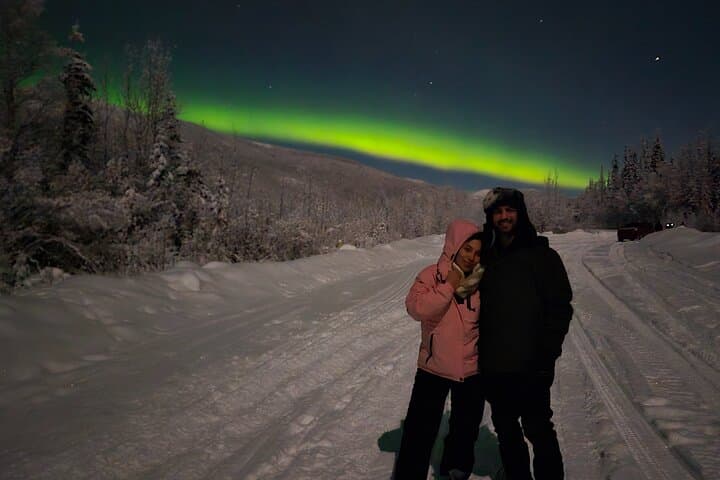
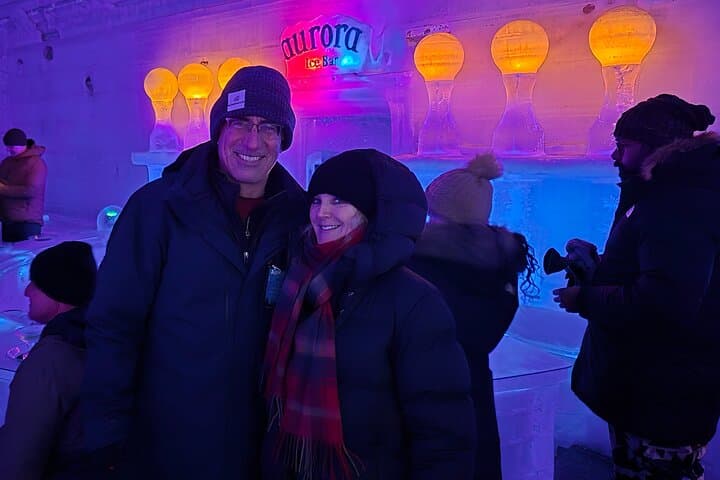
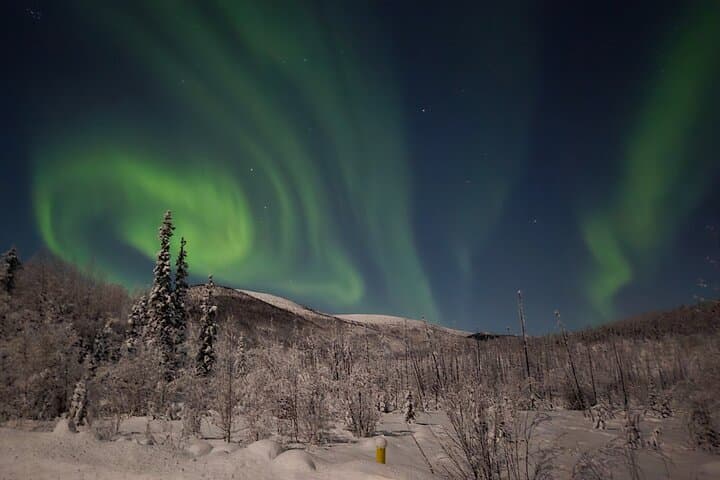
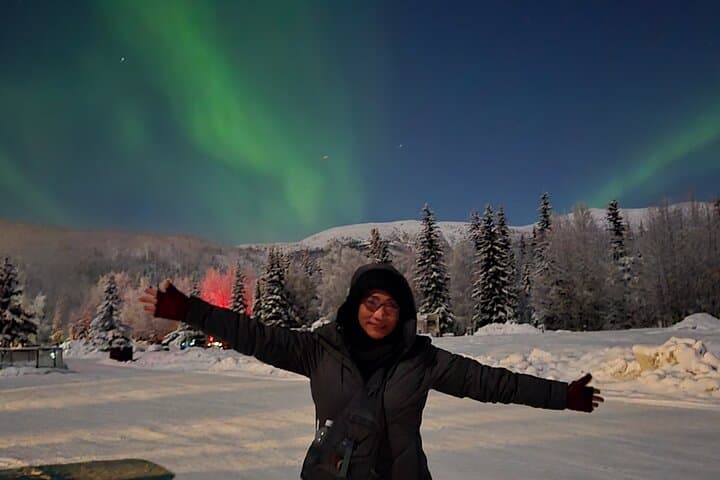
A cold wind carries the night across the Tanana Valley as headlights fade and a wide, black ceiling opens above you. Guides lead small groups away from town lights toward open ridgelines and frozen lakes, where the auroral oval will often stage its green and purple curtains. The scene is active and patient: breath clouds the air, boot crunch on frost, and the sky performs in unpredictable bursts.
A cold wind carries the night across the Tanana Valley as headlights fade and a wide, black ceiling opens above you. Guides lead small groups away from town lights toward open ridgelines and frozen lakes, where the auroral oval will often stage its green and purple curtains. The scene is active and patient: breath clouds the air, boot crunch on frost, and the sky performs in unpredictable bursts.
Fairbanks sits beneath one of the best stretches of the auroral oval, a result of geomagnetic latitude and long winter nights. The phenomenon itself is solar particles meeting Earth’s magnetosphere; the region’s clear, dry air and sparse light pollution make it a reliable viewing base. Local Athabascan history and the early gold-rush settlements shaped access routes and winter hospitality—today’s guides mix science with regional stories around a bonfire.
Expect a 4–6 hour outing that prioritizes comfort and vantage: warm drinks, a guided campfire, and portrait-style photography help freeze the memory. Guides monitor space-weather forecasts and choose among several sites—Murphy Dome, river flats, and remote ledges—so you maximize viewing chances.
Practical guide: dress in insulated layers, wear waterproof insulated boots, and bring a tripod and spare batteries (cold drains power fast). For photographers, use a sturdy tripod, wide aperture (f/2.8–f/4), 10–25 second exposures, and ISO 800–3200 as a starting point. Plan for late-night logistics—reservations or hotel pickup—and expect flexible end times if the lights intensify. Respect private lands, minimize light pollution, and carry extra warm drinks; patience and preparation reward you with the sky’s slow, electric show.