THE ADVENTURE COLLECTIVE® · Independent discovery and booking for outdoor travel

Chase the aurora from Fairbanks with a guided photography tour that moves with the clouds and geomagnetic conditions. Learn practical tips for night photography while guides capture and deliver your best shots.
Chase the aurora from Fairbanks with a guided photography tour that moves with the clouds and geomagnetic conditions. Learn practical tips for night photography while guides capture and deliver your best shots.
A crisp night opens over the Alaskan interior and the van eases away from Fairbanks, headlights cutting through a low winter haze. Travelers step out into a cold, glassy quiet where stars feel close enough to touch; the aurora can unfold in ribbons, curtains, or sudden flares that seem to decide the sky’s choreography.
Verified experiences and guided adventures in the surrounding area.
Operated by Alaska Journey Tours in Fairbanks, Alaska · Fairbanks, Alaska
A crisp night opens over the Alaskan interior and the van eases away from Fairbanks, headlights cutting through a low winter haze. Travelers step out into a cold, glassy quiet where stars feel close enough to touch; the aurora can unfold in ribbons, curtains, or sudden flares that seem to decide the sky’s choreography.
Fairbanks sits under the auroral oval—a geomagnetic ring that makes this part of Alaska one of the most reliable places on Earth to see the Northern Lights. The town’s history—from Alaska Native Athabascan communities to gold-rush boomers and military installations—has always moved around the long nights and extremes of seasonality. Geologically, the broad Yukon-Tanana uplands and nearby low hills provide dark, elevated viewing points that catch clear skies when coastal clouds roll in.
On this guided chase, drivers watch solar forecasts and cloud cover, moving to higher ground or darker river valleys as needed. Guests get hands-on photography help and receive final JPGs delivered via cloud link. Expect sudden stops on roadside pullouts, no permanent shelters, and brief hikes onto frozen tundra or snowbanks to frame shots.
Practical notes: dress in insulated layers, bring a sturdy tripod, and charge phones—cold drains batteries. Tours run long into the night and can change routes with conditions; patience is essential. If you want more comfort, choose lodging with an aurora wake-up service. For photographers and night-sky seekers alike, the experience balances the science of forecasting with the stubborn unpredictability of a living sky.
easy.
4 hours.
Low physical demand—able to board a vehicle and do short walks over snow or uneven ground is sufficient
No—auroras are a natural phenomenon dependent on solar activity and sky conditions; guides optimize locations and timing but cannot guarantee sightings.
Yes—guides provide basic composition and camera-setting assistance and supply final JPGs via cloud link within a few days.
Not reliably—chasing requires stopping in remote areas; plan accordingly and inform the operator of needs in advance.
Layered insulated clothing, warm waterproof boots, hat and mittens; windproof outer layers are important for exposed pullouts.
Fairbanks developed under the auroral oval; Athabascan peoples and later gold rush settlements shaped local culture and winter adaptation.
Minimize light pollution by using red headlamps and avoid driving off designated roads; support local operators who follow leave-no-trace practices.
Alaska Journey Tours in Fairbanks, Alaska operates guided outdoor trips and adventures with an emphasis on safety, stewardship, and memorable experiences.
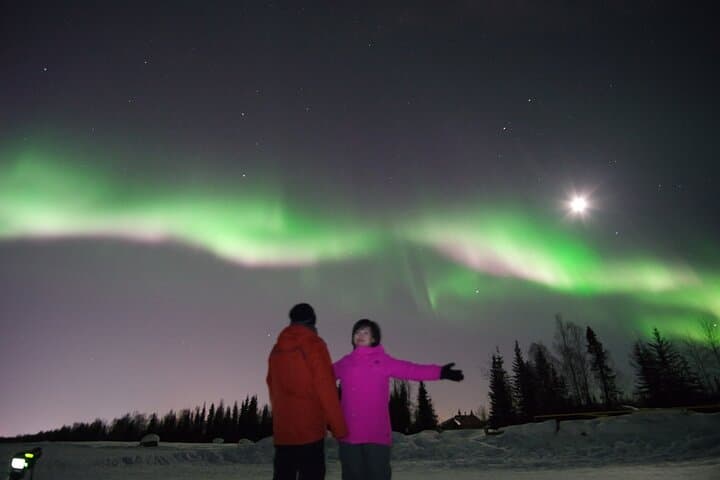
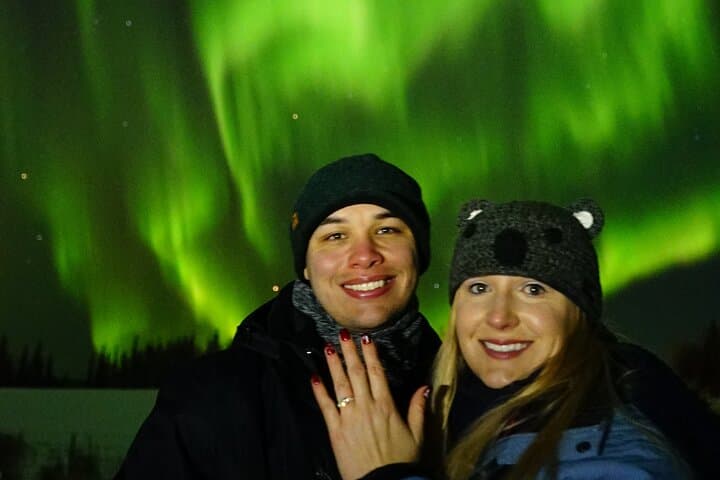
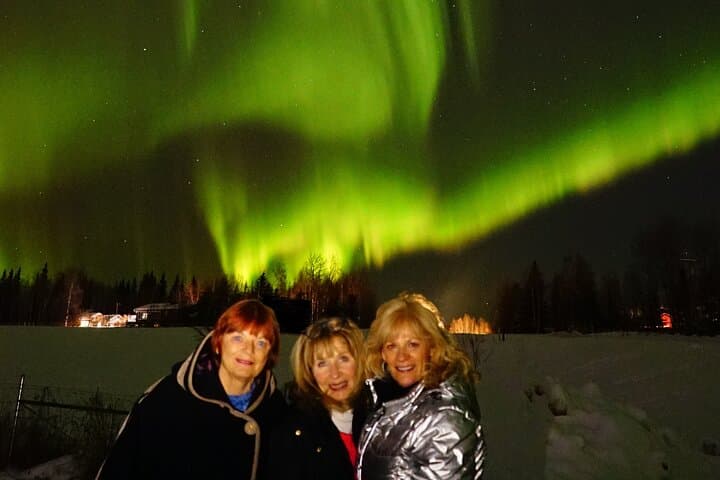
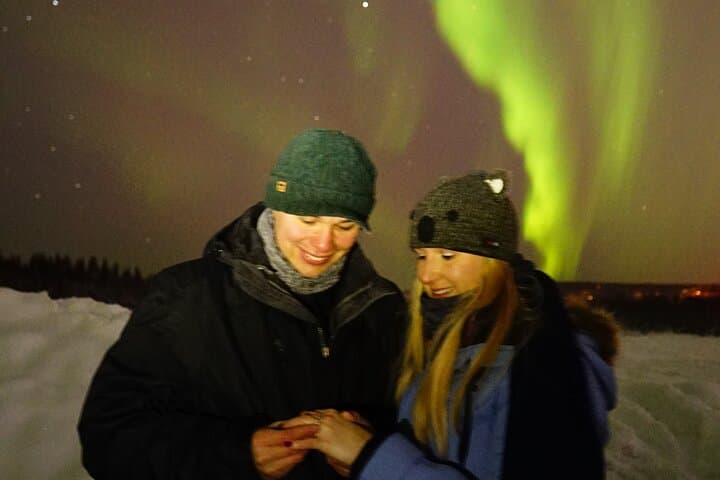
A crisp night opens over the Alaskan interior and the van eases away from Fairbanks, headlights cutting through a low winter haze. Travelers step out into a cold, glassy quiet where stars feel close enough to touch; the aurora can unfold in ribbons, curtains, or sudden flares that seem to decide the sky’s choreography.
A crisp night opens over the Alaskan interior and the van eases away from Fairbanks, headlights cutting through a low winter haze. Travelers step out into a cold, glassy quiet where stars feel close enough to touch; the aurora can unfold in ribbons, curtains, or sudden flares that seem to decide the sky’s choreography.
Fairbanks sits under the auroral oval—a geomagnetic ring that makes this part of Alaska one of the most reliable places on Earth to see the Northern Lights. The town’s history—from Alaska Native Athabascan communities to gold-rush boomers and military installations—has always moved around the long nights and extremes of seasonality. Geologically, the broad Yukon-Tanana uplands and nearby low hills provide dark, elevated viewing points that catch clear skies when coastal clouds roll in.
On this guided chase, drivers watch solar forecasts and cloud cover, moving to higher ground or darker river valleys as needed. Guests get hands-on photography help and receive final JPGs delivered via cloud link. Expect sudden stops on roadside pullouts, no permanent shelters, and brief hikes onto frozen tundra or snowbanks to frame shots.
Practical notes: dress in insulated layers, bring a sturdy tripod, and charge phones—cold drains batteries. Tours run long into the night and can change routes with conditions; patience is essential. If you want more comfort, choose lodging with an aurora wake-up service. For photographers and night-sky seekers alike, the experience balances the science of forecasting with the stubborn unpredictability of a living sky.