THE ADVENTURE COLLECTIVE® · Independent discovery and booking for outdoor travel

Head into the Alaskan night with a small group guided by local experts to hunt the aurora borealis. Expect a 5–6 hour drive-and-wait style tour from east Fairbanks that prioritizes clear, dark vantage points and hands-on photography support.
Head into the Alaskan night with a small group guided by local experts to hunt the aurora borealis. Expect a 5–6 hour drive-and-wait style tour from east Fairbanks that prioritizes clear, dark vantage points and hands-on photography support.
The van slips out of east Fairbanks into a black Arctic night, tires whispering over frost as the driver scans the horizon for clear sky. Above the spruce and river flats a pale green curl begins to unfurl—an auroral ribbon that rises and folds like a living, breathing map of the magnetosphere.
Verified experiences and guided adventures in the surrounding area.
Operated by Auroraquest · Fairbanks, Alaska
The van slips out of east Fairbanks into a black Arctic night, tires whispering over frost as the driver scans the horizon for clear sky. Above the spruce and river flats a pale green curl begins to unfurl—an auroral ribbon that rises and folds like a living, breathing map of the magnetosphere.
This tour follows the practical rhythm of aurora chasing: drive to dark, open vantage points beyond city lights and wait. Fairbanks sits under one of the highest auroral oval probabilities on Earth thanks to its latitude and position under the dipole; geomagnetic storms and charged particles from the sun create the light shows. The region’s history—Gwich’in and Lower Tanana Athabascan presence, and later Gold Rush settlement—frames nights that have long been read for signs and stories. The boreal landscape (permafrost, black spruce, and braided rivers) shapes both access and atmosphere: expect flat, open corridors that make for long sightlines.
Practically: this is a 5–6 hour, small-group experience suited to all fitness levels. Tours depart from a meeting point in east Fairbanks and head to groomed, vehicle-accessible viewing spots—drivers carry spare tripods for guests. Dress for Arctic night: multi-layer insulation, insulated boots, and windproof outerwear. Bring fully charged camera batteries and a tripod or borrow one on the vehicle if needed; batteries drain quickly in cold. Timing is flexible—clear skies and solar activity dictate where you stop—so patience and flexibility are part of the adventure. Respect private property and local wildlife, leave no trace, and prepare for long, cold waits rewarded by sudden, unforgettable skies.
easy.
5–6 hours.
Suitable for all fitness levels; primarily seated/short walks on flat ground during stops
Meet-up is in east Fairbanks near the Walmart off the Steese Highway & Johansen Expressway intersection; tours return to the same location.
Peak viewing runs from late August through April, with darkest skies and longest nights from November to February.
No—sightings depend on solar activity and local weather; guides maximize opportunities by chasing clear skies but cannot guarantee lights.
Not required—bring a camera and tripod for best results; drivers carry at least one spare tripod for customer use.
The Fairbanks area has long been home to Athabascan peoples and later surged during the early 20th-century gold rush; the aurora has cultural significance in indigenous oral histories.
Minimize light pollution by using red lights and staying on designated pullouts; practice leave-no-trace—human activity can disturb winter wildlife and fragile tundra.
Auroraquest operates guided outdoor trips and adventures with an emphasis on safety, stewardship, and memorable experiences.
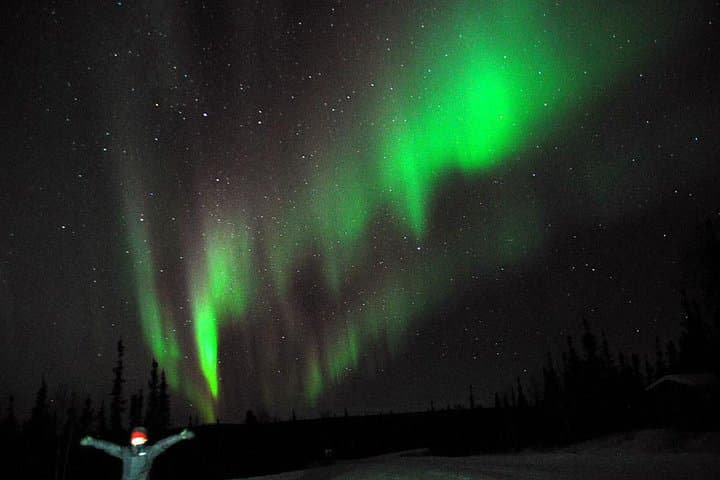
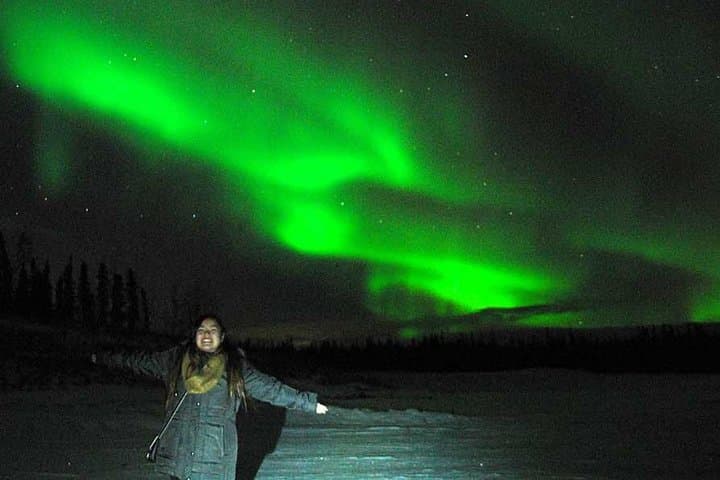
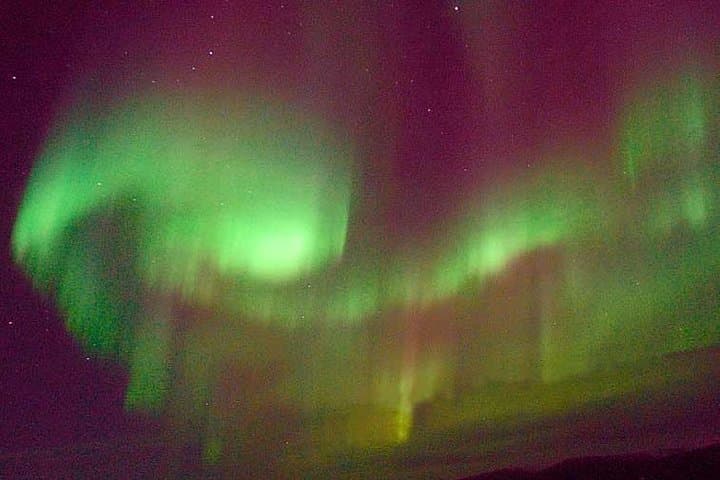
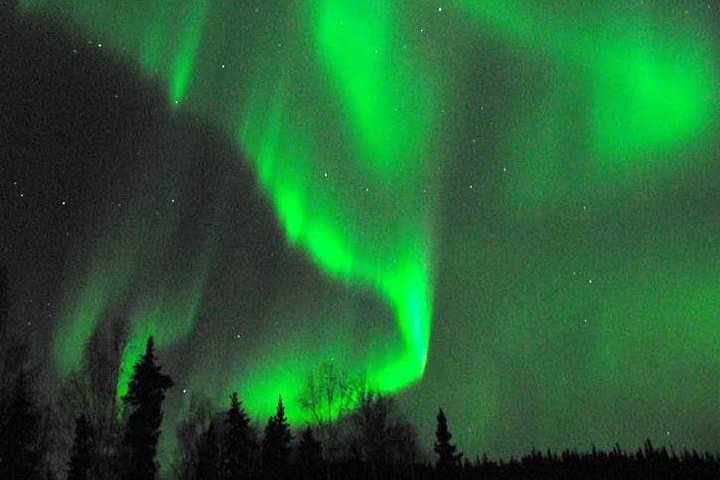
The van slips out of east Fairbanks into a black Arctic night, tires whispering over frost as the driver scans the horizon for clear sky. Above the spruce and river flats a pale green curl begins to unfurl—an auroral ribbon that rises and folds like a living, breathing map of the magnetosphere.
The van slips out of east Fairbanks into a black Arctic night, tires whispering over frost as the driver scans the horizon for clear sky. Above the spruce and river flats a pale green curl begins to unfurl—an auroral ribbon that rises and folds like a living, breathing map of the magnetosphere.
This tour follows the practical rhythm of aurora chasing: drive to dark, open vantage points beyond city lights and wait. Fairbanks sits under one of the highest auroral oval probabilities on Earth thanks to its latitude and position under the dipole; geomagnetic storms and charged particles from the sun create the light shows. The region’s history—Gwich’in and Lower Tanana Athabascan presence, and later Gold Rush settlement—frames nights that have long been read for signs and stories. The boreal landscape (permafrost, black spruce, and braided rivers) shapes both access and atmosphere: expect flat, open corridors that make for long sightlines.
Practically: this is a 5–6 hour, small-group experience suited to all fitness levels. Tours depart from a meeting point in east Fairbanks and head to groomed, vehicle-accessible viewing spots—drivers carry spare tripods for guests. Dress for Arctic night: multi-layer insulation, insulated boots, and windproof outerwear. Bring fully charged camera batteries and a tripod or borrow one on the vehicle if needed; batteries drain quickly in cold. Timing is flexible—clear skies and solar activity dictate where you stop—so patience and flexibility are part of the adventure. Respect private property and local wildlife, leave no trace, and prepare for long, cold waits rewarded by sudden, unforgettable skies.