THE ADVENTURE COLLECTIVE® · Independent discovery and booking for outdoor travel

See Faial’s dramatic geology and coastal lookouts in a focused half-day loop. This tour visits the Caldeira, the Capelinhos eruption zone and panoramic viewpoints around Horta with short walks and guided context.
See Faial’s dramatic geology and coastal lookouts in a focused half-day loop. This tour visits the Caldeira, the Capelinhos eruption zone and panoramic viewpoints around Horta with short walks and guided context.
You step off the van and the Atlantic opens like a brisk invitation: salt on the air, basalt cliffs cutting the horizon, and Pico’s cone rising across the channel as if pinned to the sky. The route moves quickly but thoughtfully — short walks, lookouts and volcanic scars that tell Faial’s origin story.
Verified experiences and guided adventures in the surrounding area.
Operated by Trilhos R - Azores Tours · Horta, Azores
You step off the van and the Atlantic opens like a brisk invitation: salt on the air, basalt cliffs cutting the horizon, and Pico’s cone rising across the channel as if pinned to the sky. The route moves quickly but thoughtfully — short walks, lookouts and volcanic scars that tell Faial’s origin story.
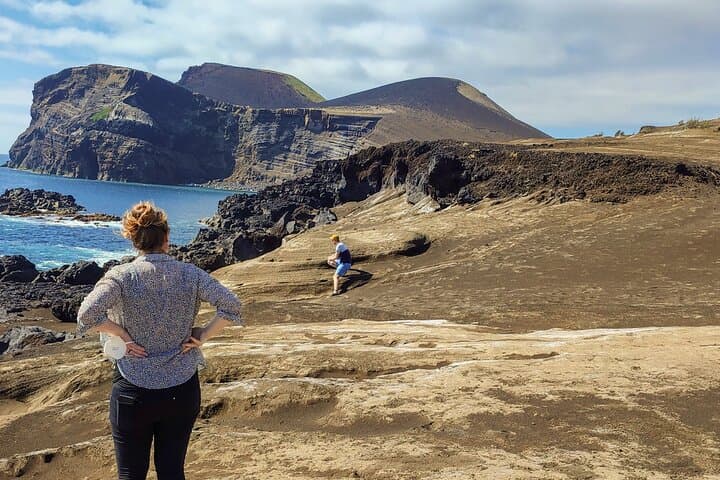
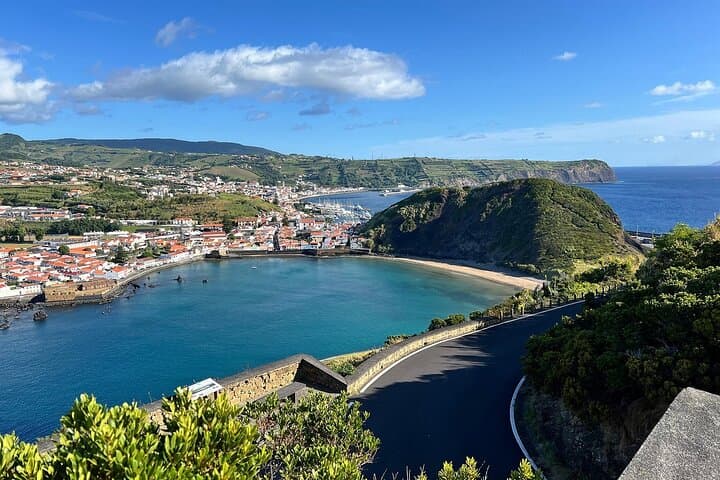
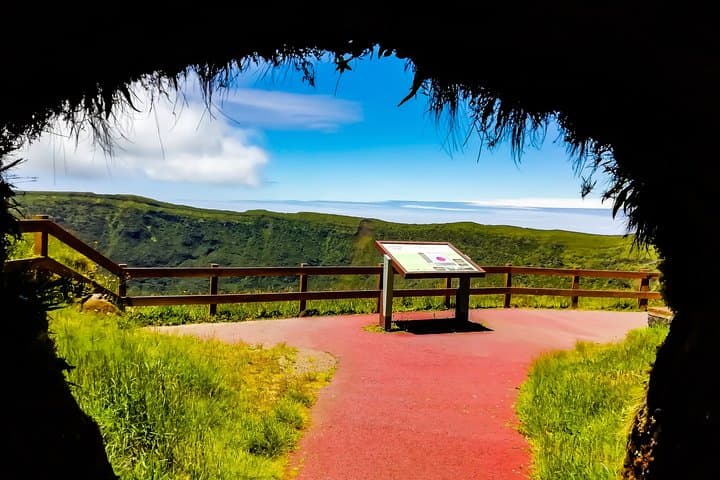
Geology shapes every stop. The Caldeira is a 2-km-wide crater carved from successive eruptions and collapse; its rim offers angles onto Porto Pim and Horta’s harbor. Capelinhos, the 1957–58 eruption, still reads like a recent event — black ash beaches, pumice fields and a lighthouse that marks where land sprouted from sea. Between these extremes are human traces: small chapels, fishing coves and terraces that speak to island life shaped by wind and volcanic soil.
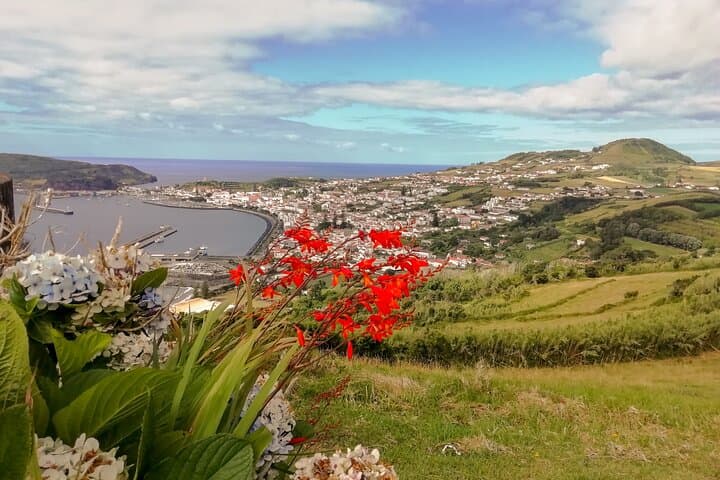
Local guides-angle the tour to reveal links between landscape and livelihood: how basalt walls protect gardens, where whale watchers launched from Horta, and why the harbor’s painted yachts form a practical navigation chart and a social forum.
Practicalities matter on a half-day loop. Expect about 3–3.5 hours including van transfers, short on-foot stops (5–40 minutes) and easy but uneven terrain at viewpoints and natural pools. Wear sturdy shoes for volcanic sand and basalt steps; bring a wind shell and layered clothing — Azorean weather flips fast. Water and a camera are essentials; the tour provides bottled water and round-trip transport from central Horta. On clear days the island chain—Pico, São Jorge and Graciosa—frames every lookout; on windy days, the sea’s energy becomes the show.
This is an efficient, geology-forward introduction to Faial: short on time but rich in landscape and context, ideal for first-time visitors who want the island’s signature sights in one sweep.
easy.
3–4 hours.
Suitable for most fitness levels; involves short easy walks up to 40 minutes with some uneven ground and steps.
The tour lasts about 3.5 hours with several short stops (5–40 minutes) for viewpoints and walks; pace is relaxed and suitable for most travelers.
No — the visit to Caldeira is a short rim walk on mostly well-defined paths; expect some steps and uneven ground but no technical climbing.
Layered clothing, a windproof shell and closed-toe shoes are recommended; even summer can be windy and cool by the shore.
Round-trip transport from central Horta is included; pickup locations are communicated when booking and usually cover central hotels and agreed meeting points.
Faial’s modern identity was reshaped by the 1957–58 Capelinhos eruption, which extended the island and influenced local architecture and land use.
The Azores balance tourism with marine and terrestrial protections; stick to marked trails, avoid disturbing seabird colonies and limit single-use plastics to reduce impact.
Trilhos R - Azores Tours operates guided outdoor trips and adventures with an emphasis on safety, stewardship, and memorable experiences.
You step off the van and the Atlantic opens like a brisk invitation: salt on the air, basalt cliffs cutting the horizon, and Pico’s cone rising across the channel as if pinned to the sky. The route moves quickly but thoughtfully — short walks, lookouts and volcanic scars that tell Faial’s origin story.
You step off the van and the Atlantic opens like a brisk invitation: salt on the air, basalt cliffs cutting the horizon, and Pico’s cone rising across the channel as if pinned to the sky. The route moves quickly but thoughtfully — short walks, lookouts and volcanic scars that tell Faial’s origin story.
Geology shapes every stop. The Caldeira is a 2-km-wide crater carved from successive eruptions and collapse; its rim offers angles onto Porto Pim and Horta’s harbor. Capelinhos, the 1957–58 eruption, still reads like a recent event — black ash beaches, pumice fields and a lighthouse that marks where land sprouted from sea. Between these extremes are human traces: small chapels, fishing coves and terraces that speak to island life shaped by wind and volcanic soil.
Local guides-angle the tour to reveal links between landscape and livelihood: how basalt walls protect gardens, where whale watchers launched from Horta, and why the harbor’s painted yachts form a practical navigation chart and a social forum.
Practicalities matter on a half-day loop. Expect about 3–3.5 hours including van transfers, short on-foot stops (5–40 minutes) and easy but uneven terrain at viewpoints and natural pools. Wear sturdy shoes for volcanic sand and basalt steps; bring a wind shell and layered clothing — Azorean weather flips fast. Water and a camera are essentials; the tour provides bottled water and round-trip transport from central Horta. On clear days the island chain—Pico, São Jorge and Graciosa—frames every lookout; on windy days, the sea’s energy becomes the show.
This is an efficient, geology-forward introduction to Faial: short on time but rich in landscape and context, ideal for first-time visitors who want the island’s signature sights in one sweep.