THE ADVENTURE COLLECTIVE® · Independent discovery and booking for outdoor travel

A multi-day traverse of Romania’s Făgăraș range linking Sibiu to high alpine lakes, Negoiu and Moldoveanu. Challenging terrain, glacial basins and remote huts make this a true high-mountain hiking experience.
A multi-day traverse of Romania’s Făgăraș range linking Sibiu to high alpine lakes, Negoiu and Moldoveanu. Challenging terrain, glacial basins and remote huts make this a true high-mountain hiking experience.
Dawn breaks over a serrated skyline: grey ridgelines silhouette against a cold, high sun, and the path ahead narrows to a ribbon of scree and lichen-stiffened rock.
Verified experiences and guided adventures in the surrounding area.
Operated by Romaniatourism · Sibiu, Sibiu County
Dawn breaks over a serrated skyline: grey ridgelines silhouette against a cold, high sun, and the path ahead narrows to a ribbon of scree and lichen-stiffened rock.
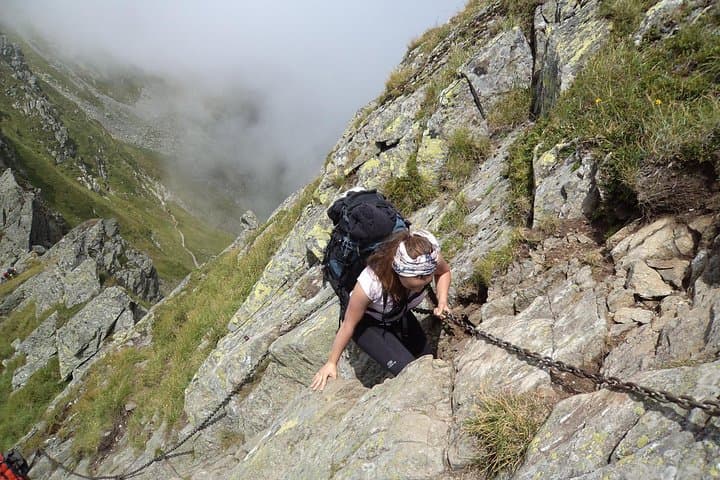
This multi-day traverse through the Făgăraș range drops you into Romania’s “Transylvanian Alps,” where glacial bowls cradle deep blue lakes and steep arêtes force focused, steady steps. The route links village trailheads near Sibiu to alpine shelters and tented nights, climbing toward Negoiu (2,535 m) and offering views of Moldoveanu, Romania’s highest summit.
Geologically the range is young and rugged — metamorphic cores scoured by Pleistocene glaciers — so expect steep cols, polished slabs, and scattered talus. Culturally, the routes pass seasonal shepherding areas and remoter mountain huts that reflect traditional mountain life; the Transylvanian Saxon town of Sibiu offers a medieval finish with cobbled streets and layered history.
Practical guidance: this itinerary is physically demanding and often requires route-finding across exposed terrain. Carry a topo map or GPS tracks, start early to avoid afternoon storms, and plan for significant daily gain and descent. Water is available at high-altitude lakes and streams but should be treated. Footwear with ankle support and a stiff sole helps on long scree sections; trekking poles reduce knee strain.
Expect varying weather and wear layered clothing; nights can be below freezing even in summer. Follow Leave No Trace practices — fragile alpine meadows recover slowly — and be prepared for limited rescue access on remote ridgelines. This is a high-country journey that rewards careful preparation with wide panoramas and glacier-sculpted basins.
challenging.
9 days.
Suitable for very fit hikers used to sustained elevation gain, long days, and carrying overnight gear.
No technical ropes are required for the standard route, but some sections involve scrambling — harnesses are not typically needed.
Late June through September offers the most stable conditions; early season may still have snowfields and winter conditions return by October.
Some mountain chalets are seasonal and basic; expect simple facilities and bring a sleeping liner and food for tent nights.
No formal permits are required, but hiring a local guide is recommended for route-finding and safety on exposed sections.
French geographer Emmanuel de Martonne dubbed the range the ‘Transylvanian Alps’; local villages have long practiced seasonal transhumance with shepherd huts dotting the high pastures.
Alpine meadows are fragile and recover slowly — camp on durable surfaces, pack out waste, and stick to durable trails to minimize impact.
Romaniatourism operates guided outdoor trips and adventures with an emphasis on safety, stewardship, and memorable experiences.
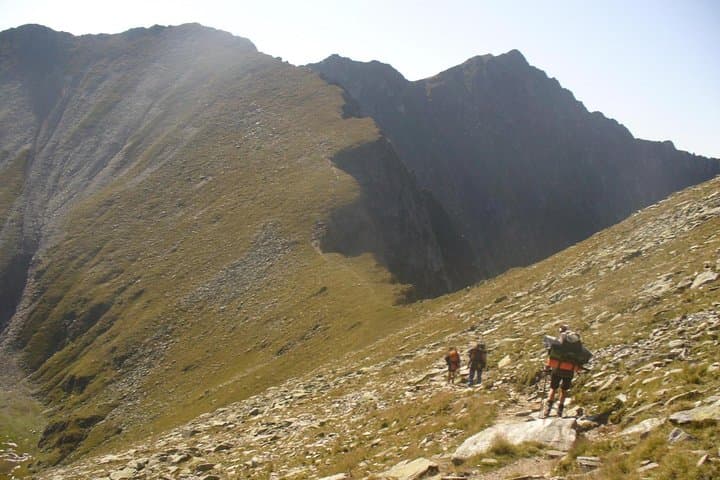


Dawn breaks over a serrated skyline: grey ridgelines silhouette against a cold, high sun, and the path ahead narrows to a ribbon of scree and lichen-stiffened rock.
Dawn breaks over a serrated skyline: grey ridgelines silhouette against a cold, high sun, and the path ahead narrows to a ribbon of scree and lichen-stiffened rock.
This multi-day traverse through the Făgăraș range drops you into Romania’s “Transylvanian Alps,” where glacial bowls cradle deep blue lakes and steep arêtes force focused, steady steps. The route links village trailheads near Sibiu to alpine shelters and tented nights, climbing toward Negoiu (2,535 m) and offering views of Moldoveanu, Romania’s highest summit.
Geologically the range is young and rugged — metamorphic cores scoured by Pleistocene glaciers — so expect steep cols, polished slabs, and scattered talus. Culturally, the routes pass seasonal shepherding areas and remoter mountain huts that reflect traditional mountain life; the Transylvanian Saxon town of Sibiu offers a medieval finish with cobbled streets and layered history.
Practical guidance: this itinerary is physically demanding and often requires route-finding across exposed terrain. Carry a topo map or GPS tracks, start early to avoid afternoon storms, and plan for significant daily gain and descent. Water is available at high-altitude lakes and streams but should be treated. Footwear with ankle support and a stiff sole helps on long scree sections; trekking poles reduce knee strain.
Expect varying weather and wear layered clothing; nights can be below freezing even in summer. Follow Leave No Trace practices — fragile alpine meadows recover slowly — and be prepared for limited rescue access on remote ridgelines. This is a high-country journey that rewards careful preparation with wide panoramas and glacier-sculpted basins.