THE ADVENTURE COLLECTIVE® · Independent discovery and booking for outdoor travel

Get close to endangered Rothschild giraffes at Nairobi’s Giraffe Centre — a compact, accessible conservation site where feeding platforms, guided talks, and interpretive trails make for a 2–3 hour wildlife encounter. Learn what to expect, how to prepare, and why this small reserve matters.
Get close to endangered Rothschild giraffes at Nairobi’s Giraffe Centre — a compact, accessible conservation site where feeding platforms, guided talks, and interpretive trails make for a 2–3 hour wildlife encounter. Learn what to expect, how to prepare, and why this small reserve matters.
You step out of an air-conditioned vehicle into warm Nairobi air and a stretch of fenced meadow where long necks move like slow metronomes. A raised feeding platform waits; powdered pellets in an open palm bring the giraffes forward — deliberate, curious, unhurried — their lashes framing a view of Lang'ata and the distant city skyline.
Verified experiences and guided adventures in the surrounding area.
Operated by City Break Safaris · Nairobi, Nairobi County
You step out of an air-conditioned vehicle into warm Nairobi air and a stretch of fenced meadow where long necks move like slow metronomes. A raised feeding platform waits; powdered pellets in an open palm bring the giraffes forward — deliberate, curious, unhurried — their lashes framing a view of Lang'ata and the distant city skyline.
The Giraffe Centre began as a hands-on conservation project to protect the endangered Rothschild giraffe, growing into an education hub where local schools and international visitors learn species-specific care. Geologically this pocket sits on the Kenyan highlands, a plateau of red volcanic soils and grassland that once supported wide-ranging herds; today landscaped grounds approximate that habitat. Culturally, the centre blends wildlife stewardship with community outreach — guides talk about breeding programs, rescue work, and local livelihoods linked to conservation.
Expect structured encounters: a guided talk, supervised feeding from the raised platform, and photo opportunities at close range. The site is compact but packed with interpretive displays; staff explain identification marks, calf-rearing, and how urban growth affects habitat. Practicalities are straightforward — wheelchair-accessible paths, bottled water often included, and an easy 2–3 hour visit if you add the onsite nature trail and souvenir area.
Timing matters: mornings are cooler and the giraffes are most active. Wear closed-toe shoes for gravel paths, sun protection for exposed viewing areas, and bring small Kenyan shillings if you want to support community projects. The visit is as much a photo moment as a primer in species recovery — intimate, educational, and unexpectedly tactile.
easy.
2–3 hours.
Suitable for most fitness levels; limited walking on compact paths and a short nature trail.
Plan 2–3 hours to include the guided feeding, interpretive exhibits, and the short nature trail; full tours often last about three hours.
Yes — pathways and viewing areas are designed to be wheelchair accessible and staff can assist where needed.
Light supervised feeding from the platform may allow brief contact with the tongue or mouth when guided by staff; always follow directions.
Yes — daily talks cover breeding programs, local conservation challenges, and community education efforts; ask guides about volunteer options.
Founded to protect the endangered Rothschild giraffe, the centre evolved from a private breeding project into a major public conservation and education site serving Nairobi schools and visitors.
The centre focuses on captive breeding, release programs, and community outreach; visitor fees and donations support habitat protection and local education.
City Break Safaris operates guided outdoor trips and adventures with an emphasis on safety, stewardship, and memorable experiences.
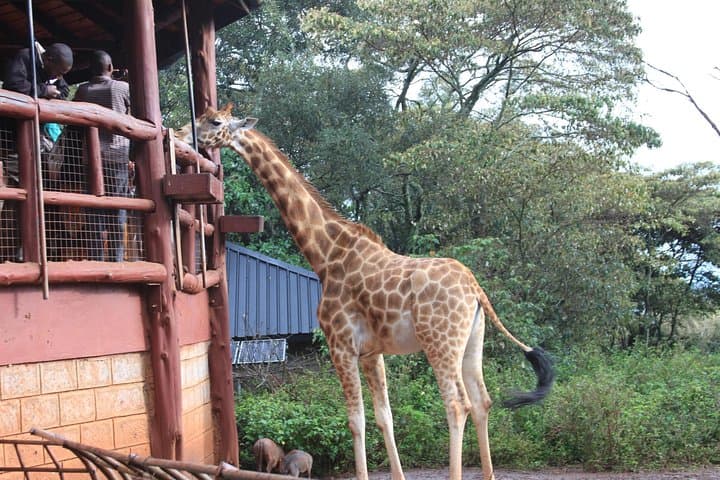
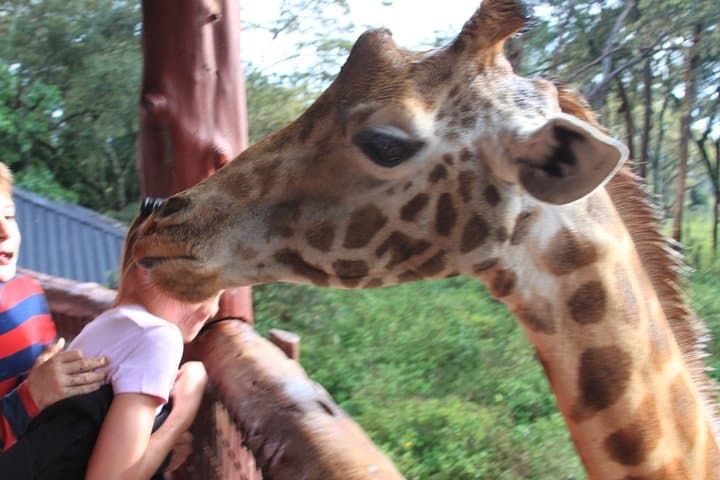
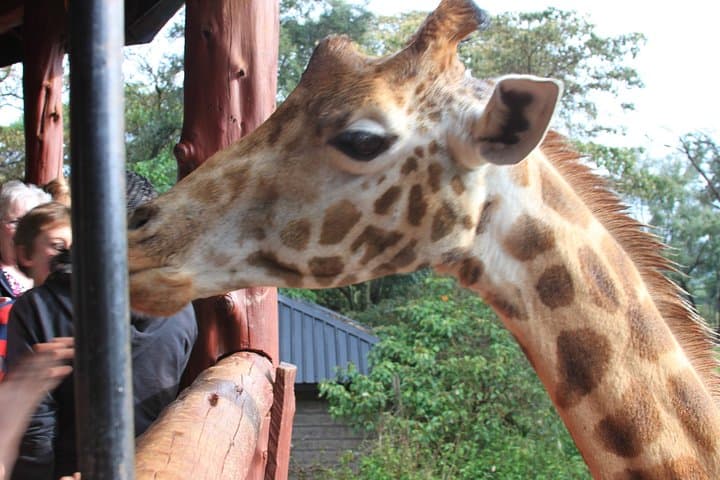
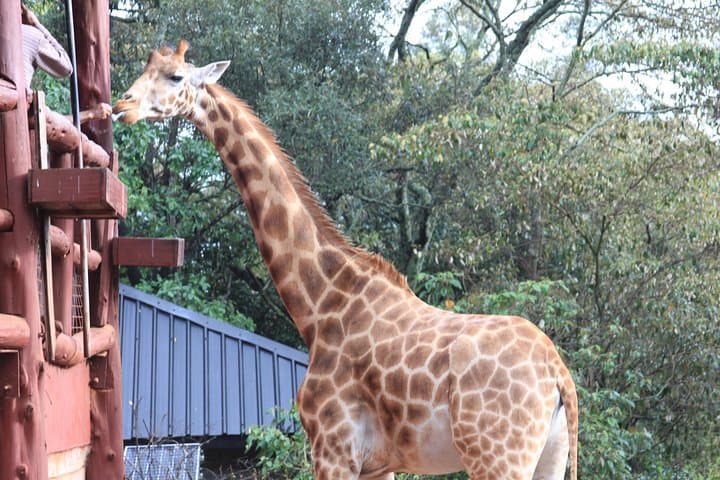
You step out of an air-conditioned vehicle into warm Nairobi air and a stretch of fenced meadow where long necks move like slow metronomes. A raised feeding platform waits; powdered pellets in an open palm bring the giraffes forward — deliberate, curious, unhurried — their lashes framing a view of Lang'ata and the distant city skyline.
You step out of an air-conditioned vehicle into warm Nairobi air and a stretch of fenced meadow where long necks move like slow metronomes. A raised feeding platform waits; powdered pellets in an open palm bring the giraffes forward — deliberate, curious, unhurried — their lashes framing a view of Lang'ata and the distant city skyline.
The Giraffe Centre began as a hands-on conservation project to protect the endangered Rothschild giraffe, growing into an education hub where local schools and international visitors learn species-specific care. Geologically this pocket sits on the Kenyan highlands, a plateau of red volcanic soils and grassland that once supported wide-ranging herds; today landscaped grounds approximate that habitat. Culturally, the centre blends wildlife stewardship with community outreach — guides talk about breeding programs, rescue work, and local livelihoods linked to conservation.
Expect structured encounters: a guided talk, supervised feeding from the raised platform, and photo opportunities at close range. The site is compact but packed with interpretive displays; staff explain identification marks, calf-rearing, and how urban growth affects habitat. Practicalities are straightforward — wheelchair-accessible paths, bottled water often included, and an easy 2–3 hour visit if you add the onsite nature trail and souvenir area.
Timing matters: mornings are cooler and the giraffes are most active. Wear closed-toe shoes for gravel paths, sun protection for exposed viewing areas, and bring small Kenyan shillings if you want to support community projects. The visit is as much a photo moment as a primer in species recovery — intimate, educational, and unexpectedly tactile.