THE ADVENTURE COLLECTIVE® · Independent discovery and booking for outdoor travel

Paddle through the Pastaza’s tight canyon and class III–IV+ drops on a half-day run from Baños. Expect cold water, fast currents, expert guides and a post-run lunch—this is adrenaline with careful logistics.
Paddle through the Pastaza’s tight canyon and class III–IV+ drops on a half-day run from Baños. Expect cold water, fast currents, expert guides and a post-run lunch—this is adrenaline with careful logistics.
You arrive in Baños with the volcano behind you and the river already calling — a steady roar that cuts through town and promises a different kind of altitude. Guides load helmets and dry bags into a van; the drive to the put-in is 35–45 minutes along the Route of the Waterfalls, each cascade flashing through the window like a preview of what’s to come.
Verified experiences and guided adventures in the surrounding area.
Operated by Turismo Ecuador 24 · Baños de Agua Santa, Tungurahua
You arrive in Baños with the volcano behind you and the river already calling — a steady roar that cuts through town and promises a different kind of altitude. Guides load helmets and dry bags into a van; the drive to the put-in is 35–45 minutes along the Route of the Waterfalls, each cascade flashing through the window like a preview of what’s to come.
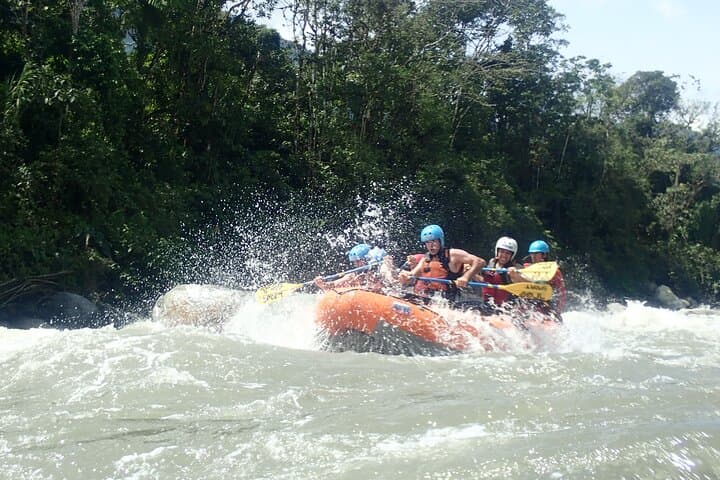
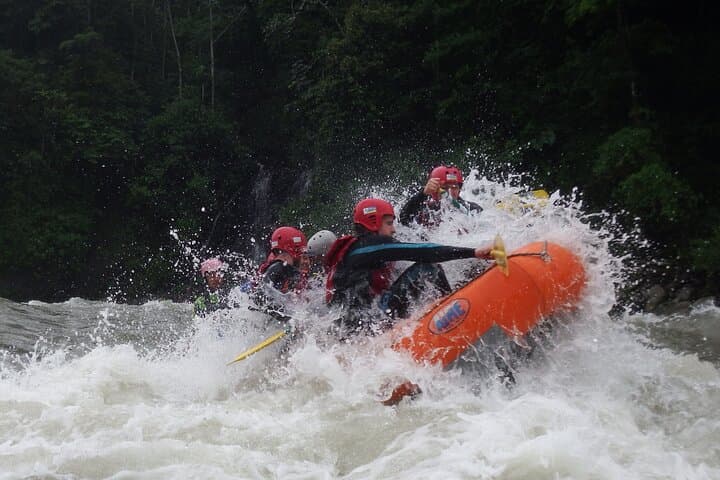
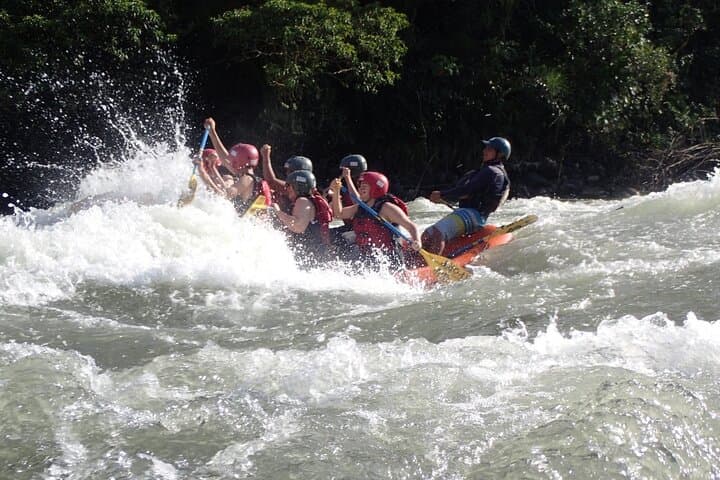
At the river the canyon tightens. The Pastaza, born in the high Andes and racing toward the Amazon basin, has a mood here: boulder-choked channels, sudden drops and standing waves that demand synchronized strokes. The guides lay out commands — forward, back, brace — and when the raft catches its first wave the current feels like a living thing pushing and testing the crew.
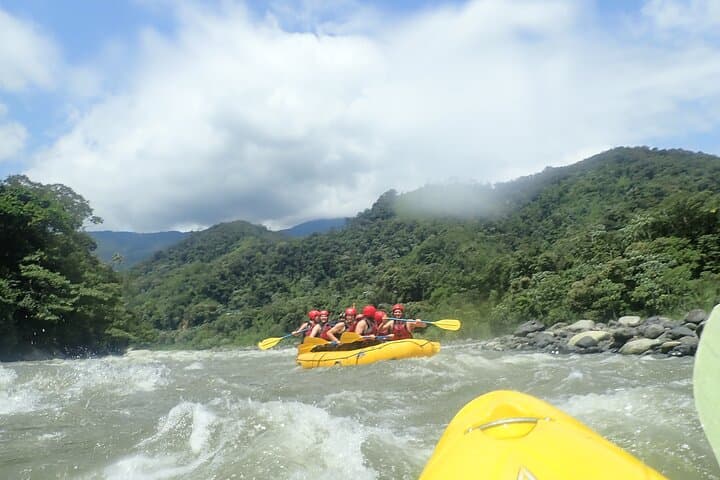
Baños has always been a crossroads. Its thermal springs drew indigenous communities long before colonial maps placed a church on the plaza; later it became a gateway between highland Quito and the eastern jungle. Geologically, the Pastaza carved its canyon through volcanic and sedimentary layers, the river’s erosive force exposing bright, layered cliffs and pockets of jungle that cling to steep slopes.
Culture here is pragmatic and welcoming. Lunch after the run is a ritual: a simple, hearty meal — chicken, tilapia, beef or vegetables — that refuels bodies used to cold water and hard paddling. Local guides blend technical training with a deep familiarity with weather windows and river behavior.
Practical essentials: the full trip is about 5–6 hours from meeting to return, with roughly 2–3 hours of actual paddling covering an 8–10 km stretch of whitewater. Elevation in Baños sits near 1,800 m (5,900 ft), so the water feels chilly even in daytime heat. Operators provide helmets, life jackets, wetsuits and sometimes river shoes, but expect a strong workout — this is guided but demanding whitewater at Class III to IV+.
Safety and planning: advise against booking if pregnant or if you have serious back or heart conditions. The guides run a safety brief and practice rescues; follow commands, keep your feet tucked on flips and always wear your PFD.
Timing matters. The wet season raises flows and makes rapids more continuous; the drier months lower the river and create more technical lines. Bring a lightweight change of clothes, secure water shoes, biodegradable sunscreen and a waterproof phone case. If you want a quieter experience, request an early morning departure — the canyon’s light is best then, and the river is often calmer before afternoon rain.
Done right, a half-day rafting run from Baños is equal parts technical challenge and scenic theater — a fast, physical way to read the landscape where Andean highland gives way to Amazonian urgency.
challenging.
5–6 hours.
Moderate to fit — you should be able to paddle hard for 2–3 hours and manage core bracing in turbulent water.
No prior experience is required — guides teach paddling commands and safety — but you should be comfortable in moving water and able to follow instructions.
Age restrictions vary by operator; many require guests to be at least 12–14 years old and able to hold a paddle and follow safety briefings.
Yes — reputable operators supply helmets, life jackets, wetsuits and often river shoes; you can bring your own footwear if preferred.
The water is noticeably chilly at Baños’ elevation (~1,800 m); a wetsuit is recommended even on warm days to prevent hypothermia during longer swims.
Trips are often canceled in heavy rain or unsafe conditions; the operator’s cancellation policy typically allows a full refund if canceled at least 24 hours prior.
Private transportation to and from the put-in is usually included in the tour price; confirm pick-up details when you book.
Baños grew as a thermal and trading hub between the highlands and the Amazon; its springs and strategic valley made it a 19th-century stop for explorers and travelers.
Operators often emphasize leave-no-trace practices; use biodegradable sunscreen, avoid plastic waste, and follow guide rules to reduce erosion and river pollution.
Turismo Ecuador 24 operates guided outdoor trips and adventures with an emphasis on safety, stewardship, and memorable experiences.
You arrive in Baños with the volcano behind you and the river already calling — a steady roar that cuts through town and promises a different kind of altitude. Guides load helmets and dry bags into a van; the drive to the put-in is 35–45 minutes along the Route of the Waterfalls, each cascade flashing through the window like a preview of what’s to come.
You arrive in Baños with the volcano behind you and the river already calling — a steady roar that cuts through town and promises a different kind of altitude. Guides load helmets and dry bags into a van; the drive to the put-in is 35–45 minutes along the Route of the Waterfalls, each cascade flashing through the window like a preview of what’s to come.
At the river the canyon tightens. The Pastaza, born in the high Andes and racing toward the Amazon basin, has a mood here: boulder-choked channels, sudden drops and standing waves that demand synchronized strokes. The guides lay out commands — forward, back, brace — and when the raft catches its first wave the current feels like a living thing pushing and testing the crew.
Baños has always been a crossroads. Its thermal springs drew indigenous communities long before colonial maps placed a church on the plaza; later it became a gateway between highland Quito and the eastern jungle. Geologically, the Pastaza carved its canyon through volcanic and sedimentary layers, the river’s erosive force exposing bright, layered cliffs and pockets of jungle that cling to steep slopes.
Culture here is pragmatic and welcoming. Lunch after the run is a ritual: a simple, hearty meal — chicken, tilapia, beef or vegetables — that refuels bodies used to cold water and hard paddling. Local guides blend technical training with a deep familiarity with weather windows and river behavior.
Practical essentials: the full trip is about 5–6 hours from meeting to return, with roughly 2–3 hours of actual paddling covering an 8–10 km stretch of whitewater. Elevation in Baños sits near 1,800 m (5,900 ft), so the water feels chilly even in daytime heat. Operators provide helmets, life jackets, wetsuits and sometimes river shoes, but expect a strong workout — this is guided but demanding whitewater at Class III to IV+.
Safety and planning: advise against booking if pregnant or if you have serious back or heart conditions. The guides run a safety brief and practice rescues; follow commands, keep your feet tucked on flips and always wear your PFD.
Timing matters. The wet season raises flows and makes rapids more continuous; the drier months lower the river and create more technical lines. Bring a lightweight change of clothes, secure water shoes, biodegradable sunscreen and a waterproof phone case. If you want a quieter experience, request an early morning departure — the canyon’s light is best then, and the river is often calmer before afternoon rain.
Done right, a half-day rafting run from Baños is equal parts technical challenge and scenic theater — a fast, physical way to read the landscape where Andean highland gives way to Amazonian urgency.