THE ADVENTURE COLLECTIVE® · Independent discovery and booking for outdoor travel

Skim Cartagena’s harbor, land on Isla de Tierra Bomba and trade cobbled streets for sand, mangroves and quad-bike throttle. This 2½-hour ATV tour pairs beach blasts with low-forest trails and stops at San Fernando Fort for a compact, high-adrenaline taste of Colombia’s Caribbean coast.
Skim Cartagena’s harbor, land on Isla de Tierra Bomba and trade cobbled streets for sand, mangroves and quad-bike throttle. This 2½-hour ATV tour pairs beach blasts with low-forest trails and stops at San Fernando Fort for a compact, high-adrenaline taste of Colombia’s Caribbean coast.
The engine kicks and the island leans into motion: spray from the bay beads on your visor, the guide calls a quick check on your helmet, and the fiberglass hull hums as it cuts Cartagena’s turquoise harbor toward Isla de Tierra Bomba.
Verified experiences and guided adventures in the surrounding area.
Operated by Unique Travel Colombia · Cartagena, Bolívar
The engine kicks and the island leans into motion: spray from the bay beads on your visor, the guide calls a quick check on your helmet, and the fiberglass hull hums as it cuts Cartagena’s turquoise harbor toward Isla de Tierra Bomba.
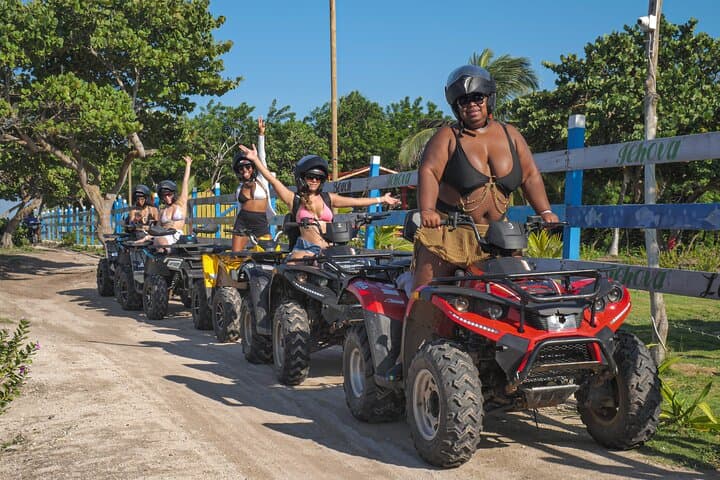
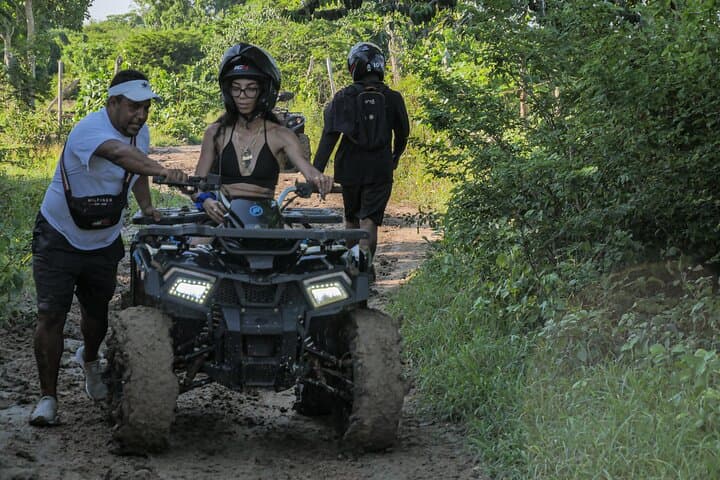
You step off the boat and onto sand that still holds the afternoon’s heat. The first stretch is beach—soft, elastic, a place where tires squeal and salt air presses in like a living thing. Then the trail ducks into a low forest of thorny shrubs and scattered palms, where shade cools the handlebars and the island’s small nature seems to challenge you to look closer. The route telescopes between open shoreline runs, mangrove-edged tracks and a handful of compact village streets; the Fort of San Fernando appears at a bend, a low Spanish stone outline keeping watch over the channel.
Tierra Bomba’s landscape is modest—low dunes, coastal scrub and patches of reclaimed coconut groves—but its history is outsized. The fort was part of Cartagena’s colonial defense network guarding the bay; cannon ports and ramparts still hint at the island’s role in the city’s maritime story. Geologically it’s recent coastal sediment and coral rubble, reworked by tides and boat wakes; trails can turn from hard-packed sand to loose coral gravel in a few meters, so the terrain continually reminds you that you’re riding on the interface between sea and land.
Local rhythms surface in tiny ways: fishermen mending nets beneath tin roofs, a roadside stall selling fried fish, kids who set up impromptu flags to race you as you pass. Guides will point out the best shoreside viewpoints and share how the island’s residents balance tourism with fishing and small-scale farming.
Practical details: the full excursion runs about 150 minutes (roughly 2½ hours) and includes boat transfer from Cartagena, ATVs, helmets, insurance, bottled water and lunch. Expect roughly 10–20 km of varied riding—beach runs, short dune climbs and village streets—with minimal elevation change but a need for steady throttle control. Riders must be 16+; guides give a safety induction, and no prior ATV experience is required, though basic coordination helps.
Timing matters—mornings and late afternoons deliver softer light, cooler temps and calmer seas; midday brings strong sun and dustier trails. Wear closed-toe shoes, sunscreen, and a light long-sleeve layer under the helmet. Bring your passport details for the insurance form, and leave single-use plastics at home: the guides ask riders to pack out what they bring in.
If you want an adrenaline jolt without technical climbing, Tierra Bomba’s mix of beach full-throttle and shady trail turns is an efficient way to feel Cartagena’s coastal energy up close.
moderate.
2–3 hours.
Suitable for most fitness levels; riders should have basic coordination and be comfortable operating throttle/brakes for sustained periods.
The tour lasts approximately 150 minutes (about 2½ hours) including the boat transfer, safety briefing, riding time, and a lunch stop.
No prior experience is required; guides provide a brief training session and accompany riders throughout the route.
Yes—boat transfer from Cartagena to Isla de Tierra Bomba is included as part of the activity.
Helmets and insurance for the activity are included; you must provide full names and passport numbers for the insurance form.
Riders must be 16 years or older to participate in this activity.
The operator’s cancellation policy allows a full refund if you cancel at least 24 hours in advance; the trip may proceed in light rain but could be rescheduled for safety in severe weather.
Isla de Tierra Bomba guarded Cartagena’s harbor during the colonial era; the Fort of San Fernando is one of several low-profile Spanish defenses that protected trade routes into the bay.
The island faces development pressure—stick to marked trails, minimize plastic waste, and support local vendors to help distribute tourism income.
Unique Travel Colombia operates guided outdoor trips and adventures with an emphasis on safety, stewardship, and memorable experiences.


The engine kicks and the island leans into motion: spray from the bay beads on your visor, the guide calls a quick check on your helmet, and the fiberglass hull hums as it cuts Cartagena’s turquoise harbor toward Isla de Tierra Bomba.
The engine kicks and the island leans into motion: spray from the bay beads on your visor, the guide calls a quick check on your helmet, and the fiberglass hull hums as it cuts Cartagena’s turquoise harbor toward Isla de Tierra Bomba.
You step off the boat and onto sand that still holds the afternoon’s heat. The first stretch is beach—soft, elastic, a place where tires squeal and salt air presses in like a living thing. Then the trail ducks into a low forest of thorny shrubs and scattered palms, where shade cools the handlebars and the island’s small nature seems to challenge you to look closer. The route telescopes between open shoreline runs, mangrove-edged tracks and a handful of compact village streets; the Fort of San Fernando appears at a bend, a low Spanish stone outline keeping watch over the channel.
Tierra Bomba’s landscape is modest—low dunes, coastal scrub and patches of reclaimed coconut groves—but its history is outsized. The fort was part of Cartagena’s colonial defense network guarding the bay; cannon ports and ramparts still hint at the island’s role in the city’s maritime story. Geologically it’s recent coastal sediment and coral rubble, reworked by tides and boat wakes; trails can turn from hard-packed sand to loose coral gravel in a few meters, so the terrain continually reminds you that you’re riding on the interface between sea and land.
Local rhythms surface in tiny ways: fishermen mending nets beneath tin roofs, a roadside stall selling fried fish, kids who set up impromptu flags to race you as you pass. Guides will point out the best shoreside viewpoints and share how the island’s residents balance tourism with fishing and small-scale farming.
Practical details: the full excursion runs about 150 minutes (roughly 2½ hours) and includes boat transfer from Cartagena, ATVs, helmets, insurance, bottled water and lunch. Expect roughly 10–20 km of varied riding—beach runs, short dune climbs and village streets—with minimal elevation change but a need for steady throttle control. Riders must be 16+; guides give a safety induction, and no prior ATV experience is required, though basic coordination helps.
Timing matters—mornings and late afternoons deliver softer light, cooler temps and calmer seas; midday brings strong sun and dustier trails. Wear closed-toe shoes, sunscreen, and a light long-sleeve layer under the helmet. Bring your passport details for the insurance form, and leave single-use plastics at home: the guides ask riders to pack out what they bring in.
If you want an adrenaline jolt without technical climbing, Tierra Bomba’s mix of beach full-throttle and shady trail turns is an efficient way to feel Cartagena’s coastal energy up close.