THE ADVENTURE COLLECTIVE® · Independent discovery and booking for outdoor travel

Condense the legendary W Circuit into four intense days of granite towers, glaciers and wind-swept valleys. This fast-track itinerary links Base Torres, Grey Glacier and the French Valley with refugios and a catamaran crossing to maximize highlights.
Condense the legendary W Circuit into four intense days of granite towers, glaciers and wind-swept valleys. This fast-track itinerary links Base Torres, Grey Glacier and the French Valley with refugios and a catamaran crossing to maximize highlights.
On the first morning the bus peels away from Puerto Natales and the world compresses into wind, water and stone. By mid-morning you’re at Laguna Amarga, the park’s threshold, signing forms and taking in an abrupt panorama: serrated granite towers rising from glaciar-fed lakes, and the wind already shaping your day.
Verified experiences and guided adventures in the surrounding area.
Operated by Tangol · Puerto Natales, Magallanes y la Antártica Chilena
On the first morning the bus peels away from Puerto Natales and the world compresses into wind, water and stone. By mid-morning you’re at Laguna Amarga, the park’s threshold, signing forms and taking in an abrupt panorama: serrated granite towers rising from glaciar-fed lakes, and the wind already shaping your day.
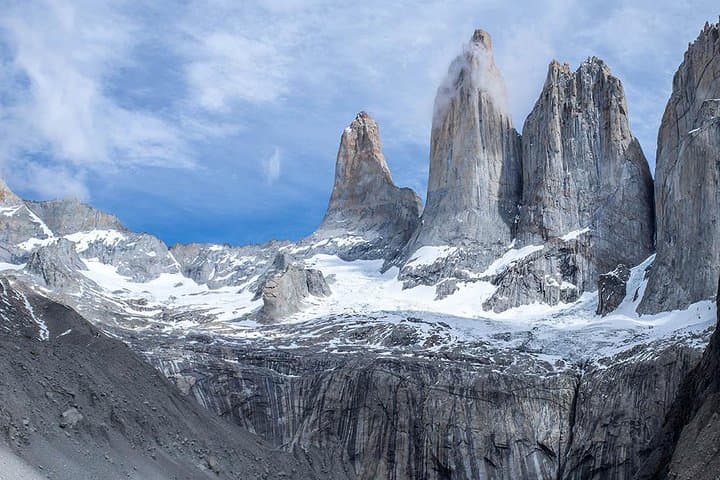
This is the W Circuit condensed into four hard-won days. Day one climbs the Ascencio Valley to Mirador Base Torres — an 11 km push with 700–900 m of elevation gain through lenga forest, moraine fields and finally across an enormous talus slope that delivers you to the classic view of the three granite teeth.
Day two begins with a ferry across Lake Pehoé to Paine Grande and a trail that threads toward Glacier Grey. The icefield shows itself in fragments—blue-tinged seracs calving silently into Gray’s lagoon—and the trail alternates boardwalks, rooty forest and wind-raked moraine.
You’ll backtrack to Paine Grande on day three, giving you time to explore suspension bridges and lookout points. Day four is the French Valley loop: steep switchbacks, granite amphitheaters, and a high viewpoint that opens on hanging glaciers and the central massif before a late-afternoon catamaran returns you to Pudeto and the bus back to Puerto Natales.
Geologically Torres del Paine is a study in contrasts—granite intrusions thrust through older sedimentary layers, polished by Pleistocene glaciers that left moraines, cirques and the broad U-shaped valleys you walk today. Culturally the park sits in the ancestral lands of the Kawésqar and Tehuelche peoples; you’ll see grazing guanaco and winding sheep tracks that echo the region’s ranching history.
Practical edge: the terrain is mixed—roots, rock, scree and boardwalks—and the wind is a constant variable. Distances are manageable in isolation but the condensed schedule means long days: expect 7–9 hours on the Base Torres day and several 4–6 hour walks on other days. Pack for rapid weather changes: layered insulation, a hardshell, and socks that dry fast.
Hydration and nutrition are not optional—carry at least 1.5–2 liters and compact, high-calorie snacks for summit pushes. Footwear should be sturdy, broken-in boots with good ankle support; trekking poles will save knees on descents and on windy stretches.
This itinerary is efficient: refugios and catamarans knit the route together so you cover key highlights without carrying full expedition loads. Still, move conservatively. The park rewards patience—wait for a clearing in the wind and the towers will reveal themselves as if on cue.
challenging.
4 days.
You should have good cardiovascular fitness and experience with multi-day hiking; expect sustained climbs, long days and unstable weather.
You need good aerobic fitness and experience with full-day hikes; expect multiple days of 4–9 hour hikes with variable terrain and wind.
The itinerary includes refuge lodging per the program and the Paine Grande–Pudeto catamaran crossing as noted in the inclusions.
This package is self-guided but organized; solo hikers are allowed though you should be comfortable navigating, carrying gear, and managing weather on your own.
Summer (December–February) offers the most stable weather and longest daylight but book early; spring and fall are quieter; winter is for experienced parties only.
The tour description notes you’ll process entrance at Laguna Amarga—confirm current park fee procedures and have ID and cash or card as required.
The operator arranges campsite accommodation if a refugio isn’t available and will reimburse the difference per the booking terms—confirm specifics before travel.
Torres del Paine sits on lands historically used by the Kawésqar and Tehuelche peoples; European ranching and guide culture shaped much of the park’s modern access.
The park limits camping zones and enforces strict Leave No Trace rules; stick to trails and use designated campgrounds to minimize impact.
Tangol operates guided outdoor trips and adventures with an emphasis on safety, stewardship, and memorable experiences.


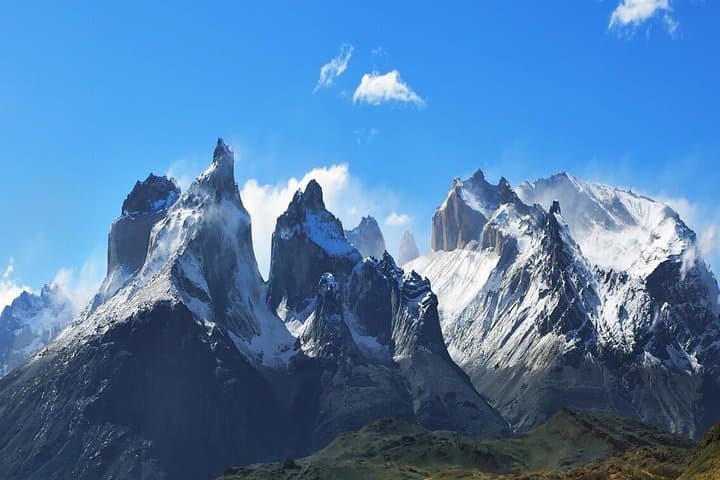
On the first morning the bus peels away from Puerto Natales and the world compresses into wind, water and stone. By mid-morning you’re at Laguna Amarga, the park’s threshold, signing forms and taking in an abrupt panorama: serrated granite towers rising from glaciar-fed lakes, and the wind already shaping your day.
On the first morning the bus peels away from Puerto Natales and the world compresses into wind, water and stone. By mid-morning you’re at Laguna Amarga, the park’s threshold, signing forms and taking in an abrupt panorama: serrated granite towers rising from glaciar-fed lakes, and the wind already shaping your day.
This is the W Circuit condensed into four hard-won days. Day one climbs the Ascencio Valley to Mirador Base Torres — an 11 km push with 700–900 m of elevation gain through lenga forest, moraine fields and finally across an enormous talus slope that delivers you to the classic view of the three granite teeth.
Day two begins with a ferry across Lake Pehoé to Paine Grande and a trail that threads toward Glacier Grey. The icefield shows itself in fragments—blue-tinged seracs calving silently into Gray’s lagoon—and the trail alternates boardwalks, rooty forest and wind-raked moraine.
You’ll backtrack to Paine Grande on day three, giving you time to explore suspension bridges and lookout points. Day four is the French Valley loop: steep switchbacks, granite amphitheaters, and a high viewpoint that opens on hanging glaciers and the central massif before a late-afternoon catamaran returns you to Pudeto and the bus back to Puerto Natales.
Geologically Torres del Paine is a study in contrasts—granite intrusions thrust through older sedimentary layers, polished by Pleistocene glaciers that left moraines, cirques and the broad U-shaped valleys you walk today. Culturally the park sits in the ancestral lands of the Kawésqar and Tehuelche peoples; you’ll see grazing guanaco and winding sheep tracks that echo the region’s ranching history.
Practical edge: the terrain is mixed—roots, rock, scree and boardwalks—and the wind is a constant variable. Distances are manageable in isolation but the condensed schedule means long days: expect 7–9 hours on the Base Torres day and several 4–6 hour walks on other days. Pack for rapid weather changes: layered insulation, a hardshell, and socks that dry fast.
Hydration and nutrition are not optional—carry at least 1.5–2 liters and compact, high-calorie snacks for summit pushes. Footwear should be sturdy, broken-in boots with good ankle support; trekking poles will save knees on descents and on windy stretches.
This itinerary is efficient: refugios and catamarans knit the route together so you cover key highlights without carrying full expedition loads. Still, move conservatively. The park rewards patience—wait for a clearing in the wind and the towers will reveal themselves as if on cue.