THE ADVENTURE COLLECTIVE® · Independent discovery and booking for outdoor travel

Learn three classic Thai dishes—Green Curry, Tom Kha Gai and Tom Yum Goong—in a focused 90‑minute class in Phuket. Small groups, English instruction, and a recipe book mean you leave with both skills and a meal.
Learn three classic Thai dishes—Green Curry, Tom Kha Gai and Tom Yum Goong—in a focused 90‑minute class in Phuket. Small groups, English instruction, and a recipe book mean you leave with both skills and a meal.
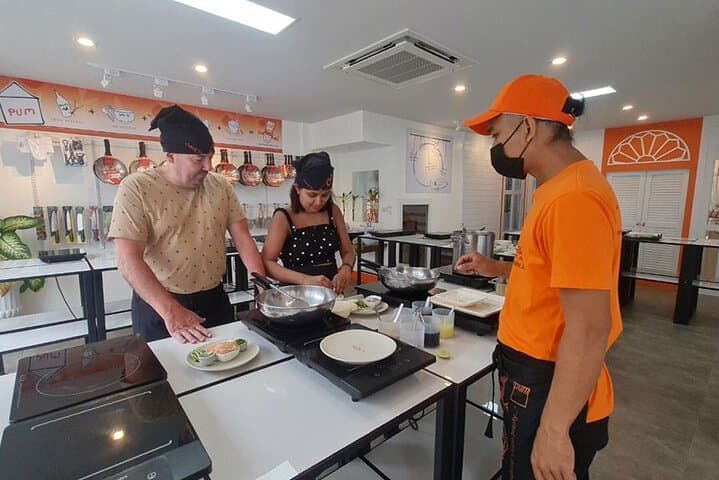
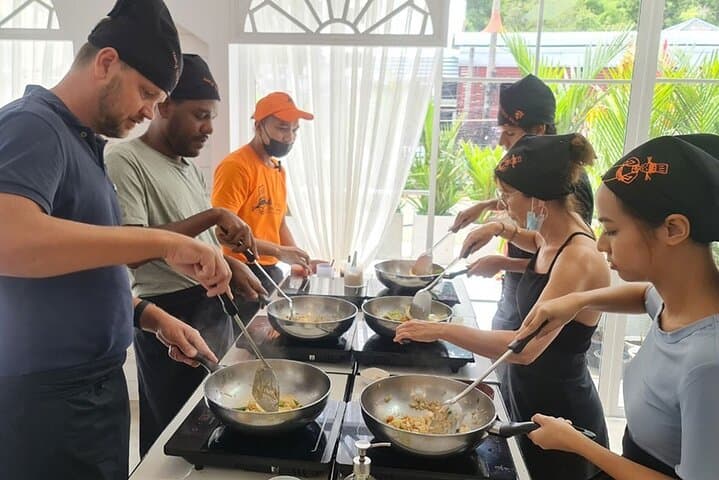
Walk into a compact kitchen in Phuket and the first thing you notice is the heat—wok smoke, citrusy kaffir lime, and the steady rhythm of knives. The classroom sits a short ride from Phuket Town markets; here, cooking is hands-on and fast, designed for travelers who want to eat what they learn within 90 minutes.
Verified experiences and guided adventures in the surrounding area.
Operated by Oh-Hoo · Phuket, Phuket
Walk into a compact kitchen in Phuket and the first thing you notice is the heat—wok smoke, citrusy kaffir lime, and the steady rhythm of knives. The classroom sits a short ride from Phuket Town markets; here, cooking is hands-on and fast, designed for travelers who want to eat what they learn within 90 minutes.
Phuket’s food reflects its history: southern Thai spice tempered by Malay and Chinese trading routes, and a tin‑mining boom that brought diverse ingredients and cooks to the island. The region’s geology—limestone karsts offshore and rich coastal plains—supports the herbs, galangal and lime that define dishes like Tom Kha and Tom Yum. The class itself focuses on technique over theory: how to build a curry paste, balance heat and acidity, and coax flavor from coconut milk and shrimp stock.
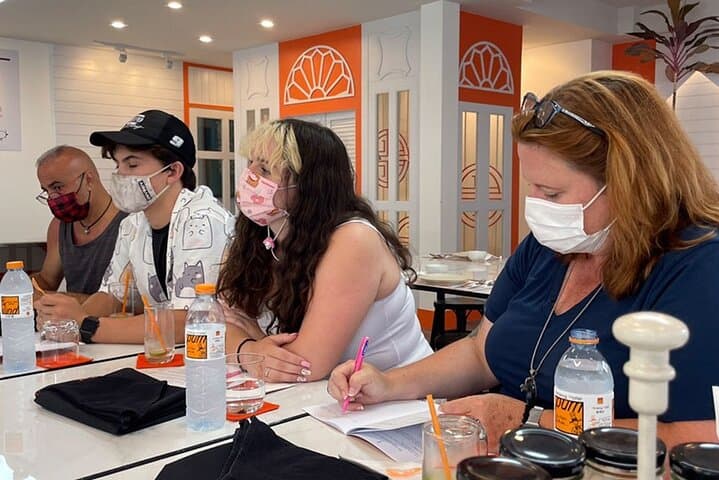
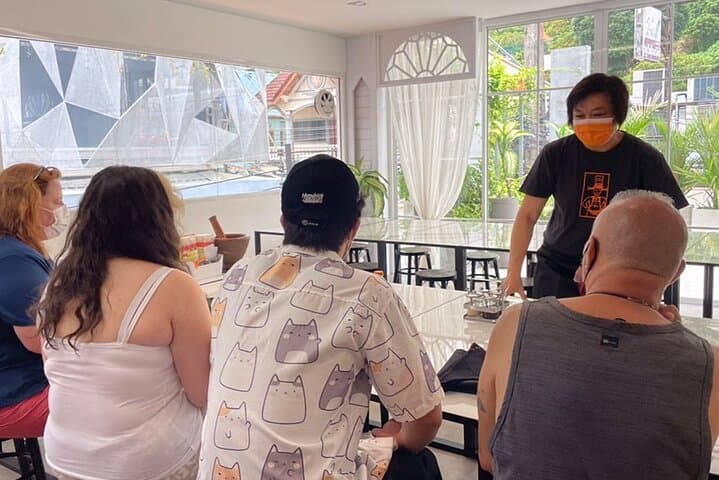
Expect a small group (8–10 people), English instruction, a printed recipe, and the chance to dine on your three dishes at the end. Practical tips: arrive with hunger, wear closed-toe shoes, declare allergies up front, and plan for local traffic—classes run at 11:00, 16:00 and 18:00 daily.
For food-focused travelers, this is a compact introduction to southern Thai household cooking—fast, tactile, and immediately rewarding. It’s ideal as a half-day cultural stop between market visits or beach afternoons; bring a small notebook, an appetite, and a willingness to get hands-on with a knife and a wok.
easy.
1.5–2 hours.
Minimal physical fitness required; you should be comfortable standing and doing light chopping and stirring for the session.
Yes—most classes can accommodate vegetarian requests if you notify the operator in advance; halal substitutions are usually possible but confirm when booking.
Pickup may be available; bookings ask for pickup point and special requirements—confirm at reservation and allow extra time for traffic.
Children aged 6–11 can join but may share a station with a parent; check the operator’s policy when booking.
Instruction is provided in English; the instructor will demonstrate techniques and offer printed recipes.
Phuket’s cuisine evolved from Malay and Chinese influence plus ingredients brought by 19th-century tin‑mining and trade, shaping the island’s salty-sour-spicy profiles.
Choose sustainable seafood and avoid single-use plastics when possible; supporting local markets and small schools helps keep supply chains local and lower-impact.
Oh-Hoo operates guided outdoor trips and adventures with an emphasis on safety, stewardship, and memorable experiences.
Walk into a compact kitchen in Phuket and the first thing you notice is the heat—wok smoke, citrusy kaffir lime, and the steady rhythm of knives. The classroom sits a short ride from Phuket Town markets; here, cooking is hands-on and fast, designed for travelers who want to eat what they learn within 90 minutes.
Walk into a compact kitchen in Phuket and the first thing you notice is the heat—wok smoke, citrusy kaffir lime, and the steady rhythm of knives. The classroom sits a short ride from Phuket Town markets; here, cooking is hands-on and fast, designed for travelers who want to eat what they learn within 90 minutes.
Phuket’s food reflects its history: southern Thai spice tempered by Malay and Chinese trading routes, and a tin‑mining boom that brought diverse ingredients and cooks to the island. The region’s geology—limestone karsts offshore and rich coastal plains—supports the herbs, galangal and lime that define dishes like Tom Kha and Tom Yum. The class itself focuses on technique over theory: how to build a curry paste, balance heat and acidity, and coax flavor from coconut milk and shrimp stock.
Expect a small group (8–10 people), English instruction, a printed recipe, and the chance to dine on your three dishes at the end. Practical tips: arrive with hunger, wear closed-toe shoes, declare allergies up front, and plan for local traffic—classes run at 11:00, 16:00 and 18:00 daily.
For food-focused travelers, this is a compact introduction to southern Thai household cooking—fast, tactile, and immediately rewarding. It’s ideal as a half-day cultural stop between market visits or beach afternoons; bring a small notebook, an appetite, and a willingness to get hands-on with a knife and a wok.