THE ADVENTURE COLLECTIVE® · Independent discovery and booking for outdoor travel

Covering classic hilltop villages, rhododendron forests and high alpine bowls, this 10-day express trek to Annapurna Base Camp delivers grand mountain scenery and authentic local culture. Read on for what to expect, how to prepare, and practical route notes.
Covering classic hilltop villages, rhododendron forests and high alpine bowls, this 10-day express trek to Annapurna Base Camp delivers grand mountain scenery and authentic local culture. Read on for what to expect, how to prepare, and practical route notes.
Morning in Pokhara is humid and sharp with coffee and diesel; by noon you are moving uphill into rhododendron forest where the trail narrows and the village roofs shrink behind you. The path climbs in a steady rhythm—stone steps, wooden bridges, breath caught on ledges—until the amphitheatre of Annapurna Base Camp opens and the massif stares back like an old, indifferent monarch.
Verified experiences and guided adventures in the surrounding area.
Operated by Mountain Kick Private Limited · Pokhara, Gandaki Province
Morning in Pokhara is humid and sharp with coffee and diesel; by noon you are moving uphill into rhododendron forest where the trail narrows and the village roofs shrink behind you. The path climbs in a steady rhythm—stone steps, wooden bridges, breath caught on ledges—until the amphitheatre of Annapurna Base Camp opens and the massif stares back like an old, indifferent monarch.
This route threads through Gurung and Magar villages such as Ghandruk and Chomrong, places shaped by trans-Himalayan trade and subsistence farming. Geologically the trail skirts steep river gorges carved by glacial melt and tectonic uplift; peaks around you exceed 7,000 meters, their faces revealing strata and ancient thrust faults. Culture is visible in prayer flags, mani stones, and tea-house hospitality—local knowledge that turns a hard day into something orderly and human.
Practically, expect 10 days from Kathmandu/Pokhara return, with nights in guesthouses and one or two long ascent days above 3,000 m. Altitude is the real variable: acclimatize, keep daily gain conservative, and watch for headache, nausea or severe fatigue.
Bring sturdy boots, layered clothing, water treatment, and a trustable headlamp. Plan on basic facilities in teahouses—simple meals, shared rooms, hot showers where available. Morning sunlight can transform visibility; late afternoon brings wind and cliff-cold quickly. Move slow on steep staircases, hydrate deliberately, and let the mountains demand your patience—Annapurna rewards measured effort with sunrise on serrated ridgelines and a base camp that feels earned.
challenging.
10 days.
Good aerobic base and leg strength; ability to hike 5–8 hours a day with heavy elevation gain; prior multi-day hiking experience recommended
Yes—trekkers must have an Annapurna Conservation Area Permit (ACAP) and a TIMS card; guides usually assist with these before the trek starts.
Risk is real due to rapid ascent; symptoms range from headache and nausea to more severe signs—follow acclimatization advice and descend if symptoms worsen.
Basic twin-share rooms with thin mattresses are standard; teahouses offer simple Nepali and Western dishes—expect boiled or fried meals and limited beverage options at high elevations.
Porters are provided (one per pair of travelers in this program) to carry heavier luggage, but you should carry a daypack with essentials and equipment you need on the trail.
Ghandruk and surrounding villages are traditional Gurung communities with histories tied to trans-Himalayan trade and recruitment into Gurkha regiments.
The Annapurna Conservation Area uses permit fees to fund local conservation and community projects—stick to marked trails, pack out waste, and minimize firewood use.
Mountain Kick Private Limited operates guided outdoor trips and adventures with an emphasis on safety, stewardship, and memorable experiences.

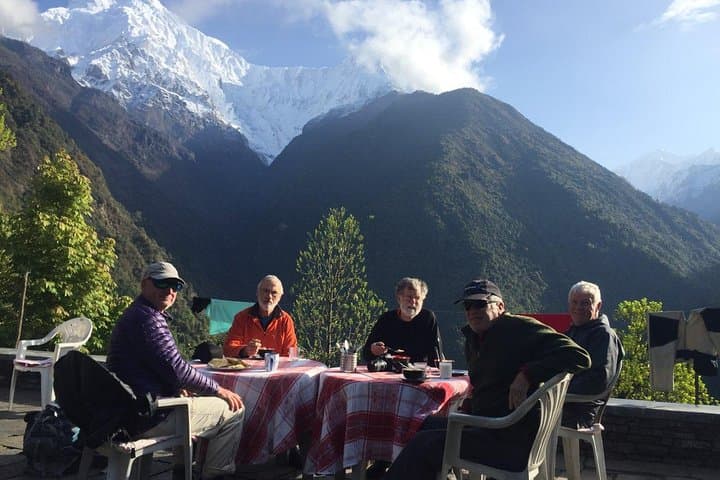


Morning in Pokhara is humid and sharp with coffee and diesel; by noon you are moving uphill into rhododendron forest where the trail narrows and the village roofs shrink behind you. The path climbs in a steady rhythm—stone steps, wooden bridges, breath caught on ledges—until the amphitheatre of Annapurna Base Camp opens and the massif stares back like an old, indifferent monarch.
Morning in Pokhara is humid and sharp with coffee and diesel; by noon you are moving uphill into rhododendron forest where the trail narrows and the village roofs shrink behind you. The path climbs in a steady rhythm—stone steps, wooden bridges, breath caught on ledges—until the amphitheatre of Annapurna Base Camp opens and the massif stares back like an old, indifferent monarch.
This route threads through Gurung and Magar villages such as Ghandruk and Chomrong, places shaped by trans-Himalayan trade and subsistence farming. Geologically the trail skirts steep river gorges carved by glacial melt and tectonic uplift; peaks around you exceed 7,000 meters, their faces revealing strata and ancient thrust faults. Culture is visible in prayer flags, mani stones, and tea-house hospitality—local knowledge that turns a hard day into something orderly and human.
Practically, expect 10 days from Kathmandu/Pokhara return, with nights in guesthouses and one or two long ascent days above 3,000 m. Altitude is the real variable: acclimatize, keep daily gain conservative, and watch for headache, nausea or severe fatigue.
Bring sturdy boots, layered clothing, water treatment, and a trustable headlamp. Plan on basic facilities in teahouses—simple meals, shared rooms, hot showers where available. Morning sunlight can transform visibility; late afternoon brings wind and cliff-cold quickly. Move slow on steep staircases, hydrate deliberately, and let the mountains demand your patience—Annapurna rewards measured effort with sunrise on serrated ridgelines and a base camp that feels earned.