THE ADVENTURE COLLECTIVE® · Independent discovery and booking for outdoor travel

Descend into a pale, sculpted underground where salt becomes architecture and history. This guided half-day tour from Bogotá pairs a town walk in Zipaquirá with an immersive visit to the Salt Cathedral—ideal for travelers who want culture, geology, and easy hiking in one outing.
Descend into a pale, sculpted underground where salt becomes architecture and history. This guided half-day tour from Bogotá pairs a town walk in Zipaquirá with an immersive visit to the Salt Cathedral—ideal for travelers who want culture, geology, and easy hiking in one outing.
You descend from a sun-warmed minibus into a carved, cool hush—the salt walls absorb light and give it back as a pale glow. Footsteps echo through galleries where crucifixes and sculptures have been cut from salt, and the air tastes faintly of mineral and history.
Verified experiences and guided adventures in the surrounding area.
Operated by transporte & turismo del eje S.A.S · Zipaquirá, Cundinamarca
You descend from a sun-warmed minibus into a carved, cool hush—the salt walls absorb light and give it back as a pale glow. Footsteps echo through galleries where crucifixes and sculptures have been cut from salt, and the air tastes faintly of mineral and history.
The Salt Cathedral sits inside a former halite mine outside the town of Zipaquirá. Long before the modern cathedral was fashioned, the Muisca people harvested salt here, and colonial-era and 20th-century miners expanded the tunnels that would later become an engineered place of worship. Geologically, the site is part of the Eastern Cordillera’s evaporite deposits: thick salt layers folded and uplifted by Andean tectonics, sculpted by extraction and later by artists.
Culturally the cathedral functions as both shrine and museum—architectural chambers alternate with interpretive exhibits, while the town of Zipaquirá keeps a lively market culture where obleas and panela sweets are part of any visit.
Practically: this is a guided, mostly on-foot tour of roughly six to seven hours including hotel pickup, a town walk, and the underground visit. Expect steady staircases and cool, damp air around 12–16°C; wear sturdy shoes and layers. Health considerations matter—those with serious cardiovascular issues should consult a doctor. Bring water, leave bulky bags on the coach, and plan mornings to avoid peak crowds. Photography is allowed in many areas but follow guide directions to protect the site. With a mix of geology, faith, and human craft, the Salt Cathedral is an accessible half-day adventure that pairs well with a stroll through Zipaquirá’s colonial center.
easy.
6–7 hours.
Light walking ability; able to manage stairs and periods of standing
Yes; the tour offers round-trip transportation from your hotel or airport as specified by your booking option.
Entrance is included in the advertised tour options—confirm whether you selected the Full Plan or Starter Plan when booking.
The itinerary involves stairs and uneven surfaces; it’s listed as physically easy but not recommended for those with serious cardiovascular problems—check with the operator about accessibility accommodations.
Photography is generally allowed in many chambers, but follow the guide’s directions and any signage to protect exhibits and sacred areas.
The site sits on salt deposits long exploited by the Muisca people; modern use transforms former mining chambers into a religious and cultural space.
Visitor flows are managed to protect fragile salt sculptures and maintain microclimate stability; stay on designated paths and avoid touching salt carvings.
transporte & turismo del eje S.A.S operates guided outdoor trips and adventures with an emphasis on safety, stewardship, and memorable experiences.
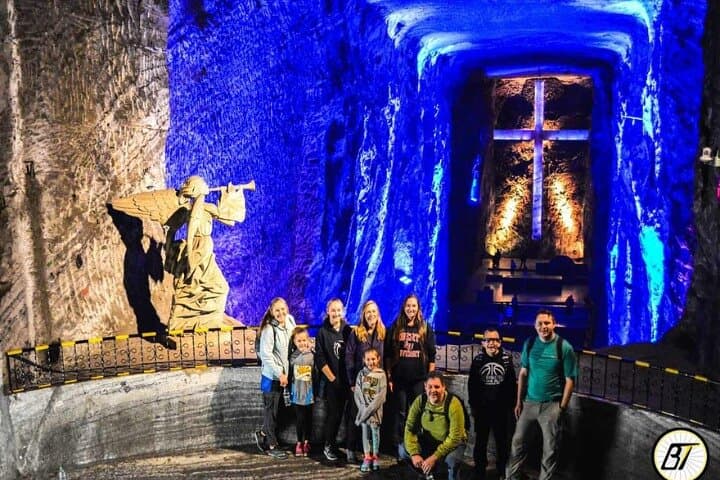
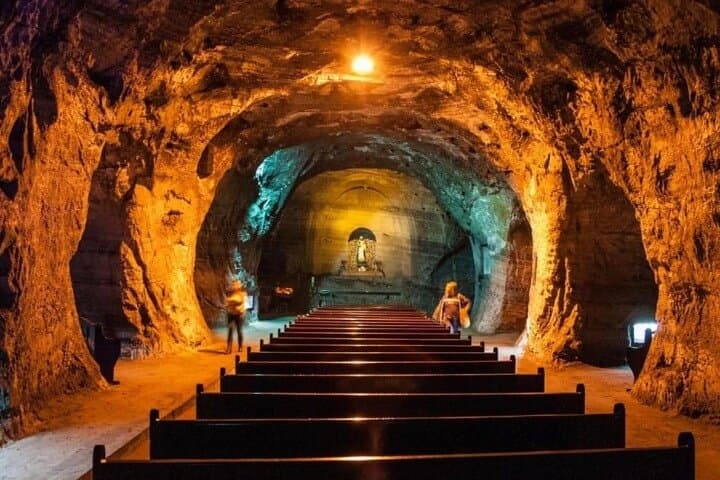
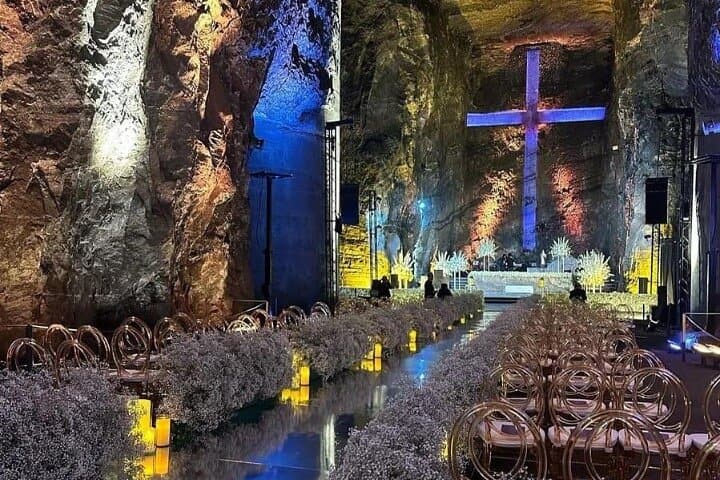
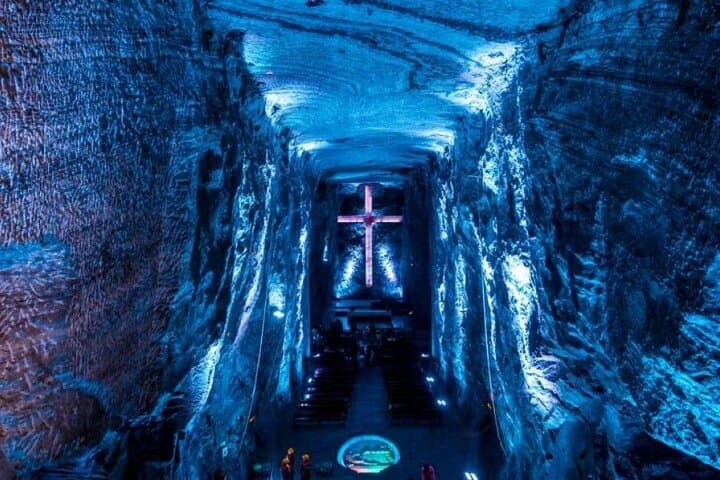
You descend from a sun-warmed minibus into a carved, cool hush—the salt walls absorb light and give it back as a pale glow. Footsteps echo through galleries where crucifixes and sculptures have been cut from salt, and the air tastes faintly of mineral and history.
You descend from a sun-warmed minibus into a carved, cool hush—the salt walls absorb light and give it back as a pale glow. Footsteps echo through galleries where crucifixes and sculptures have been cut from salt, and the air tastes faintly of mineral and history.
The Salt Cathedral sits inside a former halite mine outside the town of Zipaquirá. Long before the modern cathedral was fashioned, the Muisca people harvested salt here, and colonial-era and 20th-century miners expanded the tunnels that would later become an engineered place of worship. Geologically, the site is part of the Eastern Cordillera’s evaporite deposits: thick salt layers folded and uplifted by Andean tectonics, sculpted by extraction and later by artists.
Culturally the cathedral functions as both shrine and museum—architectural chambers alternate with interpretive exhibits, while the town of Zipaquirá keeps a lively market culture where obleas and panela sweets are part of any visit.
Practically: this is a guided, mostly on-foot tour of roughly six to seven hours including hotel pickup, a town walk, and the underground visit. Expect steady staircases and cool, damp air around 12–16°C; wear sturdy shoes and layers. Health considerations matter—those with serious cardiovascular issues should consult a doctor. Bring water, leave bulky bags on the coach, and plan mornings to avoid peak crowds. Photography is allowed in many areas but follow guide directions to protect the site. With a mix of geology, faith, and human craft, the Salt Cathedral is an accessible half-day adventure that pairs well with a stroll through Zipaquirá’s colonial center.