THE ADVENTURE COLLECTIVE® · Independent discovery and booking for outdoor travel

Step into Villa d'Este and let fountains lead the way: a Renaissance estate above Tivoli where 16th-century hydraulics meet frescoed opulence. This guided visit pairs outdoor spectacle with art-historical insight—perfect for travelers who want both scenery and story.
Step into Villa d'Este and let fountains lead the way: a Renaissance estate above Tivoli where 16th-century hydraulics meet frescoed opulence. This guided visit pairs outdoor spectacle with art-historical insight—perfect for travelers who want both scenery and story.
A thin mist lifts off the terraces as water begins its daily performance: jets and cascades cut through morning light, marble statues glistening, pathways slick with spray. Villa d'Este sits on a wooded terrace above Tivoli, its fountains the loud, precise punctuation to an otherwise quiet town.
Verified experiences and guided adventures in the surrounding area.
Operated by Nicom Tours · Tivoli, Lazio
A thin mist lifts off the terraces as water begins its daily performance: jets and cascades cut through morning light, marble statues glistening, pathways slick with spray. Villa d'Este sits on a wooded terrace above Tivoli, its fountains the loud, precise punctuation to an otherwise quiet town.
Built in the 16th century for Cardinal Ippolito II d'Este, the villa is a high bar of Renaissance ambition—an architectural house made to show off hydraulic mastery as much as frescoed rooms. The site uses springs from the Aniene valley and channels them through carved stone, producing staged falls, grottos and the monumental Neptune cascade. Over centuries the garden influenced European landscape design and today the whole estate is a UNESCO World Heritage Site.
Culturally the villa represents papal-era showmanship: frescoed interiors and carefully composed sightlines that turn water into spectacle. Geologically, the park occupies tufa and limestone slopes; look for terraced beds and engineered retaining walls that keep fountains fed and paths stable.
Practical guidance: allow an hour for the formal tour but add time to linger on terraces. Expect many stairs and narrow walkways—comfortable shoes and a steady step help. Peak light for fountain photography is mid-morning or late afternoon; midsummer is busiest and hottest. Listen for your guide’s explanation of Bernini’s Neptune Fountain and the Oval Fountain—both are anchor moments of the route.
The experience balances close-up art history with outdoor mechanics: frescoed halls give context, while the pumps, aqueducts and terraces tell the story of engineering meeting spectacle. Plan water, soft-soled shoes, and time to sit and watch the water do the talking.
moderate.
1–1.5 hours.
Suitable for most travelers who can manage several flights of stairs and uneven stone paths
The scheduled visit is about 60 minutes; allow extra time if you want to explore terraces or photograph the fountains at leisure.
Some paths and sections have steep stairs and uneven stone; stroller access is possible in parts but the tour is not fully accessible for all mobility devices.
Photography rules vary by room—guides will note restricted areas to protect frescoes; outdoor photography of fountains is generally permitted.
Early morning and late afternoon are quieter; avoid peak midday in July and August when buses are frequent.
Commissioned by Cardinal Ippolito II d'Este in the mid-1500s, Villa d'Este combined frescoed interiors with unprecedented hydraulic gardens; it joined the UNESCO list for its influence on European garden design.
Heavy visitation and historic water infrastructure require ongoing maintenance; stay on designated paths, avoid touching frescoes, and follow local guidance to reduce wear.
Nicom Tours operates guided outdoor trips and adventures with an emphasis on safety, stewardship, and memorable experiences.
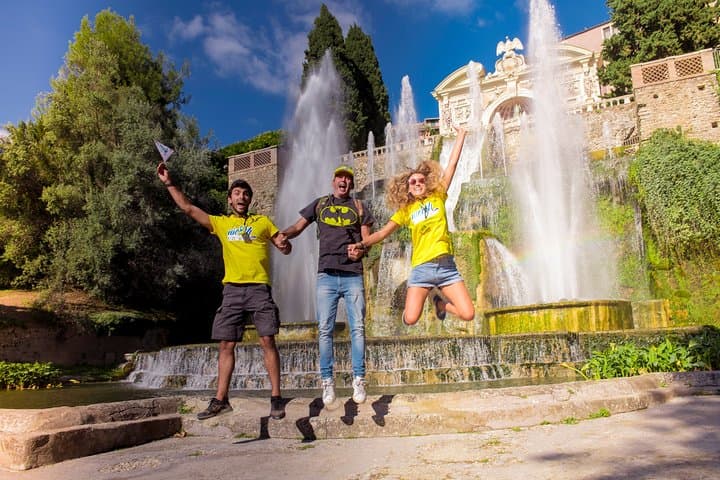

A thin mist lifts off the terraces as water begins its daily performance: jets and cascades cut through morning light, marble statues glistening, pathways slick with spray. Villa d'Este sits on a wooded terrace above Tivoli, its fountains the loud, precise punctuation to an otherwise quiet town.
A thin mist lifts off the terraces as water begins its daily performance: jets and cascades cut through morning light, marble statues glistening, pathways slick with spray. Villa d'Este sits on a wooded terrace above Tivoli, its fountains the loud, precise punctuation to an otherwise quiet town.
Built in the 16th century for Cardinal Ippolito II d'Este, the villa is a high bar of Renaissance ambition—an architectural house made to show off hydraulic mastery as much as frescoed rooms. The site uses springs from the Aniene valley and channels them through carved stone, producing staged falls, grottos and the monumental Neptune cascade. Over centuries the garden influenced European landscape design and today the whole estate is a UNESCO World Heritage Site.
Culturally the villa represents papal-era showmanship: frescoed interiors and carefully composed sightlines that turn water into spectacle. Geologically, the park occupies tufa and limestone slopes; look for terraced beds and engineered retaining walls that keep fountains fed and paths stable.
Practical guidance: allow an hour for the formal tour but add time to linger on terraces. Expect many stairs and narrow walkways—comfortable shoes and a steady step help. Peak light for fountain photography is mid-morning or late afternoon; midsummer is busiest and hottest. Listen for your guide’s explanation of Bernini’s Neptune Fountain and the Oval Fountain—both are anchor moments of the route.
The experience balances close-up art history with outdoor mechanics: frescoed halls give context, while the pumps, aqueducts and terraces tell the story of engineering meeting spectacle. Plan water, soft-soled shoes, and time to sit and watch the water do the talking.