THE ADVENTURE COLLECTIVE® · Independent discovery and booking for outdoor travel

Skip the ticket line and move at your own pace through the Palace of Versailles and its formal gardens. This guide explains what to expect — from the Hall of Mirrors to the Grand Canal — and how to plan a smooth visit.
Skip the ticket line and move at your own pace through the Palace of Versailles and its formal gardens. This guide explains what to expect — from the Hall of Mirrors to the Grand Canal — and how to plan a smooth visit.
A late-morning light washes across the gravel of the Cour d'Honneur as visitors step through the wrought-iron gate — the Palace of Versailles feels both immense and intimate at once. Inside, gilded rooms and the Hall of Mirrors impose a measured hush; outside, André Le Nôtre’s geometry unfolds in clipped hedges, fountains that punctuate long sightlines, and the wide, reflective sweep of the Grand Canal.
Verified experiences and guided adventures in the surrounding area.
A late-morning light washes across the gravel of the Cour d'Honneur as visitors step through the wrought-iron gate — the Palace of Versailles feels both immense and intimate at once. Inside, gilded rooms and the Hall of Mirrors impose a measured hush; outside, André Le Nôtre’s geometry unfolds in clipped hedges, fountains that punctuate long sightlines, and the wide, reflective sweep of the Grand Canal.
Versailles grew from a 17th-century hunting lodge into Louis XIV’s instrument of statecraft, its architecture and gardens engineered to display royal power. The stone and stucco bear repeated layers of history: Baroque ornament, Revolutionary clashes, and 19th-century restorations that shaped the estate visitors see today. The grounds’ flat, loamy soils and engineered terraces make it a different inland landscape than nearby Paris — an ordered, water-managed environment where fountains still demand careful maintenance.
Practical guidance follows the spectacle. Timed entry removes long waits but doesn’t shorten the route: allow 2–4 hours to see principal rooms and spare time for the Orangerie or Marie-Antoinette’s hamlet. Weekday mornings are quieter; musical fountain days are best for the kinetic garden shows but draw crowds. Expect polished marble floors, long corridors, and uneven gravel paths outdoors — comfortable low-profile shoes and a light rain layer are sensible year-round. Carry a refillable water bottle; food options near the palace are limited and tend toward cafes with queues. Check the official schedule for closures and the timed-entry slot printed on your ticket before you go.
easy.
1–4 hours.
Minimal cardiovascular fitness required; ability to stand and walk on hard and uneven surfaces for several hours.
Timed-entry grants access at the reserved start time, allowing you to bypass the general ticket queue, but security checks and crowding inside can still create brief waits.
Garden access depends on the option booked; standard palace tickets often include garden entry, but special events like Musical Fountains may require a separate or upgraded admission.
Non-commercial photography is typically allowed in most rooms without flash, but some rooms may prohibit tripods or flash—follow posted rules and staff instructions.
Allocate 2–4 hours to tour the main apartments and stretch across key garden sections; a full visit including Trianon and the hamlet can take a half-day.
Versailles was transformed by Louis XIV in the 17th century into a seat of monarchical display; subsequent political change and restorations shaped the palace seen today.
High visitor numbers and water-intensive fountains require ongoing restoration and careful garden management; stay on paths and respect planted parterres to minimize impact.
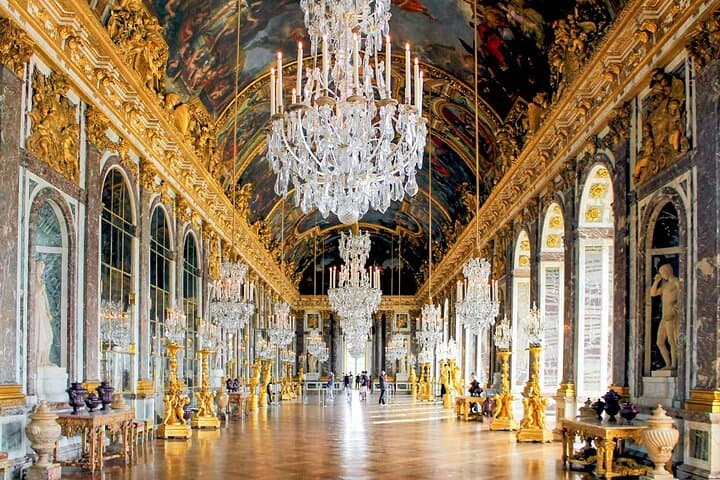
A late-morning light washes across the gravel of the Cour d'Honneur as visitors step through the wrought-iron gate — the Palace of Versailles feels both immense and intimate at once. Inside, gilded rooms and the Hall of Mirrors impose a measured hush; outside, André Le Nôtre’s geometry unfolds in clipped hedges, fountains that punctuate long sightlines, and the wide, reflective sweep of the Grand Canal.
A late-morning light washes across the gravel of the Cour d'Honneur as visitors step through the wrought-iron gate — the Palace of Versailles feels both immense and intimate at once. Inside, gilded rooms and the Hall of Mirrors impose a measured hush; outside, André Le Nôtre’s geometry unfolds in clipped hedges, fountains that punctuate long sightlines, and the wide, reflective sweep of the Grand Canal.
Versailles grew from a 17th-century hunting lodge into Louis XIV’s instrument of statecraft, its architecture and gardens engineered to display royal power. The stone and stucco bear repeated layers of history: Baroque ornament, Revolutionary clashes, and 19th-century restorations that shaped the estate visitors see today. The grounds’ flat, loamy soils and engineered terraces make it a different inland landscape than nearby Paris — an ordered, water-managed environment where fountains still demand careful maintenance.
Practical guidance follows the spectacle. Timed entry removes long waits but doesn’t shorten the route: allow 2–4 hours to see principal rooms and spare time for the Orangerie or Marie-Antoinette’s hamlet. Weekday mornings are quieter; musical fountain days are best for the kinetic garden shows but draw crowds. Expect polished marble floors, long corridors, and uneven gravel paths outdoors — comfortable low-profile shoes and a light rain layer are sensible year-round. Carry a refillable water bottle; food options near the palace are limited and tend toward cafes with queues. Check the official schedule for closures and the timed-entry slot printed on your ticket before you go.